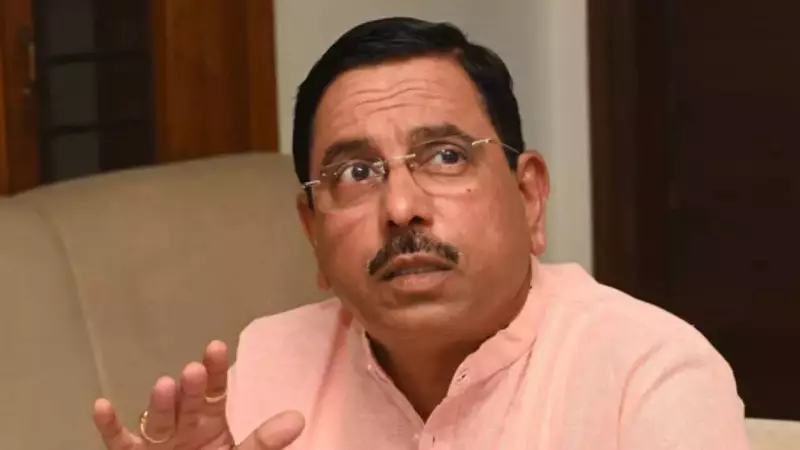
NEW DELHI: Union Minister for New and Renewable Energy Pralhad Joshi announced on Sunday that recent high-level global interactions have significantly reinforced India's determination to accelerate its clean energy transition. The minister emphasized that stable policies, sustained international collaboration, and long-term investments are positioning India as a crucial driver of the global shift toward renewable energy sources.
Davos Engagements Boost India's Renewable Energy Profile
Following his return from the World Economic Forum (WEF) Annual Meeting 2026 in Davos, Joshi revealed that a series of strategic engagements were conducted that substantially enhanced India's standing as one of the world's most attractive destinations for long-term clean energy investments. The minister noted that these discussions provided valuable insights, strengthened key partnerships, and bolstered global confidence in India's renewable energy journey.
$300 Billion Green Energy Investment Opportunity
At the Davos forum, India presented an impressive investment opportunity of $300 billion in the green energy sector to international investors. Joshi detailed how he showcased India's compelling long-term investment narrative, which is firmly supported by policy stability, predictable regulatory frameworks, and consistent engagement with stakeholders at both central and state government levels.

The minister stated: "The interactions reaffirmed global confidence in India's ability to scale renewable energy rapidly while ensuring socio-economic growth and inclusivity."
Policy Stability as Foundation for Growth
Joshi highlighted that India's renewable energy strategy is built upon a foundation of consistent policies and transparent regulations that provide investors with the certainty needed for long-term commitments. This approach has created an environment where clean energy projects can flourish while contributing to broader economic development goals.
The minister's remarks underscore how India is leveraging international platforms like the World Economic Forum to advance its clean energy ambitions. Through strategic diplomacy and clear policy communication, the country is establishing itself as a reliable partner in the global transition toward sustainable energy systems.