

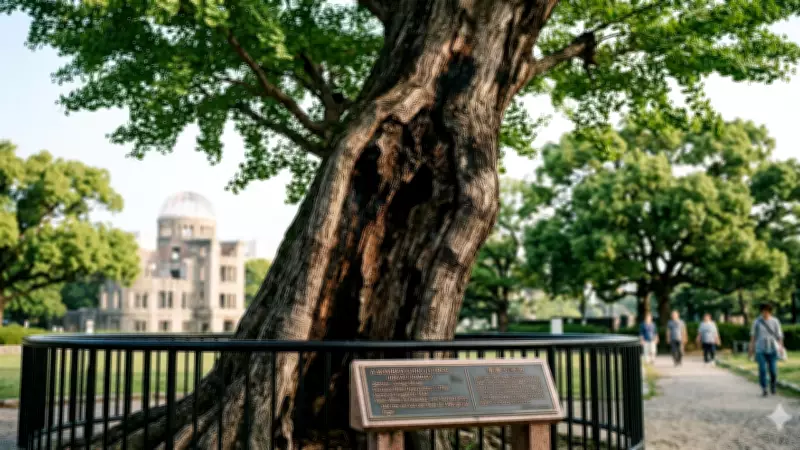
The atomic bomb dropped on Hiroshima in August 1945 caused devastation so severe that scientists believed nothing would grow in the area for decades. The explosion generated extreme temperatures and dangerously high radiation levels, killing nearly all life forms. However, life returned much sooner than anticipated.
Early Regrowth of Vegetation
Within just a few months after the explosion, trees that had been burned down began to sprout again. Many years later, these astonishingly resilient trees, known as hibakujumoku, continue to thrive. Early scientific hypotheses suggested it could take years for vegetation to recover, but by the spring of 1946, new growth was already visible. One notable example is the Ginkgo biloba, often called a "living fossil" due to its prehistoric origins. These trees, located within two kilometers of the hypocentre, regenerated despite severe damage. The United Nations recognizes them globally as symbols of resilience, representing "hope for a peaceful future."
Why These Trees Survived Radiation
Considerable research has focused on understanding how these trees withstood such high levels of radiation and heat. A recent study from Stanford University attributes their survival to inherent characteristics, termed "constitutive resilience" or stress resistance. The atomic bombing created a unique environment of acute, high-dose ionizing radiation. Some plants survived due to innate defense mechanisms, including highly efficient DNA repair and elevated antioxidant levels that mitigated radiation damage to molecules.

Another factor is structural biology. Unlike animals, trees do not rely on vital organs; they can lose a large portion of their biomass and still survive. Their roots, located deep underground, may have escaped irradiation, serving as a source for new growth even after visible parts were destroyed.
Scientific Research into Radiation-Resistant Plants
The survival of Hiroshima's trees opens avenues for scientific research. Unlike the gradual adaptation seen in Chernobyl, no evolutionary process occurred in Hiroshima—the trees survived immediately. This has prompted researchers to study their genomes to identify the causes of such robust adaptation. According to experts, these discoveries could benefit humanity in multiple ways. Insights from tree genes may help develop crops resistant to harsh conditions and degraded soil. Additionally, space travel could benefit, enabling plant growth in high-radiation environments.
Programs like Green Legacy Hiroshima aim to preserve the legacy of these survivor trees by collecting seeds and propagating them worldwide.
In conclusion, the survivor trees challenge assumptions about the aftermath of nuclear devastation. Not only did vegetation regrow after an atomic bomb, but these trees proved far more biologically resilient than previously thought. Studying them may lead to breakthroughs in sustaining life under extreme conditions.






