

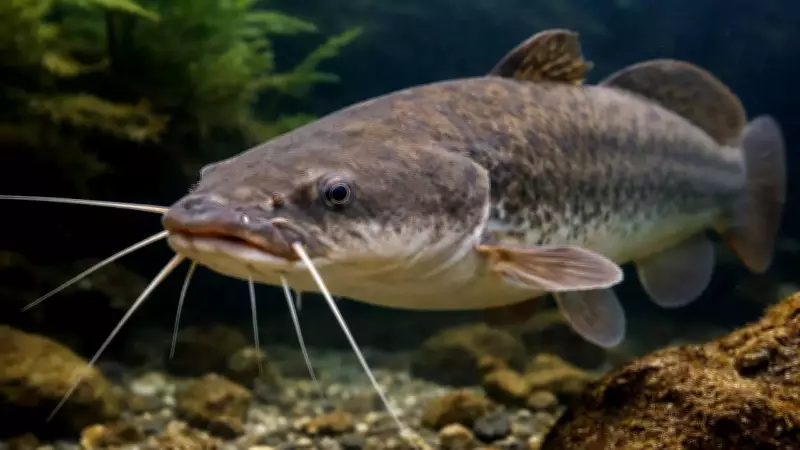
African Sharptooth Catfish 'Walk' on Land in South Africa, Showcasing Evolution
In the quiet darkness of night, while most water bodies appear still, fascinating events unfold beyond human sight. A recent camera trap sighting in South Africa has captured an extraordinary phenomenon: fish venturing onto dry land. This behavior, though seemingly unnatural, is a powerful example of evolution in action, demonstrating how species adapt to survive in changing environments.
Watch: Catfish Leave Water and 'Walk' on Land
The video, recorded by an Africam Live Cam at Naledi Bush Lodge in South Africa, shows groups of African sharptooth catfish gathering at the water's edge before pushing themselves onto land. Using side-to-side movements, the catfish crawl across wet mud for several minutes. This footage is unique not only for documenting the behavior but also for providing real-time evidence of it, as scientists have long known about this capability but rarely captured it so clearly.
Why Do These Fish Leave the Water?
The movement of catfish onto land is not random; it is a strategic response to environmental conditions. In this case, recent flooding likely played a key role by creating a moist environment that reduces the risk of dehydration. Additionally, land offers new food sources. African sharptooth catfish are opportunistic feeders, consuming insects, other fish, plants, and animals. By moving onto land, they access prey that would otherwise be unavailable.

Built for Survival Beyond Water
The African sharptooth catfish is not an average fish. Its most impressive adaptation is an organ in its gill chamber that allows it to breathe air, enabling survival out of water for hours or even days if its body remains moist. Furthermore, it uses its pectoral spines and muscles to propel itself forward on land, a method that may appear awkward but is effective for crossing between water bodies.
Movement as a Survival Strategy
This species is known to leave water during dry seasons when ponds begin to evaporate, making movement a necessity. By traveling at night, the catfish minimizes exposure to dehydration and predators, leveraging darkness and moisture for safety. This behavior also facilitates species dispersal, allowing them to colonize temporary pools and other areas, thereby expanding their range.
Ecological Impact of a Highly Adaptable Species
Despite its adaptability, the African sharptooth catfish raises ecological concerns. According to the South African National Biodiversity Institute and Cape Nature, while native to the region, it exhibits invasive traits in some areas. Its ability to consume almost anything and travel between water bodies enables aggressive competition with other species, potentially disrupting local ecosystems.
What might seem eerie or unusual to casual observers—a fish "walking" on land—holds significant importance for ecologists. It highlights how freshwater life continuously adapts to natural changes like floods and droughts, as well as human-made alterations such as canals and farm ponds. This behavior serves as a reminder that beneath calm water surfaces, dynamic activity and adaptation are constantly at play, shaping the natural world.






