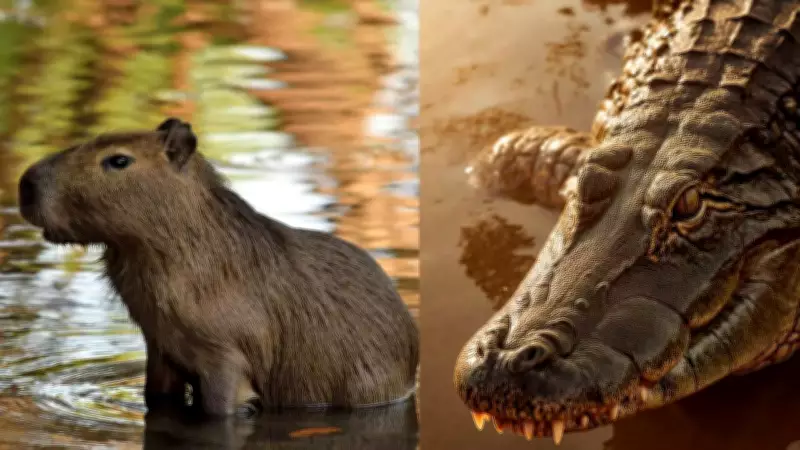
In the lush rivers and expansive swamplands of various regions, a fascinating natural phenomenon unfolds: capybaras and crocodiles coexist in the same habitat without engaging in frequent conflicts. While one might expect thrilling predation scenes, the reality presents a far more intricate and nuanced picture.
The Unexpected Peaceful Coexistence
Capybaras, the world's largest rodents, are often seen swimming and floating in pairs alongside basking crocodiles. They share the same feeding grounds and are hardly ever hunted by these formidable reptiles. This unusual harmony challenges conventional notions of predator-prey relationships, demonstrating that survival isn't always about confrontation. Instead, it can be a sophisticated matter of strategy, environmental adaptation, and instinctual prudence.
How Crocodiles Hunt Strategically and Choose Their Prey
According to research published in the Journal of Ecosystem and Ecography, crocodiles are described as opportunistic feeders who prioritize energy efficiency over mere food chasing. They employ intelligent stalking techniques, always seeking the most energy-efficient hunting methods. Ambush remains their favored strategy, with crocodiles lying in wait in the water for the perfect moment to strike.

However, not every animal within striking distance is considered worth the effort. A mature capybara, weighing up to 66 kilograms, represents a high-energy but challenging target that many crocodiles opt to forgo. This selective hunting behavior underscores the complex calculations predators make in their daily survival.
What Survival Traits Help Capybaras Avoid Predators
Capybaras are far from defenseless prey. Their physical adaptations make them formidable survivors:
- Adult capybaras can weigh as much as 66 kilograms and are skilled swimmers capable of remaining submerged for extended periods when threatened
- Their eyes, ears, and nostrils are strategically positioned on top of their heads, allowing them to monitor their surroundings while remaining partially hidden
- Their social behavior represents a crucial survival mechanism, as they live in groups ranging from tens to twenty individuals, and sometimes hundreds during drought periods
This social structure includes taking turns keeping watch, making it significantly more difficult for predators to launch successful surprise attacks, even for the most audacious hunters.
Why Capybaras and Crocodiles' Interactions Are Usually Peaceful
The peaceful coexistence between capybaras and crocodiles stems from multiple factors:
- Crocodiles have likely learned that attacking an adult capybara requires excessive energy expenditure with uncertain outcomes
- Abundant alternative food sources exist in their shared habitats, including fish, birds, and smaller mammals
- Capybaras exhibit behaviors that minimize danger, as documented in studies like "Capybara responses to varying levels of predation risk"
- Failed attacks may teach predators to seek easier targets elsewhere
Essentially, predators choose battles they can win with minimal effort, often leaving capybaras undisturbed even when they share the same immediate vicinity.
How Coexistence Impacts Wetland Ecosystems and Biodiversity
This relationship extends beyond simple predator-prey dynamics to significantly influence wetland environments:
- Capybara grazing patterns affect plant growth and create habitats for other animal species
- The presence of crocodiles helps maintain balanced fish populations and contributes to water quality regulation
- This coexistence demonstrates how even traditional predator-prey relationships can evolve toward tolerance through evolutionary pressures
Unraveling these complex relationships helps explain not only animal behavior but also broader ecological health, predator energy expenditure patterns, and the evolutionary tug-of-war between species. The capybara-crocodile dynamic serves as a remarkable example of nature's sophisticated balancing acts, where survival strategies transcend simple aggression to encompass environmental awareness, energy conservation, and adaptive coexistence.