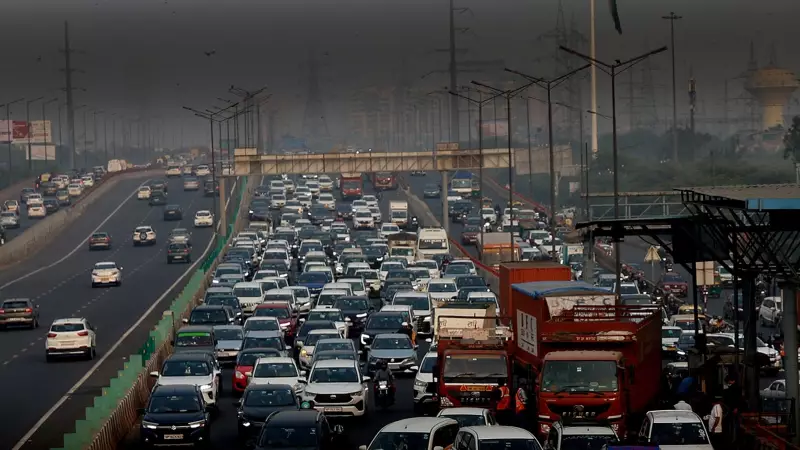
Bengaluru Climbs Global Traffic Rankings, Now Second Most Congested City Worldwide
Bengaluru has once again secured a top spot in global traffic congestion charts, emerging as the second most congested city in the world according to the latest TomTom Traffic Index. The city's notorious traffic situation has worsened, with congestion levels rising to 74.4% in 2025, up from 72.7% the previous year.
Detailed Analysis of Bengaluru's Traffic Woes
The Netherlands-based location technology firm TomTom released its comprehensive traffic analysis on Wednesday, revealing alarming statistics about Bengaluru's mobility challenges. The average time to travel 10 kilometers in the city has increased to 36 minutes and 9 seconds, marking a significant jump from 34 minutes and 10 seconds recorded in 2024.
Key findings from the report include:

- Overall average vehicle speed in Bengaluru during 2025 was recorded at just 16.6 kilometers per hour
- During peak hours, speeds dropped dramatically to 14.6 km/h in the morning and 13.2 km/h in the evening
- Average travel times per kilometer stand at 3 minutes 37 seconds during normal conditions
- During free-flow states, travel times improve significantly to 2 minutes and 4 seconds per kilometer
India's Traffic Congestion Landscape
Within India, Bengaluru leads the congestion charts with its 74% congestion level, followed closely by other major metropolitan areas:
- Pune at 71% congestion
- Mumbai at 63% congestion
- New Delhi at 60% congestion
- Kolkata at 59% congestion
The report highlights stark contrasts in mobility across Indian cities. While the national average distance covered in 15 minutes stands at 5.5 kilometers, Bengaluru commuters can only manage 4.2 kilometers in the same timeframe. During peak morning hours, this distance shrinks further to just 3.6 kilometers, and in the evening, it reduces to 3.3 kilometers.
Global Context and Comparative Analysis
Mexico City claimed the top position as the world's most congested city with a score of 75.9, while Bengaluru secured the second spot globally. The TomTom report emphasizes that Bengaluru consistently features as one of the slowest cities worldwide, with significant slowdowns during peak traffic periods creating substantial challenges for daily commuters.
Across Indian metropolitan cities, the average vehicle speed maintains at 21.9 km/h, while Bengaluru significantly lags behind at 16.6 km/h. This disparity underscores the unique traffic challenges facing India's technology capital.
Root Causes and Urban Planning Challenges
Police and senior civic officials in Bengaluru have identified multiple factors contributing to the worsening congestion:
- Lack of expansion for existing road infrastructure
- Rapid growth in the city's vehicular population
- Ongoing metro construction projects
- Stalled infrastructure initiatives, including incomplete flyovers
The TomTom Traffic Index serves as a crucial benchmark for urban planners and policymakers, highlighting the urgent need for comprehensive transportation solutions in rapidly growing Indian cities. As Bengaluru continues to grapple with these mobility challenges, the report provides valuable data for developing strategies to improve urban transportation efficiency and reduce commute times for millions of residents.