Global Realignment Reshapes Africa-Europe Relations at Luanda Summit
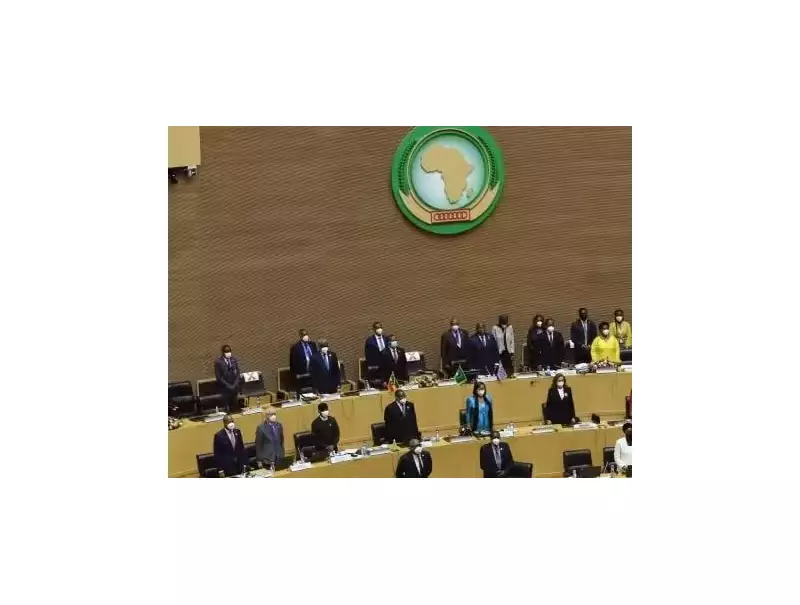
The seventh African Union-European Union Summit in Luanda has unfolded during a period of significant global transformation, fundamentally reframing the relationship between the two continents. Held shortly after the G20 Johannesburg Summit, the timing was strategic, revealing how interconnected global and inter-regional diplomacy have become in today's multipolar world.
The summit represented a dramatic departure from traditional donor-recipient dynamics, instead establishing a new framework of interest-driven cooperation. Climate change, debt sustainability, supply chain security, and institutional reform are no longer isolated issues but interconnected challenges requiring collaborative solutions.
From G20 Johannesburg to AU-EU Luanda: Policy Continuity in Action
The G20 Johannesburg Summit's agenda, built around "Solidarity, Equality, Sustainability", provided the crucial backdrop for the Luanda discussions. Key themes including development finance, debt sustainability, critical minerals, clean energy transition, and global governance reform reappeared almost identically in the AU-EU dialogue.

This similarity was no coincidence. European and African Union leadership played central roles in both forums, ensuring remarkable policy continuity. The African Union, participating in the G20 Sherpa process under South Africa's presidency, effectively used that platform to advance African priorities that later shaped the AU-EU Summit's negotiating agenda.
The result was unprecedented synchronization: global commitments from Johannesburg were rapidly converted into a concrete framework for Africa-Europe cooperation. While the G20 established the political tone, Luanda became the venue where these ideas were anchored in specific regional commitments.
New Partnership Dynamics: From Aid to Strategic Cooperation
This synergy reflects a broader trend where African states are increasingly using global forums to advance their priorities before embedding them in inter-regional partnerships. The passive dynamics that once characterized Africa-Europe relations are giving way to assertive African agency, enabled by shifting global power balances and Africa's growing strategic importance.
Europe, confronting its own needs for critical minerals, secure supply chains, green technologies, and geopolitical stability, now views Africa less through the lens of development assistance and more as an essential strategic partner for Europe's long-term security and economic resilience.
At the Luanda Summit, leaders reaffirmed commitment to a rules-based international order, economic integration, multilateral cooperation, and sustainable development. More significantly, they pledged deepened cooperation on trade, infrastructure, energy, critical minerals, migration, and security—hard issues that will define Africa-Europe relations for the next decade.
Trade, Investment and Infrastructure: Building Economic Bridges
Trade and investment emerged as central pillars of the summit's outcomes. The EU remains Africa's top trading partner collectively and its largest export market, ahead of China, India, and the United States. Currently, the EU has preferential trade agreements with 19 African countries, with 90% of African exports entering the EU market free of import duties.
The EU reiterated strong support for the African Continental Free Trade Area (AfCFTA), which once fully implemented could create the world's largest free-trade area by number of countries, opening new pathways for industrialization and value-added production.
Europe's Global Gateway initiative, with €120 billion already mobilized for African infrastructure, digital connectivity, and clean energy, was presented as Europe's long-term commitment to supporting African development. Within this framework, the Lobito Corridor railway emerged as the flagship project.

Backed by roughly €2 billion in EU financing, the corridor promises to reshape how African minerals reach global markets by connecting the copper and cobalt belts of Zambia and the Democratic Republic of the Congo to the port of Lobito in Angola. This strategic infrastructure reduces reliance on routes dominated by other powers and offers Africa a new logistics backbone that could spur industrialization in landlocked regions.
Energy, Climate and Critical Minerals: The New Strategic Frontiers
Energy and climate action formed another crucial pillar of the summit. Africa's need for reliable, affordable energy is enormous, while Europe's need for green partnerships is equally urgent. The ambitious pledge to provide clean electricity to 100 million Africans by 2030 was announced, though critics emphasize this must be matched by local capacity to operate and maintain energy systems.
Investments in renewables, clean cooking, and climate-resilient infrastructure continued the G20 momentum on climate justice and adaptation finance—long-standing African priorities that have gained international visibility.
The cooperation on critical minerals represented perhaps the most geopolitically charged element of the summit. Through the RESourceEU initiative, Europe seeks a reliable, ethically sourced supply of cobalt, lithium, rare earths and other minerals essential for electric vehicles, batteries, and renewable-energy technologies.
Africa, possessing 30–40% of the world's critical mineral reserves, sees an opportunity to break with historical patterns of exporting raw materials and importing finished products. Summit rhetoric strongly emphasized value addition, local processing, and industrial development—though whether Europe can deliver on these promises remains uncertain.
Migration, Security and Governance: Addressing Complex Challenges
Migration, security, and governance were woven throughout the discussions. Europe expressed concerns about irregular migration, instability in the Sahel, and maritime security, while Africa sought fairer mobility frameworks, development-based solutions, and respect for its sovereignty.
The summit reaffirmed cooperation on counterterrorism, cyber threats, and regional peacekeeping, while also calling for more humane and balanced migration policies. On global governance, both sides backed reforms of the UN Security Council and international financial institutions.
Persistent Challenges and the Path Forward
Despite high ambitions, significant challenges remain. Africa's debt burden continues to undermine development, and without meaningful debt restructuring, new investments could deepen financial stress. Europe's commitment through programs like Global Gateway must be matched by faster, more efficient delivery, as past EU projects have been hampered by bureaucracy, slow disbursement, and fragmented implementation.
While talk of value addition and industrial sovereignty is welcome, African policymakers remain wary that mineral partnerships could revert to familiar patterns of extraction without corresponding industrial development.
Nevertheless, the 2025 AU-EU Summit offers a compelling glimpse of what a modern Africa-Europe partnership could achieve: pragmatic, interest-driven cooperation rooted in mutual benefit rather than paternalism. The convergence with the G20 agenda demonstrates that Africa and Europe now view global and continental challenges as inseparable.
If the Luanda commitments translate into sustained investment, transparent implementation, and genuine respect for African agency, this summit could mark the beginning of a more balanced and forward-looking partnership that benefits both continents in an increasingly multipolar world.