

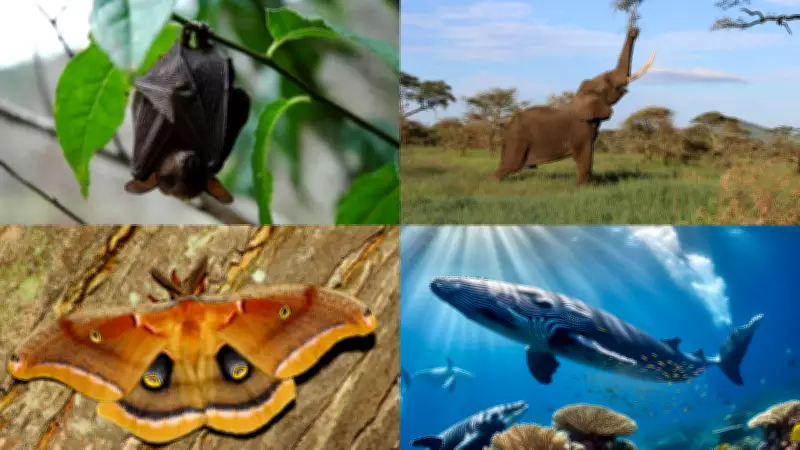
Nature's Giants and Minuscules: Animal Body Parts That Shatter Size Records
The animal kingdom is a realm of astonishing extremes, where evolution has crafted body parts that defy conventional size limits. From organs as massive as vehicles to structures so tiny they are invisible to the naked eye, these biological marvels highlight the incredible diversity and adaptability of life on Earth. This exploration delves into some of the most remarkable examples, showcasing how nature pushes boundaries in ways that continue to captivate scientists and enthusiasts alike.
The Colossal Heart of the Blue Whale
At the pinnacle of size extremes stands the blue whale, the largest animal ever known to have existed. Its heart is a true behemoth, weighing approximately 400 pounds and comparable in size to a small car. This massive organ pumps blood through a circulatory system that supports a body length of up to 100 feet and a weight of around 200 tons. The heart's sheer scale is essential for sustaining the whale's immense energy demands during deep dives and long migrations, making it a testament to evolutionary engineering on a grand scale.
Microscopic Teeth in Tiny Creatures
In stark contrast to the blue whale's heart, some animals possess teeth so minuscule they challenge the limits of perception. For instance, certain species of mites and other microscopic invertebrates have teeth that are only a few micrometers in size, requiring powerful microscopes for observation. These tiny structures are crucial for feeding on minute particles or other small organisms, demonstrating how evolution optimizes form for function even at the smallest scales. Such adaptations ensure survival in niche environments where every micron counts.

Other Record-Breaking Body Parts
Beyond hearts and teeth, the animal world is replete with other body parts that break size records. Consider the following examples:
- Elephant Tusks: African elephants boast tusks that can grow over 10 feet long and weigh more than 100 pounds each, used for digging, defense, and social interactions.
- Giraffe Necks: With necks reaching up to 6 feet in length, giraffes have evolved to access high foliage, supported by specialized vertebrae and a powerful cardiovascular system.
- Antennae of Insects: Some insects, like certain moths, have antennae that are disproportionately long relative to their body size, aiding in sensory perception and mate attraction.
The Science Behind Size Extremes
The development of such extreme body parts is driven by a combination of genetic factors, environmental pressures, and evolutionary history. For large structures like the blue whale's heart, adaptations include efficient oxygen transport and robust muscle fibers to handle immense workloads. Conversely, microscopic teeth in tiny creatures often involve specialized materials and precise growth mechanisms to maintain functionality at a minuscule scale. Researchers study these traits to understand biomechanics, ecology, and the limits of biological design, offering insights into how life thrives across diverse habitats.
Implications for Biodiversity and Conservation
These size extremes are not just curiosities; they play vital roles in ecosystems and highlight the importance of biodiversity. Large body parts can influence an animal's role as a keystone species, while tiny adaptations enable survival in specialized niches. However, many of these remarkable animals face threats from habitat loss, climate change, and human activities. Conservation efforts are crucial to protect species with unique anatomical features, ensuring that future generations can continue to marvel at nature's capacity for extremes. By appreciating these biological wonders, we gain a deeper respect for the intricate balance of life on our planet.






