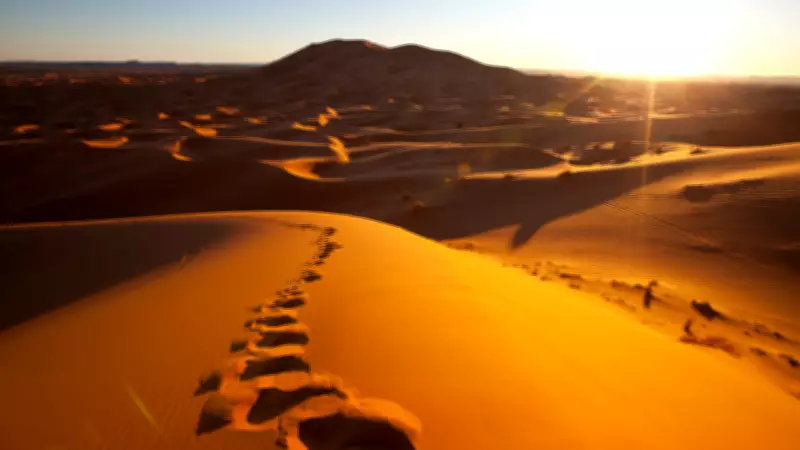
For millennia, the Sahara Desert has represented the ultimate frontier of isolation—a harsh, unforgiving landscape seemingly inhospitable to sustained human existence. Yet long before this vast expanse became the arid desert we know today, parts of North Africa nurtured thriving communities whose genetic legacy is now compelling scientists to fundamentally reconsider how ancient populations migrated, intermingled, and survived across the ages.
A Genetic Anomaly in the Ancient Sands
A landmark study published in the prestigious journal Nature has unveiled a startling discovery: 7,000-year-old mummies unearthed in southwestern Libya belong to a population that defies established genetic expectations for early Saharan inhabitants. Rather than aligning with known sub-Saharan African or Eurasian lineages, these ancient individuals trace their ancestry to a deeply divergent North African genetic branch that remained remarkably isolated for thousands of years.
The Green Sahara and Its Genetic Secrets
Between approximately 14,800 and 5,500 years ago, the Sahara experienced what scientists call the African Humid Period. During this epoch, increased rainfall transformed the region from a barren desert into a vibrant mosaic of lakes, grasslands, wetlands, and savannahs. These favorable ecological conditions supported early human settlements, including Neolithic herding communities that flourished across the landscape.

It was during this verdant period that a group of female herders lived at the Takarkori rock shelter in what is now modern-day Libya. Their naturally preserved remains, discovered at this site, presented a rare opportunity for genetic analysis in a region where DNA preservation is typically extremely poor due to harsh climatic conditions.
Led by archaeogeneticist Nada Salem from the Max Planck Institute for Evolutionary Anthropology, researchers successfully extracted fragmented genetic material from two of these ancient mummies. Despite working with limited and degraded data, the results proved nothing short of revolutionary for our understanding of human prehistory.
"The majority of Takarkori individuals' ancestry stems from a previously unknown North African genetic lineage that diverged from sub-Saharan African lineages around the same time as present-day humans outside Africa and remained isolated throughout most of its existence," the researchers emphasized in their Nature publication.
Surprising Genetic Connections and Divergences
Genetically, the Takarkori individuals show their closest kinship to 15,000-year-old foragers discovered at Taforalt Cave in present-day Morocco. Both populations demonstrate a similar genetic distance from sub-Saharan African groups of the same era, indicating limited gene flow between northern and sub-Saharan Africa even during the Green Sahara period when ecological conditions were more favorable for movement and interaction.
The comparative analysis also revealed unexpected patterns concerning Neanderthal ancestry. While the Taforalt population carries approximately half the Neanderthal DNA found in contemporary non-African populations, the Takarkori individuals possess about ten times less than that amount—yet still more than modern sub-Saharan groups. This intriguing finding suggests that although the Takarkori people had less contact with Neanderthals than some other North African populations, they were not completely isolated from groups outside the African continent.
Researchers additionally detected faint evidence of genetic admixture with Levantine farmers, though the Takarkori gene pool remained predominantly distinct and preserved its unique characteristics across generations.
Cultural Diffusion Without Mass Migration
For decades, archaeologists have operated under the assumption that pastoralism and early farming practices spread across North Africa primarily through waves of human migration. The Takarkori findings powerfully challenge this long-held hypothesis, offering a different narrative about how cultural practices disseminated across ancient landscapes.

"Our findings suggest that pastoralism spread through cultural diffusion into a deeply divergent, isolated North African lineage that had probably been widespread in Northern Africa during the late Pleistocene epoch," the study authors explained.
Rather than being replaced or absorbed by incoming populations, the ancestors of the Takarkori people appear to have adopted new practices through cultural exchange and knowledge transfer. Their hunter-gatherer forebears already exhibited signs of remarkable technological sophistication, producing pottery, baskets, and tools crafted from wood and bone, while maintaining settled locations for extended periods.
Researchers theorize that the ecological diversity of the Green Sahara itself may explain why these populations remained genetically isolated despite sharing a landscape. Vast differences between wetlands, savannahs, woodlands, and mountainous regions would have naturally limited sustained interaction between groups, even within a generally greener and more hospitable environment.
A Lost World Beneath the Sands
As the Sahara gradually dried and transformed into the formidable desert known today, much of this rich human history became buried beneath layers of sand, seemingly lost to time. The Takarkori mummies offer a precious glimpse into that vanished world, suggesting that many more discoveries likely await that will further complicate and enrich our understanding of ancient human ancestry.
This groundbreaking research not only rewrites chapters of North Africa's prehistoric narrative but also demonstrates how genetic evidence can illuminate the complex interplay between environment, culture, and human movement across millennia. As scientists continue to explore the genetic legacy of ancient populations, each discovery brings us closer to understanding the intricate tapestry of human history that has shaped our species' journey across the planet.