

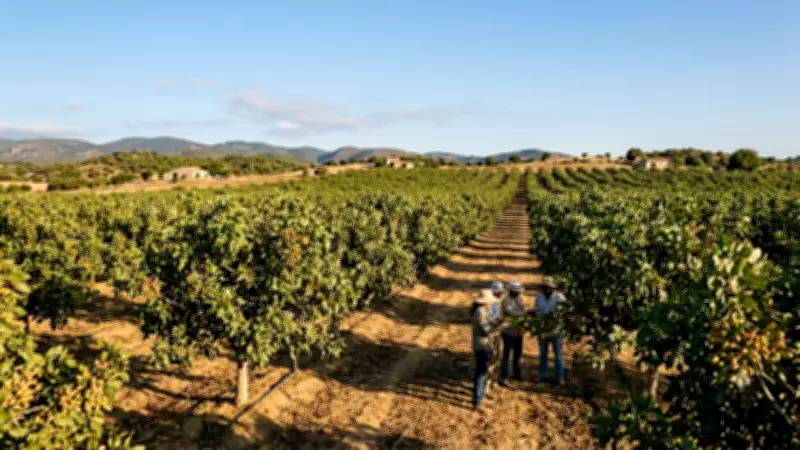
For decades, Afghanistan's environmental story was dominated by war, deforestation, and shrinking forests. From the pistachio woodlands of Badghis to the poplar-lined valleys of the northeast, millions of trees disappeared as conflict, fuel shortages, illegal logging, and poverty reshaped the country's landscapes. Researchers estimate that around 50 per cent of Afghanistan's forest cover was lost between the 1979 Soviet invasion and the early 2000s.
Yet a quieter transformation is now taking place. Across provinces including Parwan, Baghlan, Kabul, and Badghis, communities are planting poplars, pistachios, deodar cedars, walnuts, and native species to restore degraded land. From village-led micro-forests to national tree-planting campaigns targeting 200 million trees by 2030, Afghanistan is rediscovering the ecological, economic, and cultural value of trees. The effort is not only about restoring forests but also rebuilding soil health, biodiversity, water resilience, and rural livelihoods. In a country often defined by conflict, the return of trees is becoming a rare story of long-term recovery rooted in the landscape itself.
Why Afghanistan lost half its forest cover and millions of pistachio trees
Afghanistan's forests have faced sustained pressure for more than four decades. According to Mohammad Nasir Shalizi, from the Department of Forestry and Environmental Resources, North Carolina State University, approximately 50 per cent of the country's forest cover disappeared between 1979 and the fall of the first Taliban government. Timber smuggling, particularly along eastern border regions, accelerated forest loss, while communities in Afghanistan's dry northern "pistachio belt" relied heavily on wood for cooking and heating.

The decline was particularly severe for Afghanistan's native pistachio forests. The Food and Agriculture Organization has reported that the country once supported more than 450,000 hectares of pistachio woodland, much of it concentrated in Badghis Province. Years of overgrazing, tree cutting, conflict, and limited management severely reduced these ecosystems. Pistachio forests are more than a source of nuts. They stabilise fragile soils, support wildlife habitats, and provide income for rural communities. Afghanistan remains one of the natural centres of distribution for wild pistachio species, making their conservation globally significant.
How poplar plantations and micro-forests are changing local communities
One of the most visible restoration efforts is taking place through community-managed micro-forests. In Char Bagh, a one-square-kilometre grove supported by the Aga Khan Development Network contains poplars, paulownias, pomegranates, persimmons, and other species. The site follows the Miyawaki method developed by Japanese botanist Akira Miyawaki, which uses dense planting of mixed species to accelerate ecosystem recovery.
Parisa Malikzada, Afghanistan agriculture coordinator for the programme, told the Dawn: "Micro-forests restore ecosystems, improve soil fertility, help climate resilience, and support community livelihood." The benefits are measurable. Residents report cooler conditions within the forested areas, reduced soil erosion during floods, fodder for livestock, and improved access to fuelwood from managed pruning rather than destructive harvesting. Some villages have also observed the return of bird species that had largely disappeared from surrounding landscapes.
Afghanistan's ambitious plan to plant 200 million trees by 2030
Tree restoration is now being pursued on a national scale. Afghan authorities have announced a target of planting hundreds of millions of trees between 2023 and 2030. Meanwhile, reports state that between 2021 and 2023, the Food and Agriculture Organization (FAO) and the Global Environment Facility (GEF) have reseeded 1.5 million pistachio seedlings across 3,100 hectares in Badghis province. Rohullah Amin, head of climate change at the General Environmental Protection Agency, also told the Dawn that a target of eight million trees in one recent planting season ultimately resulted in 17 million trees being planted. The next annual target has been set at nine million.

The Food and Agriculture Organization (FAO) has also supported the planting of 35,000 hectares of land since 2019 through community forestry programmes and restoration initiatives. Nurseries around Kabul and other provinces now cultivate species including walnut, pine nut, almond, deodar cedar, and native forest trees for distribution nationwide.
Challenges remain substantial. Water scarcity, drought, grazing pressure, and the survival of young saplings continue to limit restoration success. In some locations, drought has killed as much as 70 per cent of newly planted pine trees, highlighting the importance of species selection and long-term maintenance.
Why trees are becoming central to Afghanistan's environmental future
Though Afghanistan still ranks among the least forested nations in Asia, with an estimated forest coverage of just 2.5 percent by 2025 due to previous gains, the progress currently being made proves how such stewardship can help restore decades of environmental degradation. From the forests of pistachio trees that previously covered hillsides in the north to plantations of poplar trees that safeguard against erosion in villages, trees are increasingly regarded as infrastructure rather than as decorations. Trees serve many purposes, including carbon storage, soil improvement, water management, and the encouragement of biodiversity. In Afghanistan, growing back the trees is now about much more than the environment; it is also about investing in food security and climate resistance.





