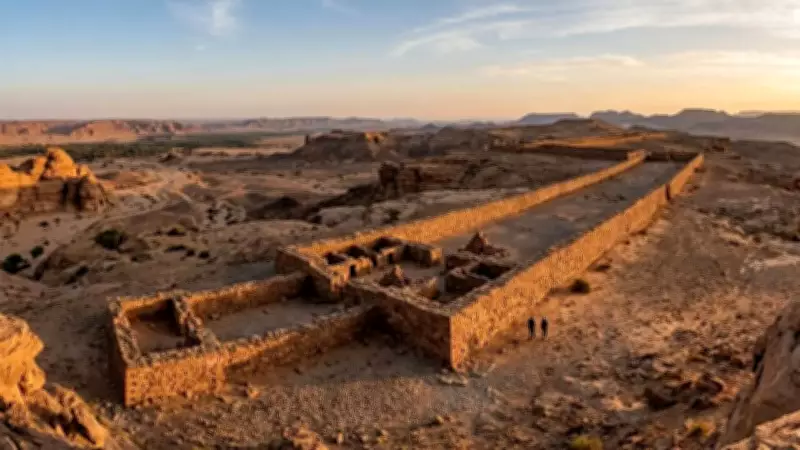
Archaeologists have uncovered an extensive prehistoric ritual landscape in Northwest Arabia, featuring massive rectangular stone structures known as 'mustatils.' These monuments, dating back approximately 7,000 years to the Late Neolithic period, were constructed long before the Pyramids of Giza or Stonehenge. Recent excavations funded by the Royal Commission for AlUla have revealed that these structures were not merely markers but served as complex centers for communal gatherings and ritual animal sacrifices. Constructed from local sandstone, some mustatils stretch over 600 meters in length, representing one of the earliest traditions of large-scale monument construction worldwide. These discoveries offer crucial insights into a sophisticated and socially cohesive society that thrived in what was once a fertile 'Green Arabia.'
Mustatil Monuments Transform Understanding of Neolithic Societies
According to a study by Cambridge University, the 'mustatils' have completely transformed our knowledge of Neolithic societies. Research indicates that these structures emerged during a period of increased rainfall, which allowed pastoralist groups to flourish. Rather than focusing on individual burials, these large stone constructions indicate extensive teamwork and shared beliefs across wide areas. Excavations at the head sections of these sites have frequently uncovered skull fragments from cattle, goats, and gazelles, suggesting that the sites were used for ritual offerings.
What the Animal Bones Revealed
Digging at specific locations, such as the mustatil near the AlUla oasis, has provided concrete evidence of the rituals performed there. Scientists used radiocarbon dating on animal bones found in the central chambers and determined that these activities occurred around 5,000 BCE. This discovery indicates that the builders were early herders who constructed these structures as a means of coping with environmental challenges through spiritual practices.

Droughts Shaped Neolithic Spirituality
Remote sensing and aerial surveys have identified over 1,600 mustatils scattered across more than 300,000 square kilometers. The architectural consistency—comprising a head, long walls, and an entrance—suggests a unified cultural tradition. The sheer scale of construction implies that hundreds of people collaborated on a single monument, reflecting an early form of regional territoriality. The construction of mustatils coincided with the 'Holocene Humid Period,' when the Arabian Peninsula featured lush grasslands and permanent lakes. Geological data suggests that the move toward monumentality may have been a response to periodic droughts, as communities gathered at these sites to perform rituals intended to ensure the return of rains and the fertility of their herds.