

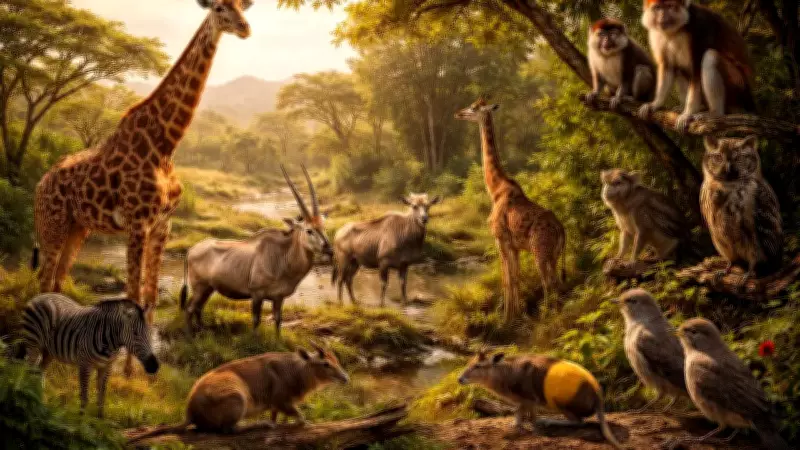
10 Rare and Extraordinary Animals Found Exclusively in Kenya
When envisioning Kenya, the mind often conjures images of classic safari landscapes: vast savannahs, majestic lions prowling, and colossal elephants traversing the terrain. However, this iconic scenery merely scratches the surface of Kenya's profound biodiversity. The nation harbors a remarkable collection of rare animal species, many found nowhere else on Earth, which are integral to Kenya's ecological identity and heritage.
The uniqueness of these creatures stems from their evolution within specific Kenyan ecosystems, adapting to thrive in distinct habitats. Numerous species highlighted here are listed on conservation registries like the IUCN Red List, underscoring their vulnerability and the critical need for protection.
Hinde’s Babbler
The Hinde’s Babbler is a highly social bird endemic to central Kenya. Unlike many forest-dwelling birds, it inhabits scrublands and farmlands, living in colonies and communicating through intricate vocalizations and body language. Unfortunately, habitat destruction and changes in land use have precipitated a significant decline in its population.

Sokoke Scops Owl
This diminutive owl is exclusive to the coastal forests of Kenya. Known for its elusive nature, its coloration provides perfect camouflage within its environment. The Sokoke Scops Owl is critically dependent on these forest habitats, which are increasingly endangered due to deforestation and human encroachment.
Beisa Oryx
Adapted to Kenya's arid climates, the Beisa Oryx is a striking antelope with long, straight horns and a pale coat. Its remarkable ability to survive prolonged periods without direct water intake—extracting moisture from vegetation—allows it to flourish in harsh, dry conditions where few other species can persist.
Gerenuk
Among the most extraordinary antelopes, the Gerenuk is distinguished by its elongated neck and unique ability to stand upright on its hind legs. This adaptation enables it to reach foliage inaccessible to other herbivores. Native to Kenya's arid regions, it has evolved to thrive in environments with limited water availability.
Reticulated Giraffe
Instantly recognizable by its net-like geometric patterns, the Reticulated Giraffe is primarily found in northern Kenya's dry savannas. Its distinctive appearance has made it a symbol of the region's unique fauna, representing the specialized adaptations of Kenyan wildlife.
Grevy’s Zebra
Grevy’s Zebra stands apart from other zebra species with its narrower stripes and larger stature. Inhabiting the northern dry and semi-arid areas of Kenya, it has adapted to survive in challenging terrains with scarce water sources, showcasing remarkable resilience.
Golden-Rumped Elephant Shrew
Despite its name, this small mammal is not closely related to shrews. Endemic to Kenya's coastal regions, it is noted for its swift movements and a distinctive golden patch on its rump. Habitat loss has led to a drastic decline in its population, threatening this unique creature.
Tana River Mangabey
This endangered primate is a social species that spends much of its time foraging and interacting within groups. Highly dependent on its forest habitat along the Tana River, the Tana River Mangabey faces significant threats from environmental changes and deforestation.
Tana River Red Colobus
Characterized by its reddish coat and expressive features, the Tana River Red Colobus Monkey is restricted to the tropical rainforests near Kenya's Tana River. It relies heavily on specific tree species for food and shelter, making it particularly vulnerable to the escalating rates of deforestation.
Hirola
Often cited as one of the world's rarest antelopes, the Hirola is confined to a small region straddling Kenya and Somalia. It is critically endangered, with a precipitous drop in numbers. As the sole surviving species of its genus, its extinction would mean the permanent loss of an entire evolutionary lineage.
These ten species exemplify the extraordinary and often overlooked biodiversity of Kenya. Beyond the famed safari icons, these rare animals highlight the importance of conservation efforts to preserve Kenya's unique natural heritage for future generations.






