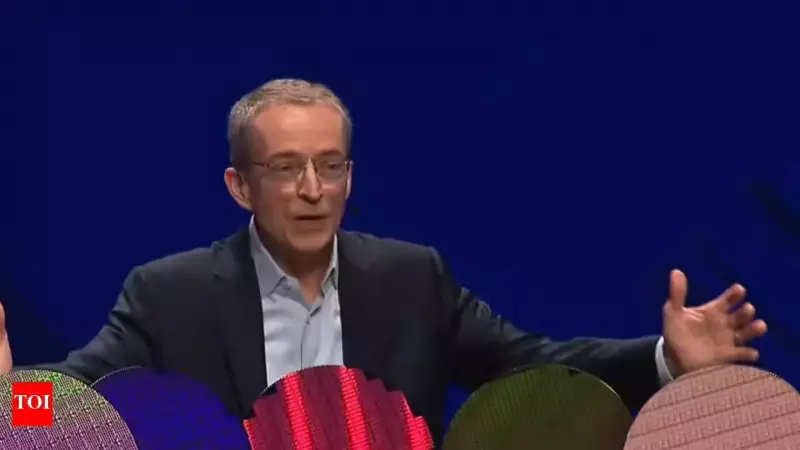
In a landmark move to reclaim America's technological sovereignty, the US government is poised to become a direct shareholder in a pioneering semiconductor startup. The company, xLight, is chaired by former Intel CEO Pat Gelsinger, a veteran of the chip industry.
A First-of-its-Kind Equity Deal Under CHIPS Act
On December 1, the US Commerce Department announced it had signed a non-binding letter of intent to invest up to $150 million in Palo Alto-based xLight. Crucially, this investment will be structured as an equity deal, marking the first time the federal government will take a direct ownership stake in a private company through its CHIPS Research and Development Office. This strategic step was initiated by the Trump administration.
Commerce Secretary Howard Lutnick framed the decision as a geopolitical imperative. "For far too long, America ceded the frontier of advanced lithography to others. Under President Trump, those days are over," Lutnick stated in an official press release. He emphasized that the partnership seeks to secure a critical domestic capability, backing a technology that could "fundamentally rewrite the limits of chipmaking" on home soil.

xLight's Mission: Disrupting Chipmaking with New Tech
Founded in 2021, xLight is targeting the heart of modern semiconductor production: Extreme Ultraviolet (EUV) lithography. This complex process, essential for manufacturing the world's most advanced chips, is currently dominated by the Dutch firm ASML. xLight is developing free-electron laser technology as an alternative light source for these machines.
The startup claims its innovation will enhance ASML's EUV systems, enabling a transformation in semiconductor fabrication capabilities while dramatically reducing both capital and operating expenses. Pat Gelsinger believes xLight has the potential to "drive the next era of Moore's Law," referring to the decades-old principle of exponentially increasing computing power.
Gelsinger's Role and the Push for US Leadership
Pat Gelsinger's involvement is a significant aspect of this story. After spending decades at Intel and serving as a key advocate for the landmark 2022 CHIPS and Science Act, he now chairs xLight. He has been candid about Intel's past missteps, publicly acknowledging that the company "made a set of bad decisions over 15 years" and was "late on AI as well."
This government investment represents a concrete attempt to correct such strategic errors on a national scale. The Commerce Department views the alliance with xLight as crucial for building a secure, domestic supply chain for the most sophisticated chipmaking tools, reducing reliance on foreign technology.
The deal underscores a new, interventionist approach by the US in the global tech race, using the financial muscle of the CHIPS Act not just for grants but for direct strategic stakes in promising companies that could define the future of the industry.