

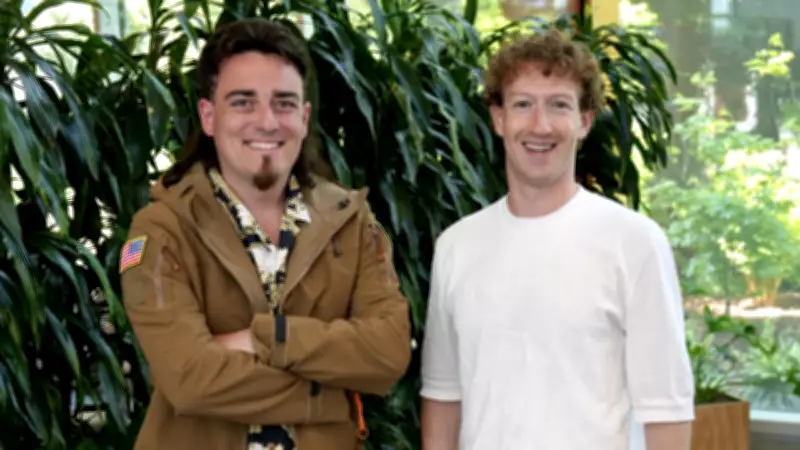
Palmer Luckey: Silicon Valley's Most Unconventional Tech Visionary
Palmer Luckey stands as one of the most unconventional and fascinating figures to emerge from Silicon Valley in the past decade. A self-taught tinkerer who developed his skills building experimental gadgets in his parents' garage, Luckey transformed a niche obsession with virtual reality into a global technological breakthrough that reshaped an entire industry.
The Garage Origins of a VR Revolution
Luckey's early years were defined by relentless curiosity and hands-on experimentation. Homeschooled and largely self-directed, he spent his teenage years constructing everything from sophisticated lasers to custom-built computing systems. His fascination with virtual reality grew into a serious pursuit as he collected dozens of vintage and modern VR headsets, meticulously studying their limitations and potential.
This deep immersion in VR technology culminated in 2012 when, at just 19 years old, Luckey created the groundbreaking Oculus Rift prototype. His innovation solved persistent issues that had plagued VR systems for decades, including motion lag and narrow field of view. The device delivered unprecedented levels of immersion that earlier systems had failed to achieve, immediately capturing attention from industry veterans like legendary programmer John Carmack.

Crowdfunding Success and Industry Transformation
To bring his vision to life, Luckey launched a historic crowdfunding campaign that shattered all expectations. Seeking $250,000 in initial funding, the campaign astonishingly raised over $2.4 million, demonstrating massive global interest in consumer virtual reality. This remarkable success transformed Oculus from a passionate hobbyist's project into a serious startup poised to revolutionize technology.
Developers, investors, and major technology corporations began taking serious notice, positioning the young entrepreneur at the center of a rapidly emerging industry that promised to change how people interacted with digital content.
The $2 Billion Facebook Acquisition
In 2014, Facebook made one of the most significant technology acquisitions of the decade, purchasing Oculus for $2 billion. This landmark deal underscored Facebook's ambitious vision to dominate the future of immersive computing and social interaction. For Luckey, still in his early twenties, the acquisition proved life-changing, catapulting him into the spotlight as the public face of modern virtual reality.
He became a frequent presence at technology events and media appearances, celebrated as the visionary who had brought VR back from science fiction into technological reality. However, this rapid ascent also placed him under intense public scrutiny that would soon lead to unexpected challenges.
Political Controversy and Corporate Departure
Luckey's trajectory took a dramatic turn in 2016 when media reports revealed his political activities. According to multiple sources at the time, he had donated approximately $10,000 to Nimble America, a pro-Donald Trump group known for producing anti-Hillary Clinton memes during the presidential campaign.
Additional reports suggested Luckey had participated in online discussions under pseudonyms, further amplifying the controversy. These revelations triggered significant backlash within segments of the technology community, with some developers organizing boycotts of Oculus products.
While Luckey later clarified aspects of his involvement, the incident created substantial internal tensions at Facebook. By 2017, he had departed the company, though Mark Zuckerberg never publicly detailed the specific reasons for his exit. Subsequent reports indicated Luckey received a substantial financial settlement as part of his departure agreement.
This episode marked a definitive turning point, transforming him from Silicon Valley's celebrated rising star into a controversial figure navigating professional uncertainty.

Anduril Industries: A Dramatic Second Act
Rather than retreating from technology, Luckey executed one of the most remarkable pivots in modern business history. In 2017, he founded Anduril Industries, named after a legendary sword from J.R.R. Tolkien's The Lord of the Rings. Backed by influential investor Peter Thiel, the company focused on applying cutting-edge software and artificial intelligence to defense and national security challenges.
Anduril's fundamental approach represented a radical departure from traditional defense contractors, emphasizing agile software development, artificial intelligence, and autonomous systems over slower, hardware-centric development cycles that had characterized the defense industry for decades.
Building a Defense Technology Powerhouse
Anduril Industries rapidly established itself as a disruptive force within the defense sector. The company's innovative technologies include sophisticated autonomous drone systems, AI-powered surveillance platforms, and comprehensive battlefield software designed to process real-time intelligence data with unprecedented speed and accuracy.
The company secured major contracts with United States defense agencies, including significant work related to border surveillance systems and military operations. Over time, Anduril expanded its footprint dramatically, reportedly taking over critical programs such as advanced military headset projects previously associated with established technology giants.
By the mid-2020s, Anduril had grown into a multi-billion-dollar enterprise, with annual revenues crossing significant milestones and company valuations reportedly exceeding $30 billion. Its systems have been deployed in real-world operational scenarios, highlighting the increasingly vital role private technology firms play in modern national security frameworks.
From Virtual Reality to National Security
Luckey's transition from virtual reality pioneer to defense technology strategist represents one of the most striking career pivots in contemporary technology history. While Oculus focused primarily on entertainment, gaming, and immersive experiences, Anduril operates within high-stakes environments involving surveillance, security, and modern warfare.
This dramatic shift reflects broader trends of Silicon Valley expertise migrating into defense sectors, where software innovation, artificial intelligence, and automation are becoming increasingly central to military capabilities. Luckey, once celebrated primarily for building revolutionary gaming hardware, now influences how advanced military systems are designed, developed, and deployed on a global scale.
The Unconventional Billionaire Persona
Despite his substantial influence and professional achievements, Luckey continues to defy conventional expectations. He maintains a distinctly casual personal style, frequently attending high-level meetings and defense industry events wearing Hawaiian shirts and flip-flops. This personality contrasts sharply with the traditional image of defense industry executives in suits and formal attire.
He has also pursued unusual side projects that reflect his enduring fascination with technology and gaming culture, including experimental VR concepts and personal collections that showcase his unique approach to innovation and problem-solving.
A Story of Controversy, Reinvention, and Lasting Influence
Palmer Luckey's professional journey defies simple categorization as a straightforward success story. Instead, it presents a complex narrative shaped by rapid technological innovation, public controversy, and a remarkable professional comeback that few could have predicted.
From constructing a revolutionary VR headset in a suburban garage to leading a company that works closely with the Pentagon and defense agencies worldwide, his career illustrates how quickly fortunes can change within the dynamic technology landscape. His story also highlights how technological influence is no longer confined to consumer products but increasingly extends into geopolitics, national security, and global defense strategies.
Ultimately, Luckey's narrative transcends mere business achievement. It represents a powerful case study in professional reinvention, demonstrating how individuals can adapt to significant setbacks and emerge with even greater impact in entirely different arenas. His journey continues to inspire discussions about the evolving relationship between Silicon Valley innovation and traditional sectors like national defense, marking him as one of the most intriguing figures in contemporary technology.





