

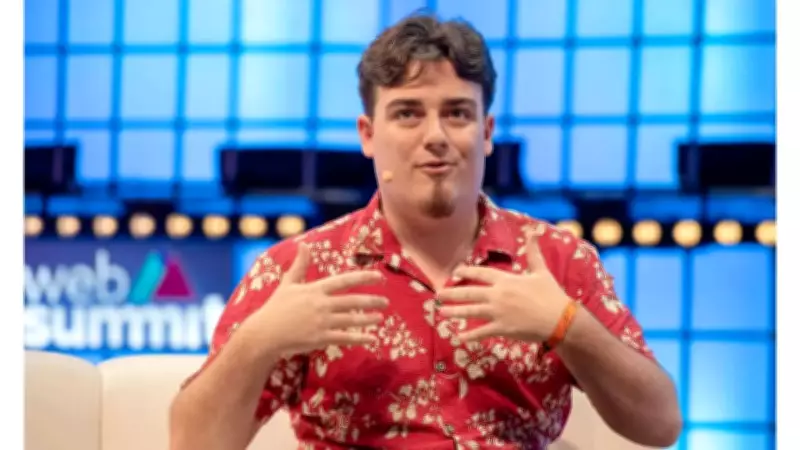
The Meteoric Rise and Sudden Fall of Palmer Luckey
At just 21 years old, Palmer Luckey achieved what many entrepreneurs only dream of when Meta, then Facebook, acquired his virtual reality startup Oculus VR in March 2014. The staggering $2 billion deal instantly catapulted Luckey into the ranks of the youngest self-made billionaires, marking one of the most significant tech acquisitions of the decade.
Zuckerberg's Vision and the Promise of VR
Meta CEO Mark Zuckerberg heralded the acquisition as a strategic move toward future platforms, stating, "Mobile is the platform of today, and now we're also getting ready for the platforms of tomorrow. Oculus has the chance to create the most social platform ever, and change the way we work, play and communicate." The statement reflected high hopes for virtual reality's transformative potential under Meta's umbrella.
The Controversial Exit from Meta
However, the narrative took an unexpected turn just three years later. In March 2017, Palmer Luckey departed from Meta amid a firestorm of controversy. Reports surfaced linking his political contributions and financial support to far-right groups and internet trolls. Luckey later confirmed in a CNBC interview that he was fired, claiming it was for "no reason at all."

He specifically pointed to a $10,000 donation to a pro-Trump group as a likely factor, emphasizing, "it wasn't my choice to leave." Despite the personal setback, Luckey maintained that selling Oculus to Meta was "the best thing that ever happened to the VR industry even if it wasn't super great for me." Since his exit, he has been an open supporter of Donald Trump.
Rebirth in Defense Technology with Anduril Industries
Undeterred by his Meta departure, Palmer Luckey founded Anduril Industries in 2017, pivoting from consumer virtual reality to security and defense technology. The startup quickly secured major contracts from U.S. defense agencies, establishing itself as a formidable player in the sector.
Navigating the Shift from VR to Military Contracts
In a recent interview, Luckey contrasted the agility of VR development with the complexities of defense work. "With VR, the only thing stopping us from launching a new headset was whether it was finished and ready to launch. You can't do that with the military. You're moving at someone else's pace," he explained.
He also critiqued the defense industry's cost-plus contracting model, noting its "perverse incentives" where profits increase with delays, expenses, and failures. "If I relied on the government to give me money to start development, I'd have to wait years just to even start," Luckey added, highlighting the challenges of innovation in this field.
Zuckerberg's Praise and Ongoing Respect
Despite the contentious split, Mark Zuckerberg has publicly expressed admiration for Luckey. In a statement to Tablet, Zuckerberg said, "I have a huge amount of respect for Palmer and hoped we could find ways to work together in the future." He described Luckey as "an impressive free-thinker and fun to work with," adding, "I was sad when his time at Meta came to an end, but the silver lining is that his work at Anduril is going to be extremely important for our national security. I'm glad an entrepreneur of his caliber is working on these problems."
Luckey's Perspective on Meta's Recent Layoffs
Earlier this year, Palmer Luckey weighed in on Meta's decision to cut 1,500 jobs in its Reality Labs division, sharing a contrarian view on social media. He argued that the layoffs were not a disaster, noting that Meta still employs the largest VR team by a significant margin.
He dismissed the narrative that Meta is abandoning VR as "obviously false," explaining that a 10% reduction in staff equates to about six months of normal turnover condensed into two months. Luckey pointed out that most of the eliminated roles were in first-party content development, which directly competed with third-party developers.

"Change always sucks because people lose their jobs in the process, but in a world of limited resources, Meta heavily subsidizing their own at the expense of core technical progress and platform stability doesn't make sense. Crowding out the rest of the entire ecosystem, even less so," he wrote.
He acknowledged the high quality of Meta's internal games but argued this exacerbated the problem by making competition untenable for independent developers. Reflecting on his Oculus days, Luckey cited the commercial failure of Rock Band VR as a lesson in market realities, concluding, "I feel really bad for the people impacted, but this is a good thing for the long-term health of the industry, especially the ongoing incentives."





