

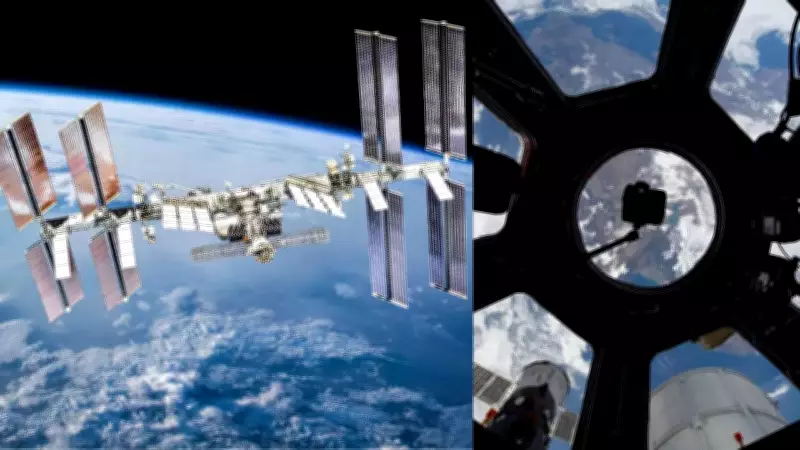
In a significant move to bolster commercial spaceflight activities, NASA has officially confirmed its partnership with Axiom Space for a fifth private astronaut mission to the International Space Station. This mission, designated as Axiom Mission 5, is scheduled to launch no earlier than January 2027 from the historic Kennedy Space Center in Florida.
Expanding Commercial Access to Low Earth Orbit
This announcement marks a continuation of NASA's strategic initiative to open low Earth orbit to commercial operators while maintaining the International Space Station's operational productivity. Following four previous private missions that transported non-government astronauts to the orbiting laboratory for brief research-focused stays, Axiom Mission 5 represents the normalization of such commercial ventures.
These missions have evolved from experimental side projects to routine components of space station utilization, playing a crucial role in shaping future plans for human exploration beyond Earth's orbit. The partnership reflects NASA's broader vision of transitioning spaceflight activities toward greater commercial involvement while reducing dependence on exclusively government-funded programs.

Mission Details and Operational Framework
Axiom Mission 5 will transport a private crew to the International Space Station for an approximate two-week duration. The precise launch timing will depend on the station's docking schedule and resource availability, as multiple spacecraft must coordinate their access to the orbiting facility.
The mission framework involves a reciprocal service arrangement between NASA and Axiom Space:
- Axiom Space will propose four crew members for the mission, subject to review and approval by NASA and its international partners before training commences
- Selected astronauts will undergo comprehensive training alongside NASA teams and launch providers
- Axiom Space will compensate NASA for essential services including food provisions, cargo delivery, storage facilities, and daily station utilization
- NASA will purchase from Axiom Space the capability to return sensitive scientific samples to Earth, particularly those requiring temperature-controlled transportation
Strategic Selection and Future Planning
NASA selected Axiom Mission 5 from proposals submitted in early 2025, demonstrating the agency's systematic approach to commercial partnership development. The space agency is already preparing for subsequent private missions following Axiom Mission 5, with plans to disclose further details in the coming period.
Axiom Space's Expanding Role in Space Infrastructure
Axiom Space has established itself as a prominent commercial space company specializing in human spaceflight and orbital infrastructure development. Beyond organizing private astronaut missions, the company is actively developing Axiom Station – a planned successor to the International Space Station designed to support ongoing research, innovation, and sustained commercial activities in low Earth orbit.
The company's technological portfolio includes next-generation spacesuits engineered for future lunar missions, positioning Axiom Space as a multifaceted contributor to space exploration advancement. Through these comprehensive efforts, the company aims to broaden space accessibility and foster growth within an expanding space economy that extends beyond traditional government-led initiatives.
NASA's Vision for Commercial Space Development
NASA views private astronaut missions as instrumental in cultivating a more commercially oriented spaceflight ecosystem. The agency believes that enabling corporate entities to conduct operations in low Earth orbit helps accumulate valuable experience and technological capabilities that NASA can subsequently leverage for more ambitious objectives, including future missions to the Moon and Mars.
For NASA, the International Space Station serves as an essential testing environment where private astronauts can conduct experiments, trial innovative technologies, support scientific research, and simultaneously generate new business opportunities in space. Agency officials emphasize that this collaborative approach strengthens the emerging space economy without compromising the station's fundamental scientific mission.






