NASA's Curiosity Rover Discovers Intriguing Coral-Like Rock on Martian Surface
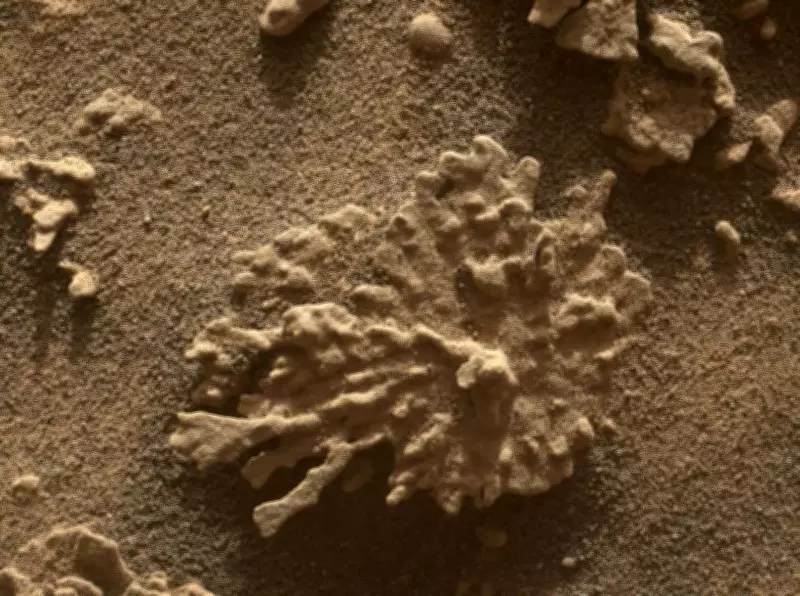
In a fascinating discovery during its routine surface operations, NASA's Curiosity rover has transmitted a close-up image of a small rock on Mars that bears a striking resemblance to coral formations found on Earth. This geological feature, measuring just a few centimetres across, has captured significant attention for its unique appearance, adding to the growing catalogue of unusual formations documented by the rover over the years.
Detailed Imaging Reveals Intricate Structure
The remarkable image was captured using Curiosity's sophisticated Mars Hand Lens Imager (MAHLI), which is mounted on the end of its robotic arm. Positioned merely a few centimetres away from the rock, the camera provided exceptional clarity, revealing intricate surface details that highlight the formation's knotted and branching structure. This visual characteristic is what prompted scientists to draw comparisons with terrestrial coral, though researchers emphasize that the shape results from natural erosion processes rather than biological growth.
Scientists explain that wind erosion has gradually removed softer material surrounding harder mineral deposits, leaving behind the raised, coral-like shape. While similar features have been observed previously on Mars, this particular formation stands out as more visually striking, offering a clearer glimpse into the planet's geological history.

Ancient Water Processes Shaped Martian Rocks
Researchers believe this rock formation dates back billions of years to a time when Mars still harbored liquid water at or near its surface. Water flowing through cracks in the rock carried dissolved minerals, which later hardened in place as the water disappeared. Over immense periods, persistent wind erosion stripped away the surrounding rock material, exposing the mineral-filled structure that we see today.
This process is not unique to Mars; on Earth, similar erosion mechanisms can be observed in desert landscapes and coastal regions, often producing delicate and oddly shaped formations. The discovery thus provides a tangible connection between geological processes on both planets, enhancing our understanding of planetary evolution.
Curiosity's Legacy of Documenting Unusual Formations
Since its historic landing in 2012, Curiosity has documented numerous rocks and formations that appear unfamiliar at first glance. From flower-like structures to spherical shapes and layered stacks, each discovery has been traced back to known geological processes. The coral-like rock fits seamlessly into this pattern, serving as another piece of evidence supporting existing theories about water activity, mineral deposition, and erosion on Mars.
Rather than altering fundamental perceptions of Mars, this find reinforces established ideas, contributing to a cumulative understanding of the planet's past. Over time, such small confirmations prove more valuable than isolated dramatic discoveries, as they build a consistent narrative of Martian history.
Why Minor Details Hold Scientific Significance
Curiosity's mission is fundamentally designed around accumulation rather than surprise. The rover operates methodically, analyzing chemistry, textures, and structures to compile a comprehensive record of Martian geology. A rock like this helps scientists confirm how minerals behaved under specific Martian conditions and test models related to erosion and climate dynamics.
Even when explanations align with familiar terrestrial processes, observing them on another planet boosts confidence in scientific models, demonstrating that our understanding of geological principles extends beyond Earth. This incremental approach ensures that each discovery, no matter how small, contributes meaningfully to the broader scientific endeavor.
Steady Progress in Mars Exploration
The coral-shaped rock, while intriguing, is unlikely to redirect the course of Mars research or be revisited extensively. Curiosity will continue its journey across the Martian landscape, scanning new terrain and collecting further quiet details. Over time, these accumulated observations form an extensive record of a planet that once hosted flowing water on its surface before gradually losing it.

The story of Mars does not unfold through sudden revelations but through patient, piece-by-piece discoveries like this one. Each image and data point adds weight to our understanding, slowly painting a clearer picture of how the Red Planet evolved over billions of years.