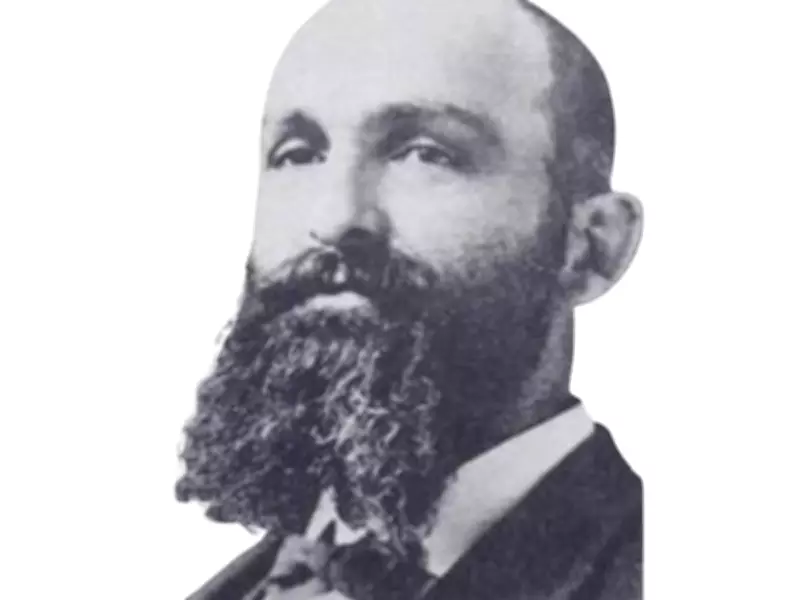
The zipper was not originally part of everyday dress; it began as a practical solution for heavy shoes. In the late 19th century, an American inventor named Whitcomb Judson developed an early clasp-type fastener. His primary goal was to replace the time-consuming laces and lacing systems used in both men's and women's shoes at the time. According to the Lemelson-MIT report, he demonstrated his clasp-lock at the 1893 Chicago World's Fair.
That meant the invention was aimed at practical footwear rather than fashion. It was designed to save time and effort when getting dressed. But the initial model wasn't exactly stylish. According to the Lemelson-MIT biography, the first version was prone to jamming and unreliable, though it could work in some situations. The first version combined useful features with serious flaws, making it an unwieldy prototype. The story of zippers began by causing inconvenience and not with polished perfection.
Early Challenges and Improvements
Even useful inventions must be reliable, and Judson's fastener lacked consistent reliability. The University of Houston's historical account says Judson tried to replicate the human hand's method of bringing a shoe together. Still, the mechanism needed further improvement. This is why the gadget did not quickly move from a fairground novelty to a common product. The device solved a real problem, but it was not yet reliable enough for everyday use. It was meant to provide a smooth, reliable closure.

Because of mechanical flaws, it took a long time to turn the idea into an everyday product. The fastener first had to prove itself under harsh conditions. Judson's invention was first used on large bags and boots. It took close to 20 years of continuous adjustment before the widespread use of clothes would even be possible. Practical uses, not fashion, shaped its development for the next several years.
Sundback's Breakthrough Design
The modern zipper became possible only after electrical engineer Gideon Sundback reworked the design into a more stable form. According to Carnegie Mellon University report, Sundback developed the "Hookless No. 2" design around 1913–1914. That design became the basis of the modern zipper.
It was a key moment in the zipper's development. Judson's clasp fastener opened the door, and Sundback's design made the closure stable, smooth, and efficient. This shows that technological innovation is often the result of perseverance and collective engineering rather than a single invention. One inventor developed the basic idea, and another made it reliable enough to spread worldwide.
How the Zipper Got Its Name
The word 'zipper' did not come directly from the inventors. It came from a company. The B.F. Goodrich Company used Sundback's closure on a new rubber product. The firm named the fastener 'zipper' because of the sound it made when it was pulled, and the name stuck. The new name helped turn a simple industrial fastener into a consumer item.
However, even after its famous title, acceptance remained slow. Heavy rubber goloshes and cigarette pouches were among the zipper's first uses, and fashion adoption came much later. The zipper entered everyday life in stages. At first, it was used on rugged products, and only later did it become common in mainstream garments.
When it became more reliable, it changed the way people dressed and used fasteners. It let people secure and remove their clothing swiftly, requiring less effort and fewer knots. It began as a slow solution to long laces and eventually became one of the most widely used closures in the world.