

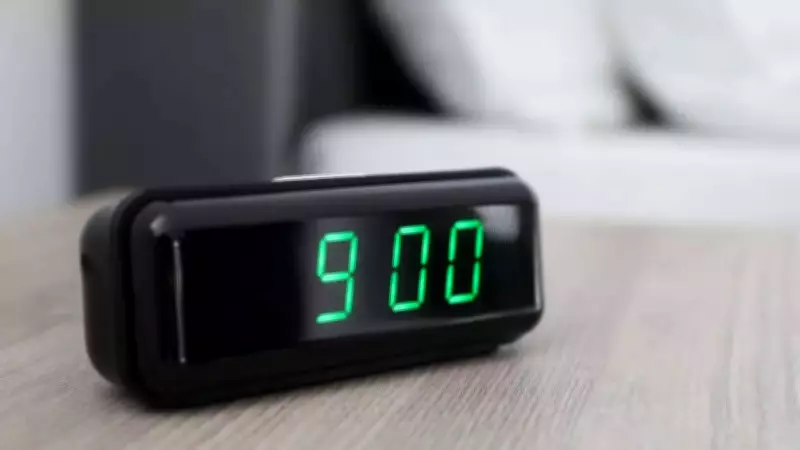
The Mystery of the Nine-Minute Snooze Button
The snooze button is a ubiquitous feature on alarm clocks, offering a brief respite between sleep and wakefulness for countless individuals. While its use has become a daily ritual for many, a peculiar detail often escapes notice: the snooze interval is rarely five or ten minutes. Instead, it is almost universally set to nine minutes. This oddly specific duration has persisted for decades, appearing on everything from vintage mechanical clocks to modern digital devices and smartphones. The explanation for this nine-minute standard does not stem from sleep science or human behavior but rather from the mechanical constraints of early alarm clock engineering. What originated as a practical solution has evolved into a global norm, shaping morning routines worldwide.
The Origins in Mechanical Alarm Clocks
In the mid-20th century, mechanical alarm clocks introduced the snooze button, operating through intricate systems of gears, springs, and levers rather than electronic components. Historical records, including those cited by the Smithsonian Institution, reveal that these clocks were limited by their internal gear divisions. Clockmakers sought to incorporate a delay feature without overhauling the entire mechanism, but achieving a precise and adjustable postponement was challenging with mechanical parts. Engineers had to work within existing gear ratios, which restricted the feasible delay times for the alarm.
Why Nine Minutes Became the Standard
The selection of a nine-minute snooze was not based on comfort or sleep research; it was the most practical option available. According to explanations referenced by BBC Future, early alarm clocks utilized gear systems that made a 10-minute delay mechanically inefficient. A nine-minute interval aligned more seamlessly with the gear layouts, whereas extending it to ten minutes would have necessitated additional components, increasing costs and reducing reliability. Consequently, manufacturers adopted nine minutes as a viable compromise, embedding it into clock designs.

Engineering Constraints and Design Choices
Mechanical alarm clocks functioned by advancing gears in predetermined increments each time the snooze button was pressed, triggering a delay before the alarm reactivated. Design historians, as noted by the Smithsonian Institution, explain that nine minutes represented the closest engineers could achieve to a "short break" without modifying the clock's fundamental structure. This decision was driven solely by mechanical efficiency, with no consideration for user psychology or sleep patterns.
The Transition to Digital Clocks
With the advent of digital alarm clocks, mechanical limitations vanished, allowing manufacturers to program any snooze duration desired. Despite this newfound flexibility, most companies retained the nine-minute standard. Technology explainers from BBC Future attribute this continuity to user familiarity. Over decades, people had grown accustomed to the timing, and altering it risked disrupting established habits. Thus, the nine-minute snooze endured, migrating into digital clocks, mobile phones, and smart devices.
Is Nine Minutes Scientifically Beneficial?
There is no scientific evidence supporting nine minutes as an optimal wake-up interval. According to the National Sleep Foundation, repeatedly hitting the snooze button can fragment sleep and exacerbate morning grogginess. Sleep experts generally advise setting an alarm for the final waking time rather than relying on multiple snoozes. This underscores that the nine-minute break exists due to historical design choices, not health benefits.
The Enduring Legacy of the Nine-Minute Snooze
The persistence of the nine-minute snooze button illustrates how older technologies influence contemporary design. Researchers at Bell Labs, who study industrial design, note that many everyday features remain unchanged because users expect consistency. Manufacturers often prefer stability over innovation, particularly for simple, familiar tasks like setting alarms. This explains why the snooze duration has remained largely constant over time, a testament to the lasting impact of engineering decisions from the past.






