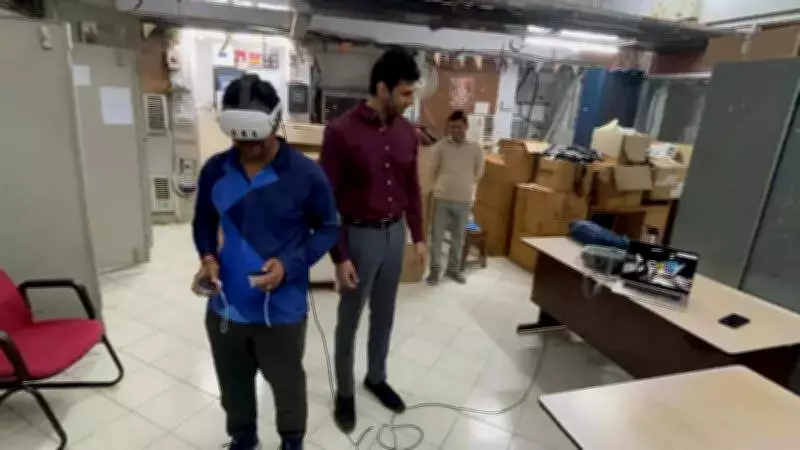
North Central Railway Pioneers VR-Based Training for Loco Pilots in Kanpur
In a significant technological advancement for Indian Railways, the North Central Railway (NCR) has unveiled a groundbreaking Virtual Reality (VR)-based Loco Pilot Training System at the Multi-Disciplinary Divisional Training Institute (MDDTI) in Kanpur. This innovative initiative marks the first adoption of immersive VR technology by NCR specifically designed to train locomotive pilots in next-generation safety protocols, supporting the nationwide expansion of the Kavach safety ecosystem.
Revolutionizing Training for Kavach Safety Protocols
The new VR training system is strategically developed to align with the accelerating rollout of Kavach, Indian Railways' indigenously developed Automatic Train Protection (ATP) system. NCR officials emphasized that the demand for rapid, effective, and realistic pilot training has become increasingly critical as railway operations modernize. The VR simulator digitally replicates a complete locomotive environment, enabling pilots to experience authentic operating conditions without the need for costly physical simulators.
Comprehensive Training Modules and Realistic Scenarios
The training program integrates guided learning modules with hands-on driving simulations that provide real-time Kavach feedback and automated performance assessments. Notably, the simulator supports all 12 operational modes of Kavach for the E70 Braking System. This allows pilots to practice complex and high-risk scenarios that are challenging or unsafe to replicate in actual operations. Key scenarios include:

- Signal Passing at Danger (SPAD) prevention techniques
- Trip Mode and communication failure simulations
- SOS emergency handling procedures
- Shunt and Reverse operational modes
Advantages Over Conventional Training Methods
NCR has highlighted several significant benefits of the VR-based training model compared to traditional classroom and simulator approaches. Research indicates that immersive VR learning can lead to up to a 40% improvement in knowledge retention among trainees. The system also facilitates the development of muscle memory and enhances faster decision-making through interactive Driver Machine Interface (DMI) procedures. This enables pilots to repeatedly practice essential responses in a controlled, risk-free environment.
The introduction of this VR training system in Prayagraj's NCR zone represents a transformative step in railway safety education, potentially setting a new standard for locomotive pilot training across India's vast railway network.