

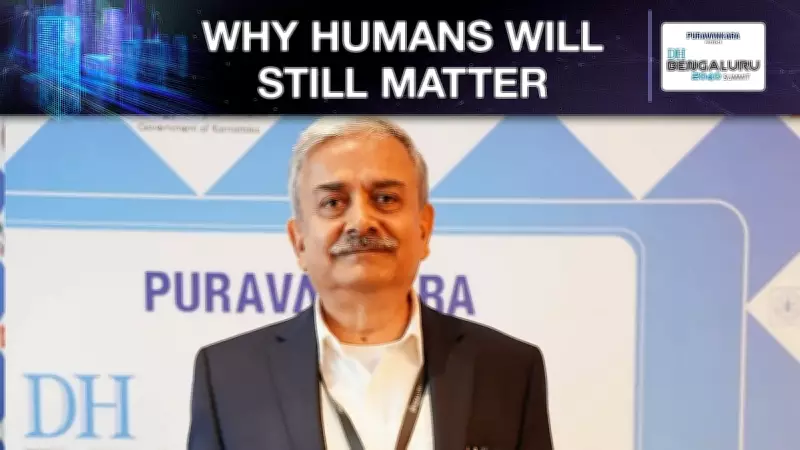
Technology Alone Cannot Solve Problems, Only Humans Can, Says Gurucharan Gollerkeri
In a thought-provoking statement, Gurucharan Gollerkeri, a prominent figure in Bengaluru's tech and policy circles, has emphasized that technology, by itself, does not solve problems. He argues that only human beings possess the capacity to address complex issues through critical thinking, ethical decision-making, and practical application. This perspective challenges the common notion that technological advancements automatically lead to solutions, highlighting the indispensable role of human agency in driving meaningful change.
The Limitations of Technology as a Standalone Solution
Gollerkeri points out that technology is fundamentally a tool, designed and operated by humans. Without human input, it remains inert and incapable of addressing real-world challenges. He cites examples such as:
- Healthcare: Advanced medical devices can diagnose conditions, but it takes doctors and nurses to interpret results and provide care.
- Education: Online learning platforms offer access to information, but teachers are essential for guidance and motivation.
- Governance: Digital systems can streamline processes, but policymakers must ensure they serve public interests fairly.
These instances underscore that technology enhances human efforts but cannot replace the nuanced understanding and empathy required for effective problem-solving.

The Human Element in Technological Innovation
According to Gollerkeri, the development and deployment of technology must be guided by human values and ethics. He stresses that innovation should focus on:
- Inclusivity: Ensuring technologies benefit all segments of society, not just a privileged few.
- Sustainability: Creating solutions that are environmentally friendly and long-lasting.
- Accountability: Holding creators and users responsible for the impacts of technological tools.
He warns against over-reliance on automation and artificial intelligence, which can lead to job displacement and social inequalities if not managed with human foresight. Gollerkeri advocates for a balanced approach where technology supports, rather than supplants, human decision-making.
Implications for Bengaluru and Beyond
As a hub for technology in India, Bengaluru's experiences reflect broader global trends. Gollerkeri's insights are particularly relevant in this context, where rapid tech growth often overshadows human-centric concerns. He calls for:
- Increased investment in education and training to equip people with skills to use technology effectively.
- Stronger regulatory frameworks to ensure ethical tech practices.
- Community engagement in tech development to address local needs.
By prioritizing human involvement, societies can harness technology's potential while mitigating its risks, leading to more equitable and sustainable outcomes.
In conclusion, Gurucharan Gollerkeri's message serves as a crucial reminder that in an era dominated by digital advancements, the human touch remains irreplaceable. Technology may provide the means, but it is human ingenuity, compassion, and responsibility that ultimately solve problems and drive progress forward.






