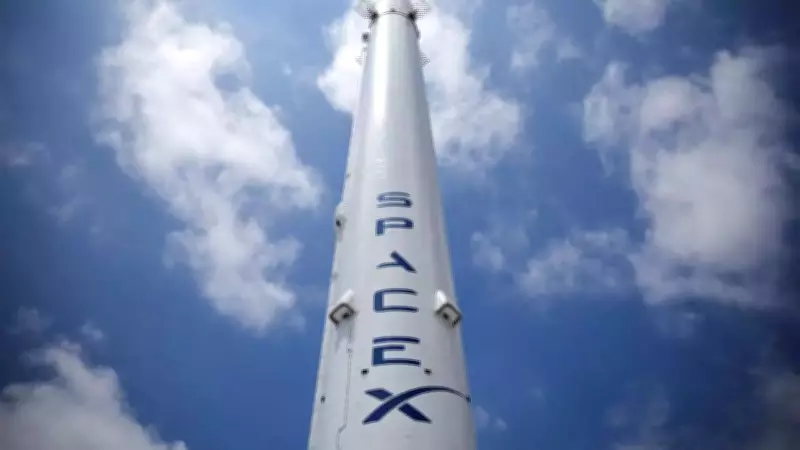
SpaceX Puts Mars Ambitions on Hold, Prioritizes Lunar Missions
In a significant strategic pivot, SpaceX appears to be temporarily shelving its ambitious plans for Mars colonization. According to a report from the Wall Street Journal, the company is now channeling its resources and focus toward the Moon as its primary extraterrestrial target. This shift represents a notable recalibration of Elon Musk's long-stated vision for interplanetary travel.
Revised Timeline: Moon First, Mars Later
The current objective centers on achieving an uncrewed lunar landing by March 2027. This mission will not carry astronauts initially, serving instead as a crucial technological demonstration. Previously, Musk had targeted sending an uncrewed mission to Mars by the end of 2026, but that timeline now seems almost certain to be postponed indefinitely.
Space industry analysts and experts suggest this strategic realignment allows SpaceX to concentrate more intensively on the development and rigorous testing of its Starship rocket system. The massive, fully reusable stainless-steel spacecraft remains under active construction and evaluation, representing the cornerstone of both lunar and Martian ambitions.

The Strategic Logic Behind the Lunar Focus
Several compelling factors make the Moon a more logical and manageable first step for SpaceX's deep-space aspirations:
- Proximity and Communication: The Moon's relative closeness to Earth enables near-instant communication, unlike the significant delays inherent in Mars communications.
- Mission Manageability: Lunar missions present fewer extreme challenges compared to the vastly more complex journey to Mars.
- Incremental Learning: A step-by-step approach—mastering lunar landings before attempting Martian voyages—provides a safer environment for testing critical systems.
This phased strategy reportedly involves perfecting Starship operations on the Moon before embarking on the far more daunting mission to the Red Planet. Many observers view this as a pragmatic and sensible adjustment to the original roadmap.
Starship: The Multi-Purpose Workhorse
The Starship vehicle is designed to be a versatile platform capable of:
- Deploying satellites into orbit
- Conducting crewed and uncrewed missions to the Moon
- Eventually transporting humans and cargo to Mars and potentially beyond
Years of development and testing have underscored the complexity of this endeavor, making delays an expected part of the process. Both investors and engineers reportedly recognize the wisdom of ensuring Starship is fully operational and reliable before committing to the immense challenges of a Mars mission.
The Broader Lunar Race and Corporate Expansion
SpaceX is not operating in a vacuum. The renewed global focus on lunar exploration, including China's stated goal to return humans to the Moon this decade, creates a competitive landscape. The last human lunar landing was Apollo 17 in 1972, making the current push a historic revival. This international pressure may have further influenced SpaceX's decision to prioritize lunar success.
Concurrently, SpaceX is expanding its technological footprint. The Wall Street Journal also reported the company's acquisition of xAI, an artificial intelligence firm. This move, valuing SpaceX at a staggering $1 trillion and the AI company at $250 billion, signals Musk's intent to merge advanced rocketry with cutting-edge AI. While the specific applications for lunar and Martian missions remain undefined, the potential synergies between spaceflight and artificial intelligence are substantial.
In summary, while Elon Musk's dream of reaching Mars is not abandoned, it is being deliberately deferred. SpaceX's revised, methodical approach—mastering the Moon with Starship as a prerequisite for Mars—reflects a maturation of strategy, balancing visionary goals with practical engineering and operational realities.