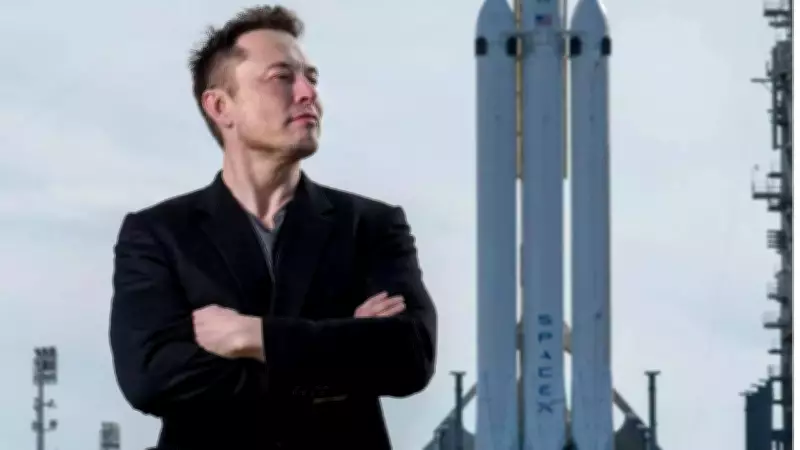
SpaceX Redirects Ambitions: Moon City Takes Priority Over Mars Mission
In a significant strategic pivot, Elon Musk's aerospace company SpaceX is reorienting its near-term objectives away from the red planet Mars to concentrate on establishing a self-sustaining city on the Moon. The billionaire entrepreneur confirmed this updated focus through a detailed post on the social media platform X, highlighting the practical advantages of lunar development over Martian colonization.
Elon Musk Clarifies SpaceX's New Lunar Priority
Responding to inquiries from the Teslanomics account regarding rumors of SpaceX deprioritizing Mars missions, Musk explicitly stated "Moon first" as the company's current directive. He elaborated that constructing a functional city on the Moon is achievable in less than a decade, whereas building a comparable settlement on Mars would require more than twenty years. This accelerated timeline is primarily due to the Moon's proximity to Earth, enabling launch opportunities every ten days with a mere two-day travel time, compared to the limited windows for Mars missions that occur only every twenty-six months with a six-month journey duration.
"The mission of SpaceX remains the same: extend consciousness and life as we know it to the stars," Musk affirmed in his post. "However, the overriding priority is securing the future of civilization, and the Moon is faster." He assured that while the Moon is now the top priority, SpaceX has not abandoned its long-term vision for Mars, with plans to commence efforts toward a Martian city in approximately five to seven years.

Technical and Logistical Advantages of Lunar Development
The decision to shift focus stems from several key factors that make lunar colonization more feasible in the short term:
- Faster Iteration Cycles: The frequent launch windows to the Moon allow for rapid testing, development, and refinement of technologies and infrastructure, accelerating progress toward a self-sustaining habitat.
- Reduced Travel Time: With a two-day trip versus six months to Mars, logistical challenges are minimized, enabling more efficient resource delivery and crew rotations.
- Enhanced Safety and Reliability: The shorter distance reduces risks associated with long-duration space travel, such as radiation exposure and mechanical failures, making initial colonization efforts more manageable.
Musk emphasized that this strategic adjustment does not diminish SpaceX's ultimate goal of interplanetary expansion but rather optimizes the pathway to achieve it by first establishing a foothold on the Moon.
Historical Context: Musk's Martian Vision and the "Terminus" Proposal
Elon Musk has consistently championed the colonization of Mars as a cornerstone of SpaceX's mission, even proposing names for future Martian settlements. In April 2025, he suggested that the first city on Mars could be named "Terminus," inspired by Isaac Asimov's Foundation series. When questioned about this on X, Musk confirmed the idea while noting that the final decision would rest with the residents of Mars themselves.
"It's from Asimov's Foundation. But I'm open to other ideas," he stated. "Ultimately, it will be up to the people of Mars to decide." This historical context underscores the depth of Musk's commitment to Martian colonization, making the current shift toward the Moon a pragmatic rather than ideological recalibration.
Implications for the Future of Space Exploration
SpaceX's renewed emphasis on lunar development aligns with broader global initiatives, such as NASA's Artemis program, which aims to return humans to the Moon and establish a sustainable presence. By prioritizing the Moon, SpaceX positions itself to collaborate with or lead in these efforts, potentially accelerating the timeline for a permanent human presence beyond Earth.

- Accelerated Innovation: The focus on a Moon city could drive advancements in life support systems, habitat construction, and resource utilization, benefiting future Mars missions.
- Economic Opportunities: Lunar bases could serve as hubs for scientific research, mining operations, and even tourism, generating revenue to fund further space exploration.
- Strategic Positioning: Establishing a city on the Moon enhances SpaceX's capability for deep-space missions, acting as a stepping stone for eventual journeys to Mars and beyond.
As SpaceX embarks on this lunar-centric phase, the aerospace industry and space enthusiasts worldwide will closely monitor progress toward what could become humanity's first extraterrestrial city, marking a pivotal chapter in the quest to become a multi-planetary species.