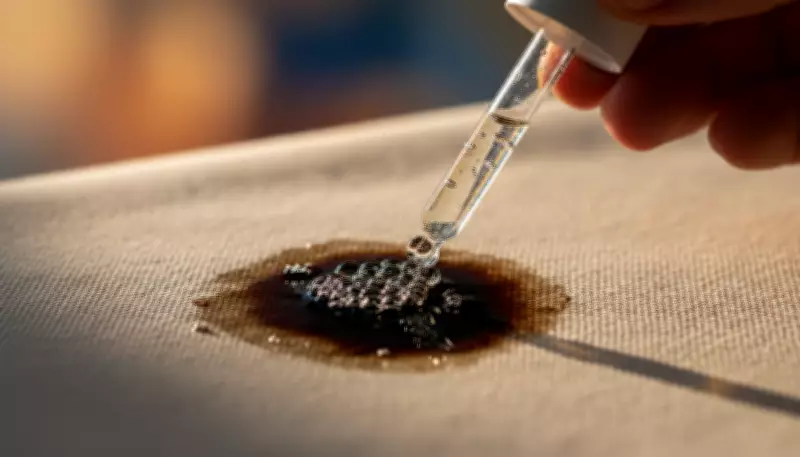
It is a familiar sinking feeling that occurs during a fine dinner or a quick car repair. A single drop of salad dressing or a splash of motor oil lands right in the center of your favorite shirt. Traditionally, this meant a frantic dash to the sink, followed by a cycle of aggressive scrubbing and a heavy dose of chemical-laden detergent that smells more like a laboratory than a laundry room. However, the way we handle these mishaps is undergoing a major shift that prioritizes both your wardrobe and the planet.
Why Oil is So Hard to Remove
Oil's difficult grip on fabrics is due to the nature of their fibers. Ordinary textiles are designed to repel moisture by attracting it instead. When oil makes contact with such fabrics, it seeps into them too far to create its own impenetrable fort that keeps it out of reach of ordinary detergents. These detergents contain surfactants that attack such forts but often end up in streams and oceans, contributing to a burden on the environment that cannot be removed using traditional water purification systems.
Self-Cleaning Fabric: The Future of Laundry?
It seems that the future of laundry does not lie in stronger detergents. It lies in smart fabrics. Imagine a surface that utilizes water pressure to repel oil. It is no longer an idea but a reality, at least according to a study published in the Journal of Cleaner Production. Researchers developed a water-based coating that makes fabric "superlyophilic." While that sounds like a complex mouthful, it simply means the fabric is designed to attract both water and oil when it is dry. But here is the magic trick: as soon as you put the fabric under water, it becomes "superoleophobic." It essentially develops an invisible shield that rejects oil. When a stain hits a garment treated with this coating, you do not need a gallon of detergent. The water itself gets under the oil, lifts it off the fiber, and carries it away. A 40°C wash temperature further aids oil dilution, proving physics plays a key role alongside chemistry for a cleaner wardrobe and planet.

What makes this discovery most exciting is its durability. According to the study, these coating materials are able to withstand everyday wear and tear, such as being washed, exposed to sunlight, and attacked by corrosive chemicals. This means that in the future, we may find that the "quick absorption" stain remover technique simply involves dipping the clothing in water.
Adjusting the Mechanical Rhythm of Your Washing Machine
Before these coatings are available to every consumer, we can get the best out of the washing machines we currently have. Many consumers believe that the secret to removing grease lies in the duration and temperature of the cycle. In reality, the rhythm at which the machine works can be a very powerful force when it comes to cleaning clothes. A study published in Chemical Engineering Science looked closely at how mechanical forces impact stain removal in commercial front-loaders. The researchers discovered that the "impact force" (when clothes fall from the top of the drum to the bottom) and the "shear force" (as fabrics rub against each other) are the real heroes. By optimizing the drum speed and the size of the load, you can actually improve the kinetics of stain removal without needing extra chemicals.
As indicated by a study, a temperature of 40°C acts as an ideal condition for handling stains caused by oil. At this point, oil gets diluted and flows more freely, making it easier for the agitation caused by the drum in the washing machine to separate it from the material's weave. It should be noted that laundry is not only about chemistry; physics is equally involved. The trick is to set the appropriate wash cycle based on load size for proper tumbling.
The goal could not be more straightforward: a clean Earth and a clean closet. With the help of green pre-washes and harnessing the mechanics that have been with us throughout our laundry process, we may finally become liberated from our dependence on chemicals. The next time an oil stain comes your way, remember that a good absorber paired with a timely spin wins the day over bleach.