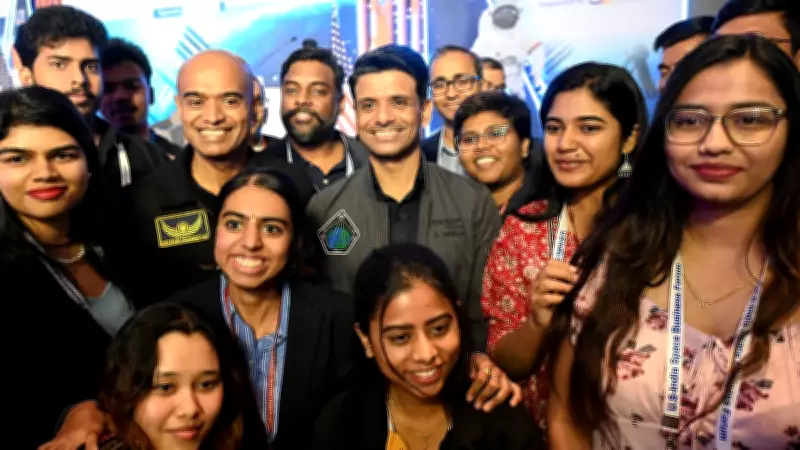
Shubhanshu Shukla Calls for Accelerated Human Spaceflight Efforts in India
In a compelling statement, Shubhanshu Shukla, who made history in 2025 as the first Indian to visit the International Space Station as part of Axim Mission 4, has strongly advocated for India to prioritize and pursue its human spaceflight programme. His remarks come at a pivotal time as the Indian Space Research Organisation (ISRO) continues to develop the ambitious Gaganyaan mission, aimed at sending Indian astronauts into space.
Historic Achievement and Future Vision
Shukla's journey to the ISS marked a significant milestone for India in the global space arena, showcasing the nation's growing capabilities in space exploration. Reflecting on this experience, he emphasized that such achievements should serve as a catalyst for further advancements. "India has demonstrated its potential through missions like Chandrayaan and Mangalyaan, but human spaceflight is the next frontier," Shukla stated, highlighting the need for sustained investment and focus in this domain.
Gaganyaan Mission and Astronaut Training
The Gaganyaan mission, a cornerstone of India's human spaceflight aspirations, has been making steady progress. Prasanth Nair, one of the four astronauts identified for this mission, is currently undergoing rigorous training to prepare for the challenges of space travel. This initiative underscores ISRO's commitment to achieving manned spaceflight capabilities, with plans to launch Indian astronauts into low Earth orbit in the coming years.

- Mission Goals: The Gaganyaan programme aims to demonstrate India's ability to conduct human spaceflight, including life support systems and safe re-entry procedures.
- Training Regimen: Astronauts like Prasanth Nair are undergoing extensive physical, technical, and psychological training to ensure mission success.
- Technological Advancements: The mission involves developing new spacecraft, such as the crew module and launch vehicle, tailored for human occupancy.
Strategic Importance and Global Context
Shukla's advocacy aligns with broader strategic interests, as human spaceflight is not only a symbol of national pride but also a driver for technological innovation and international collaboration. "Countries like the USA, Russia, and China have long recognized the value of human space exploration, and India must not lag behind," he remarked. The pursuit of such programmes can foster advancements in areas like medicine, materials science, and robotics, benefiting various sectors of the economy.
Moreover, with private space companies gaining traction globally, Shukla suggested that India could leverage partnerships to accelerate its human spaceflight efforts. The success of missions like Axim Mission 4 demonstrates the potential for international cooperation, which could be expanded to include joint ventures or knowledge-sharing initiatives.
Challenges and the Path Forward
Despite the enthusiasm, India faces challenges in funding, technology development, and safety protocols for human spaceflight. Shukla acknowledged these hurdles but urged policymakers and stakeholders to view them as opportunities for growth. "Every great endeavour comes with risks, but the rewards—in terms of scientific discovery and national prestige—are immense," he asserted.
To move forward, he recommended:
- Increasing budgetary allocations for space research, specifically targeting human spaceflight projects.
- Enhancing collaboration between ISRO, academic institutions, and private enterprises to innovate faster.
- Focusing on public engagement and education to build support and inspire future generations of scientists and astronauts.
As India continues to make strides in space exploration, voices like Shubhanshu Shukla's are crucial in shaping the narrative and direction of the country's cosmic ambitions. With the Gaganyaan mission on the horizon and astronauts like Prasanth Nair in training, the dream of sending Indians into space is closer than ever to becoming a reality.