For banana cultivators in Tamil Nadu, the dramatic and often devastating swings in market prices have long been a source of financial distress. A sudden glut in supply can send prices of popular varieties like yelakki and poovan crashing from a profitable Rs 45 per kilogram to a meager Rs 5, pushing many farmers into severe debt. This cycle of boom and bust, however, may soon be mitigated by an innovative collaboration between space technology and agricultural science.
Space Tech to the Rescue: A Rs 6 Crore Satellite Initiative
In a significant move, the ICAR-National Research Centre for Banana (NRCB) in Trichy is partnering with the Indian Space Research Organisation (ISRO) to provide farmers with precise cultivation data using satellite remote sensing. A detailed proposal for a two-year project, estimated to cost Rs 6 crore, has been submitted to the Ministry of Agriculture for funding. The project will leverage the expertise of ISRO's National Remote Sensing Centre (NRSC).
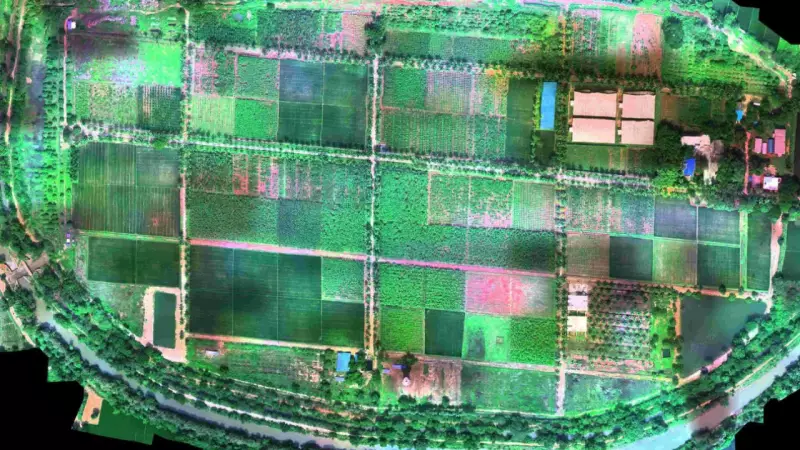
The core plan involves using satellite and drone data to evaluate the growth stages of banana crops and identify different varieties across various agricultural blocks. R Selvarajan, director of ICAR-NRCB, explained that this information will then be used to advise farmers in other regions to adjust their planting schedules strategically, thereby preventing a simultaneous oversupply in the market.

How Spectral Imaging Will Map Cultivation
NRCB researchers will interpret satellite imagery provided by NRSC by examining spectral indices. G Prabhu, a researcher at NRCB, clarified the process: "The lighter indices of the spectrum signal early growth stages, and denser ones indicate an advanced stage. Thus, the growth can be estimated." Variety identification will be done through this data, supplemented by manual verification or closer drone inspections.
The economic imperative for this intervention is stark. V A Subramanian, a banana farmer from Thottiyam cultivating on about 10 acres, voiced the common plight: "Prices fluctuate significantly, and while investment costs remain largely consistent, banana farmers suffer heavy losses when oversupply causes prices to plummet. The economic impact on us is severe, often leading many to debt." In Tamil Nadu, banana is cultivated on approximately one lakh hectares, with major districts including Trichy, Tirunelveli, Tuticorin, Theni, Coimbatore, Erode, and Cuddalore.
Creating Direct Market Links and Nationwide Rollout
Beyond advising farmers, the NRCB also intends to share the collected data on cultivation areas and varieties with procurement agencies and bulk buyers. This aims to facilitate direct connections between farmers or their producer organizations and the market. "When buyers link directly with farmers, the role of middlemen and their brokerage can be eliminated," stated Director Selvarajan, highlighting a potential secondary benefit of increased income for farmers.
To ensure accurate ground truthing, the institute plans to deploy its staff across 33 districts in key banana-growing states like Tamil Nadu, Andhra Pradesh, Madhya Pradesh, Uttar Pradesh, Karnataka, Gujarat, and Maharashtra. These teams will conduct field surveys and provide regular updates. As farmer S A Sukumar from Thottiyam noted, the success of the initiative will also depend on better coordination among farmers and government mediation to build consensus on following the advisory schedules.
This groundbreaking project represents a fusion of cutting-edge space technology with grassroots agricultural challenges, offering a data-driven ray of hope for banana farmers plagued by unpredictable markets and financial instability.