It is often the case that the most remarkable events in history unfold not in a single moment but over time. The historic town of Bath in England was undergoing Victorian modernization in the late nineteenth century. Demolition crews were busy tearing down unstable old buildings, widening narrow medieval streets, and digging deep into the ground to install iron plumbing and sewerage systems.
As their iron picks and heavy shovels chipped away at the dark subterranean layers directly beneath the bustling shopping streets, the workers did not encounter standard gravel or simple mud. Instead, they repeatedly struck their heavy tools against massive, beautifully shaped blocks of ancient stone and hollow underground chambers that seemed to stretch into the darkness.
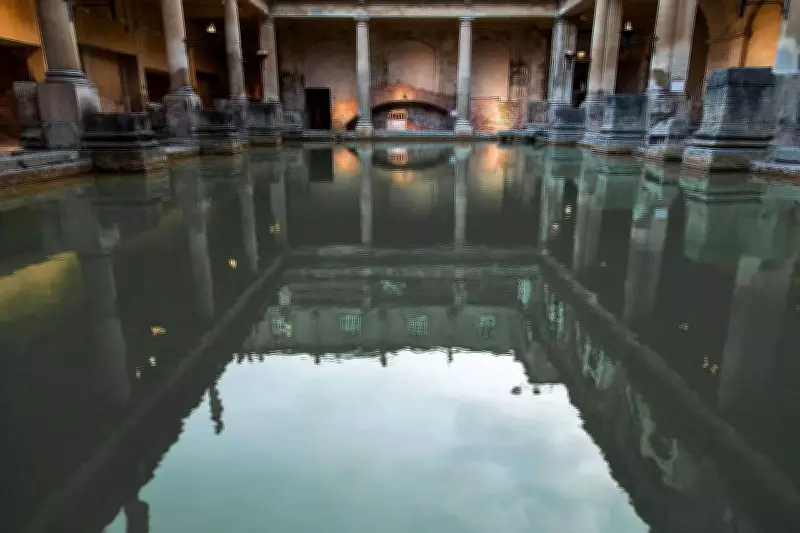
City officials halted the project almost immediately, and the subsequent discoveries that unfolded over many years fascinated the citizens. What was found under the shop floors, cellars, and cobblestones were the largest, most beautiful, and well-engineered structures of hot springs, swimming pools, and temples from antiquity. The modern town had been built atop one of the greatest religious and spa centers of the Roman Empire for several hundred years.

Reconstructing an Empire from Broken Stones
The discovery was a mystery that lasted for decades and forever altered the locals' perception of their city. As reported in the study The Roman Baths at Bath: The Excavations 1969-75, the reconstruction of the magnificent structure was possible through several generations of archaeologists who worked piece by piece. Due to centuries of residential and commercial buildings constructed atop the remains of the Roman baths, only small parts of the site became available for excavation when modern structures were demolished.
The slow discovery revealed that this was not just any random primitive swimming hole. This place was a masterpiece of classical engineering, with intricate lead-lined channels, large under-floor heating chambers, and an extensive drainage system carrying natural steaming thermal water from the depths of the earth. The unique mineral mud lining the abandoned drain system preserved all the ancient Roman coins, curse tablets, and beautiful carved gems dropped by panicked bathers into the hot water almost two thousand years ago perfectly intact.
Decoding the Plumbing of the Ancients
But what did this discovery mean? More than just rewriting local tourist maps, it completely redefined the relationship between bathing and pagan religion for global historians. As shown by a comparative historical article called A 'Fine Specimen of Neronian Brickwork' in Victorian London, the nineteenth-century craze for finding ancient bathhouses was largely motivated by the Victorians' own interest in public health engineering.
The research observes that while many people would have considered these structures as purely secular public works with a functional purpose only, the discovery at Bath proved that they played a highly spiritual role. The bath structure was designed right next to a massive temple to Sulis Minerva, an amalgamation of a local Celtic water deity and the Roman goddess of wisdom.
The site was an elaborate religious sanctuary where soldiers, merchants, and politicians traveled from different parts of Europe for cleansing purposes, making sacrifices to the deities of the hot springs, and finding company in a foreign place. Today, the well-preserved pools are a marvelous testament to continuity, illustrating that the ground under our feet is a living history.
While we rush through our own busy lives, drinking coffee on paved streets or driving cars, we are drifting directly over the top of forgotten gathering spaces where ancient hands once built structures meant to last for eternity. The idea that for many years before, everyday Victorians had been sitting around their home fires, not knowing that underneath their floors the waters of the ancient volcano were still running through Roman lead pipes, is both amazing and dizzying.