Rajasthan's Arid Landscapes Reveal New Jumping Spider Species
In a significant breakthrough for biodiversity research, scientists have documented the discovery of multiple new jumping spider species in Rajasthan, while also recording a Central Asian species in India for the very first time. These findings, published in the European Journal of Taxonomy, point to Rajasthan's deserts and rocky hills as an emerging hotspot for arachnid diversity, underscoring the ecological richness of these arid ecosystems.
New Species Adapted to Dry Habitats
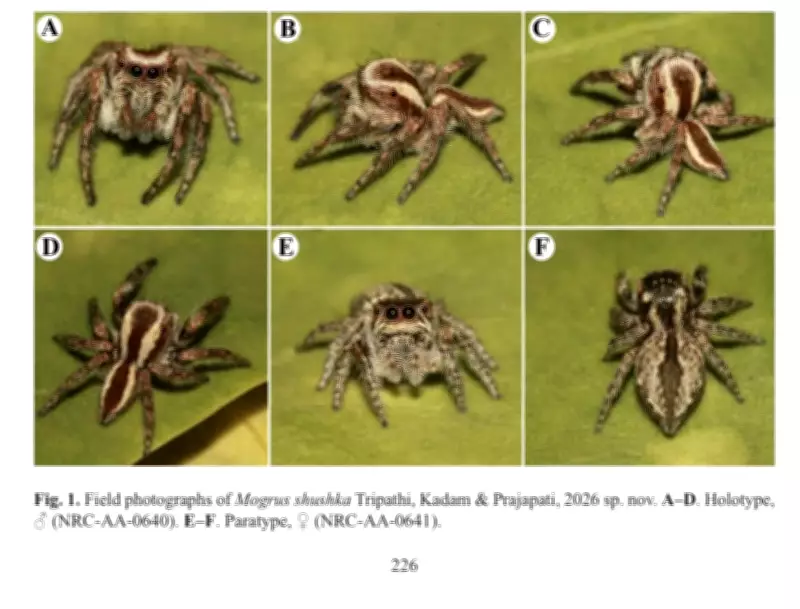
A study led by researcher Rishikesh Tripathi and his team has identified Mogrus shushka as a new species native to Rajasthan's desert landscape. The holotype was collected from Nimaaj (Chhatrasagar), with additional specimens recorded from the Desert National Park. Researchers noted that this species inhabits dry, open environments, and its name—derived from the Sanskrit word shushka, meaning dry—reflects its adaptation to arid conditions.
The same study provides the first-ever description of the male of Mogrus rajasthanensis, a species previously known only from female specimens discovered at Mount Abu. New samples collected from Jaisalmer have enabled scientists to complete its identification, offering a fuller understanding of its characteristics.

First Record of Central Asian Species in India
In another key discovery, Mogrus larisae has been recorded for the first time in India, based on specimens gathered from the Desert National Park. Previously known only from Central Asia and parts of the Middle East, its presence in Rajasthan strengthens ecological connections between the Thar Desert and wider Afro-Asian arid regions, suggesting shared biodiversity across these dry landscapes.
Additional Findings from Rocky Terrains
Separately, researchers have documented Langelurillus udaipurensis from the Sajjangarh Wildlife Sanctuary. This species, named after Udaipur, is based on a holotype male and three paratype specimens collected from rocky terrain in June 2024. Adapted to dry, rocky habitats, it was observed moving over rocks during daytime and was found alongside other jumping spiders such as Orientattus aurantius and Stenaelurillus species.
Challenges and Importance of Field Surveys
Scientists emphasize that identifying species within genera like Mogrus and Langelurillus remains challenging due to subtle physical differences. This highlights the critical value of detailed field surveys in Rajasthan's arid and semi-arid ecosystems, which are revealing previously unknown aspects of arachnid diversity and contributing to global taxonomic knowledge.