The first synchronized Nilgiri tahr survey across Tamil Nadu in 2024 estimated only 1,031 individuals of this endangered species, classified by the International Union for Conservation of Nature (IUCN). In response, Project Nilgiri Tahr was launched as India's first species-specific recovery program for this mountain ungulate, aiming to boost population, reconnect fragmented habitats, and steer the species away from extinction.
Survey Progress and Findings
The 2024 baseline survey covered 140 blocks across 13 forest divisions, spanning 1,862 square kilometers. In 2025, survey teams identified 36 previously undocumented habitats and recorded a population of 1,303 animals. The 2026 survey expanded further, with Tamil Nadu and Kerala jointly covering over 3,100 square kilometers across the species' range. Results are being compiled and appear encouraging, according to Supriya Sahu, additional chief secretary for environment, climate change and forest.
Each survey has refined conservationists' understanding, moving from rough estimates to clearer population dynamics. Sahu emphasized that annual surveys are critical for long-term protection, with the goal of reclassifying the species from endangered to vulnerable and ultimately to least concern. Independent experts from organizations like IUCN, Tamil Nadu Veterinary and Animal Sciences University (Tanuvas), and Wildlife Trust of India (WTI) participate as observers, ensuring thoroughness and reliability. Their combined expertise in animal behavior, health assessment, and habitat conditions fosters a consistent approach. The first priority is verifying adult animal numbers, then halting population decline, and finally expanding species distribution.

Technological Advancements
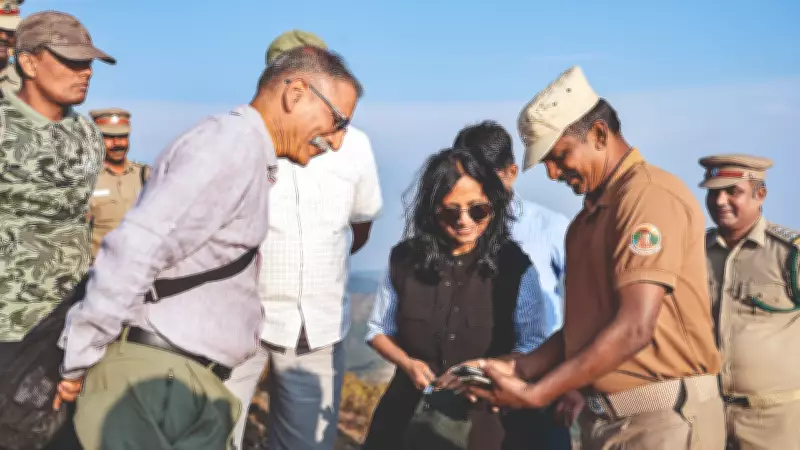
For the first time, a mobile application called 'Varudai' enables real-time data collection, GPS-based tracking, and standardized reporting. A web-based system integrates field data near-real-time. Sahu noted that earlier reports relied on rough estimates, but Varudai provides accurate latitude and longitude coordinates along with animal images, transmitted to a central center for compilation.
Yash Veer Bhatnagar, co-chair of the IUCN-Caprinae Specialist Group and Country Officer-India, stated that before the synchronized survey, no comprehensive population estimate existed across the species' range in Tamil Nadu. Earlier surveys covered only specific portions or districts, limiting knowledge of distribution.
Connecting Isolated Populations
Bhatnagar explained that the tahr evolved to use cliffs for safety, but currently only small populations survive in remote areas. When habitat patches are small and separated by up to 50 kilometers, animal movement becomes difficult. Isolated patches risk population disappearance. Mobility between patches is crucial, but excessive development in the Western Ghats hinders this.
M G Ganesan, deputy director of Mudumalai Tiger Reserve (core zone) and former project director of Project Nilgiri Tahr, participated in the 2024 and 2025 surveys. He reported that the department has begun restoring corridors between fragmented habitats identified during the exercise. In the Nilgiris, a corridor between Kolaribetta and Kudiakadubetta is being restored by removing invasive species, including thorny guare, from about 15 hectares. Another 15 hectares will be cleared to complete the link. Kolaribetta, the highest peak in the Nilgiris, supports one of the region's most important tahr populations. A male tahr has already been recorded moving toward Kudiakadubetta. Improved habitat connectivity is expected to facilitate dispersal between the two hillocks.
Similar efforts are underway elsewhere in the Western Ghats. Corridors have been identified in Tirunelveli, Kodaikanal, and the Nilgiris, where invasive plants are being removed to reconnect isolated habitat patches. Ganesan noted that many sites are in steep, swampy, or inaccessible terrain, requiring manual restoration without machinery. In the Nilgiris, six disconnected habitat blocks are being reconnected.

Population Dynamics and Genetics
Bhatnagar emphasized that a successful population increase requires at least 100 mature animals in a patch. For example, if 100 females are present, 100 lambs can be produced during breeding season, yielding a 1:1 ratio. However, female tahr numbers are few in each patch, so efforts must focus on increasing female numbers and improving lamb survival.
The species' decline is attributed to rampant hunting and poaching until the 1970s and 1980s. The Wildlife Protection Act of 1972 introduced a hunting ban, but by then the population had already fragmented. Current sampling shows tahr spend most of their time in open meadows and 7–10% in forests. Studying their forest presence could aid population increase efforts.
Full-genome sequencing of the Nilgiri tahr has been completed. Surprisingly, its genes are closer to those of sheep than goats, according to Sahu.