The Final Days of Nikola Tesla
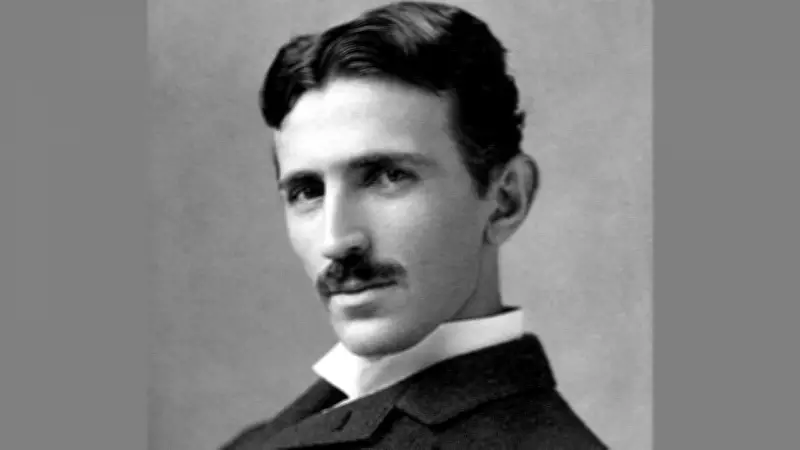
Nikola Tesla died alone in Room 3327 of the New Yorker Hotel on 7 January 1943, at the age of 86. The scene quickly became more than the end of a celebrated inventor's life. He had spent his later years talking about a powerful beam weapon he called 'teleforce', while newspapers ran with the more sensational label 'death ray'. As World War II raged, the government treated his papers as potentially significant wartime material. Within days, officials from the Office of Alien Property Custodian took possession of his belongings, and a mystery was born that still mixes hard archival fact with durable myth.
Tesla's Last Hours
By the early 1940s, Tesla's life had narrowed dramatically. He was a frail, ageing man moving between Manhattan hotels, surrounded by unpaid bills, newspapers and birdseed. He often kept a 'do not disturb' sign on his door, which is why his death went unnoticed until a maid entered his room the following day and found him lifeless. The core facts remain consistent: Tesla died in New York City in January 1943, in lonely circumstances, after a long decline from the world-famous inventor who had once transformed the modern electrical age.
Why Wartime America Worried About Tesla
The concern in 1943 was not purely speculative. Tesla had publicly promoted a particle-beam concept for years, claiming it could be used as a defensive weapon capable of destroying aircraft at long distances. While he never demonstrated a working model, the idea gained attention and was widely reported at the time. In the middle of World War II, with fears of technological advantage shaping military strategy, even theoretical designs were treated seriously. That context explains why authorities acted quickly to secure everything he left behind.

The Seizure That Fuels the Legend
One of the most persistent misconceptions is that the FBI directly seized Tesla's belongings. In reality, the operation was carried out by the Office of Alien Property Custodian, which took control of his trunks, papers and personal effects shortly after his death. The FBI later clarified that it was not involved in searching Tesla's room or directly handling his possessions. This distinction is important, as much of the mythology surrounding Tesla's final days stems from this confusion between agencies.
John G. Trump's Review of the Papers
To evaluate any potential military value in Tesla's work, the government enlisted electrical engineer John G. Trump of MIT. After reviewing the documents, Trump concluded that Tesla's later writings were largely speculative and philosophical in nature. He found no evidence of practical, workable designs that could be developed into advanced weapons. His assessment has since remained a key reference point for historians attempting to separate fact from speculation. Popular retellings often suggest that Tesla left behind a functioning superweapon or a breakthrough technology that was quickly hidden by authorities. The reality appears far less dramatic. Among the items examined were ordinary scientific instruments, including standard electrical measuring devices. While Tesla's ideas were imaginative and sometimes visionary, there was no clear indication that he had built or proven any of the extraordinary systems attributed to him in later stories.
The Missing Trunks Question
Despite official explanations, questions remain about Tesla's belongings. Some of his papers were eventually returned to his family and later transferred to Belgrade, where they are now preserved. However, reports over the decades have suggested that certain materials were unaccounted for or never fully documented. This gap between what was seized and what was ultimately returned continues to fuel debate about whether anything of significance was lost, overlooked, or deliberately withheld.

The Conspiracy Theories: Missing Files and Hidden Inventions
The story of Tesla's seized papers has generated decades of speculation. Some believe his 'teleforce' concept was not theoretical at all, but a functioning weapon that governments chose to suppress. Others claim entire trunks of research disappeared before they could be properly catalogued, possibly containing designs far ahead of their time. A recurring theory suggests Tesla had developed a viable method for transmitting electricity wirelessly across long distances, removing the need for traditional power lines, and that such ideas were buried because they threatened existing economic systems. There are also claims that elements of his work were quietly absorbed into classified military research, particularly during the early Cold War years.
Tesla's Contributions to Science
Beyond the enduring fascination and speculation surrounding his work, Nikola Tesla's verified contributions remain central to modern life. He played a pivotal role in advancing alternating current (AC) systems, which made long-distance electricity transmission practical and helped shape the foundations of today's global power grid. His innovations in electric motors, transformers, and polyphase systems transformed how energy could be generated, transmitted, and used on a large scale. Over time, Tesla's legacy has also been amplified by admirers and internet enthusiasts, some of whom credit him with 'inventing electricity' or single-handedly creating the light bulb. While these claims reflect the admiration he inspires, the history is more collaborative. Electricity had been studied for centuries, and practical incandescent lighting emerged through the combined efforts of several inventors, including Thomas Edison. Tesla's true distinction lies in building the systems that enabled electricity to be distributed widely and efficiently. He also pursued ambitious ideas such as wireless energy transmission through projects like Wardenclyffe Tower. Although these efforts did not achieve large-scale success, they demonstrated forward-thinking concepts that anticipated later developments in wireless communication and short-range power transfer.
The Modern Influence of Tesla's Ideas
Tesla's legacy extends well beyond his lifetime. His work continues to influence modern engineering, innovation, and even corporate identity. Elon Musk drew direct inspiration from him when naming Tesla, Inc., reflecting the inventor's lasting association with electrical innovation and future-focused technology. Many of Tesla's more ambitious ideas, particularly around wireless energy, remain an area of ongoing research. While the vision of transmitting electricity globally without wires is still not a practical reality, elements of that concept can be seen in today's wireless charging systems and advanced energy experiments. His influence lies as much in the questions he raised as in the systems he successfully built.
The Soviet, Cold War, and 'What If' Factor
Interest in Tesla's work did not fade after the war. As global tensions shifted into the Cold War, any suggestion of advanced or unconventional weapons gained renewed attention. Tesla's archived papers, particularly those eventually transferred abroad, became part of a broader narrative in which both sides of the geopolitical divide were seen as searching for technological advantages. This added another layer of intrigue to an already complex story.
What Survives of the Story Today
What remains today is a mix of confirmed history and unresolved questions. Tesla did die alone in New York in 1943. His belongings were seized by US authorities as a precaution during wartime. His papers were reviewed and largely deemed impractical for immediate use. At the same time, gaps in the archival record and the absence of complete documentation have left room for speculation. The enduring mystery lies in the uncertainty over what may have been lost as Tesla's papers moved from his private room into government custody.