

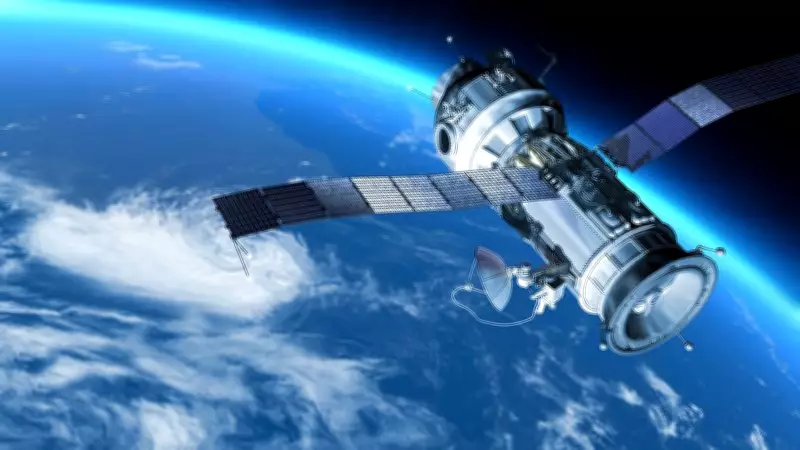
NASA's Van Allen Probe A to Re-Enter Earth's Atmosphere After 14-Year Mission
NASA's Van Allen Probe A, a pioneering spacecraft launched to study Earth's radiation belts, is scheduled to re-enter Earth's atmosphere after an impressive 14-year mission. This event marks the culmination of a groundbreaking scientific endeavor that has significantly advanced our understanding of space weather and its effects on our planet.
End of a Landmark Space Exploration Mission
The Van Allen Probe A, part of NASA's Living With a Star program, was launched in August 2012 alongside its twin, Van Allen Probe B. Together, these spacecraft have provided unprecedented data on the Van Allen radiation belts, which are zones of charged particles trapped by Earth's magnetic field. After over a decade of operation, the probe is now on a trajectory that will lead to its atmospheric re-entry, expected to occur in the coming months.
Scientific Contributions and Discoveries
During its mission, the Van Allen Probe A made several key discoveries that have reshaped space science. It helped scientists understand the dynamic nature of the radiation belts, including how they respond to solar storms and other space weather events. The probe's instruments measured high-energy particles and electromagnetic fields, providing critical insights that have improved satellite safety and space weather forecasting.

- Mapping the structure and variability of the Van Allen belts in detail.
- Identifying mechanisms that cause particle acceleration and loss in the belts.
- Enhancing models used to predict radiation hazards for astronauts and spacecraft.
Atmospheric Re-Entry and Safety Measures
The re-entry process is carefully monitored by NASA to ensure it poses no risk to people or property on Earth. Most of the spacecraft is expected to burn up upon atmospheric entry, with any surviving fragments likely to fall into uninhabited ocean areas. This controlled end-of-life disposal aligns with international guidelines for space debris management, highlighting NASA's commitment to responsible space exploration.
As the Van Allen Probe A concludes its mission, its legacy lives on through the vast dataset it collected, which continues to inform research in heliophysics and space environment studies.






