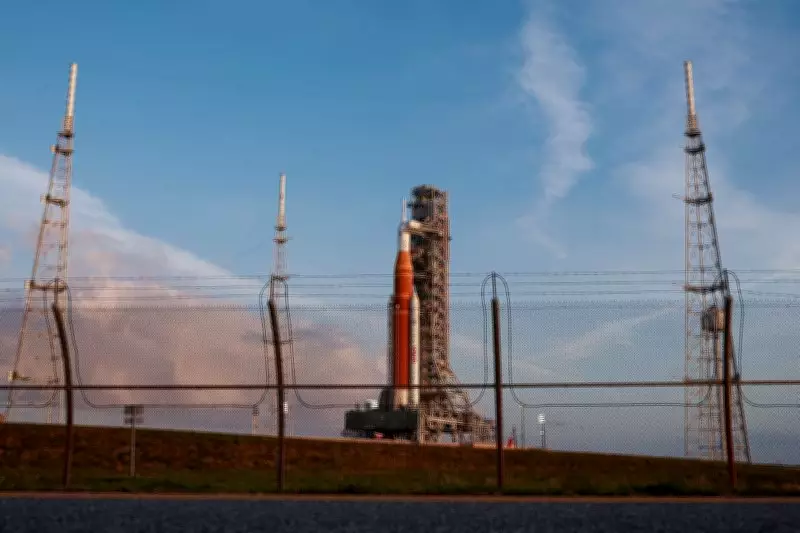
NASA Initiates Rocket Fueling for Historic Crewed Moon Mission
In a landmark step toward returning humans to the Moon, NASA has commenced the fueling process for its powerful Space Launch System (SLS) rocket. This critical operation sets the stage for the Artemis II mission, which will carry astronauts on a lunar journey for the first time in over half a century.
Reviving Lunar Exploration After Decades
The fueling marks a pivotal moment in space exploration, as the last crewed mission to the Moon was Apollo 17 in December 1972. Since then, no humans have ventured beyond low-Earth orbit. The Artemis program, named after the Greek goddess of the Moon, aims to reestablish a sustainable human presence on the lunar surface, with Artemis II serving as a crucial test flight.
Key details of the mission include:

- The SLS rocket, standing over 320 feet tall, is being loaded with liquid hydrogen and liquid oxygen propellants at Kennedy Space Center in Florida.
- Artemis II will send four astronauts on a 10-day mission to orbit the Moon, testing systems for future lunar landings.
- This mission follows the uncrewed Artemis I flight in 2022, which successfully demonstrated the rocket and Orion spacecraft's capabilities.
Technical Preparations and Safety Protocols
Fueling the SLS is a complex and hazardous procedure, requiring precise coordination to handle cryogenic fuels at extremely low temperatures. NASA engineers are monitoring the process closely to ensure all systems are functioning optimally before launch. The agency has implemented rigorous safety measures, given the mission's crewed nature and the rocket's immense power.
According to NASA officials, this fueling operation is a critical milestone that validates years of development and testing. It brings the agency one step closer to achieving its goal of landing the first woman and the next man on the Moon by the mid-2020s.
Implications for Future Space Exploration
The success of Artemis II could pave the way for Artemis III, which plans to land astronauts near the lunar south pole. Beyond scientific discovery, these missions are designed to test technologies for future Mars expeditions and foster international collaboration in space. The fueling process underscores NASA's commitment to advancing human spaceflight and exploring new frontiers.
As the rocket is prepared for its historic journey, the world watches with anticipation, marking a new chapter in lunar exploration that promises to inspire generations and expand our understanding of the cosmos.