NASA's Artemis II Mission Achieves Critical Milestone with Orion Spacecraft Separation
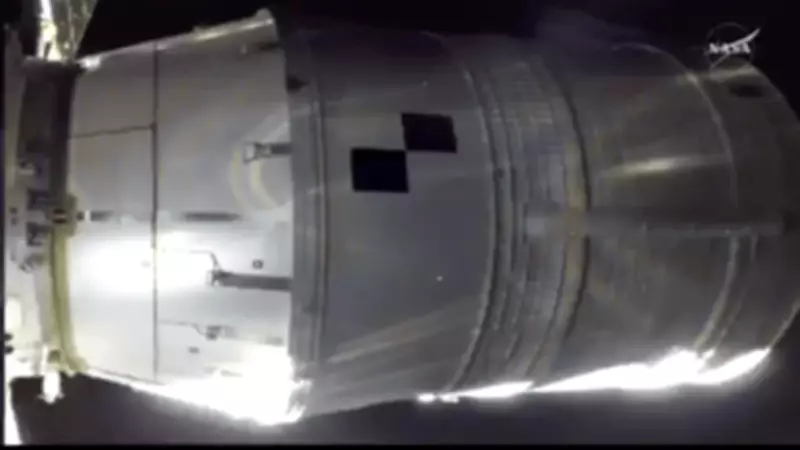
In a significant development for lunar exploration, NASA confirmed on Wednesday that the Orion spacecraft has successfully separated from the rocket's upper stage as part of the ongoing Artemis II mission. This crucial step occurred shortly after the historic launch, marking a pivotal moment in humanity's return to the Moon.
Manual Piloting and Proximity Operations Underway
The space agency announced that proximity operations tests are now actively being conducted. In a remarkable demonstration of astronaut skill, the crew aboard Orion is manually piloting the spacecraft in a manner similar to docking procedures with another vehicle. NASA shared video footage of the separation online, highlighting this hands-on control by the astronauts.
This manual operation represents a key test of human capabilities in deep space navigation, providing valuable data for future missions where such precision maneuvering will be essential for lunar landings and orbital operations.

Historic Launch and Mission Significance
The separation update came just hours after Artemis II launched successfully from Launch Pad 39B at Kennedy Space Center in Florida. The mission, propelled by NASA's powerful Space Launch System rocket, is sending astronauts on a historic journey around the Moon—the first crewed lunar flyby in over half a century since the legendary Apollo 11 mission in 1969.
NASA Administrator Jared Isaacman described the launch as "a defining moment" in space exploration history. He emphasized that "Artemis II is the start of something bigger than any one mission. It marks our return to the Moon, not just to visit, but to eventually stay on our Moon Base, and lays the foundation for the next giant leaps ahead."
Mission Details and Crew Composition
The Artemis II mission is scheduled to last approximately 10 days, during which Orion will travel into high Earth orbit before executing a translunar injection burn to set its course around the Moon. The four-person crew includes:
- NASA astronaut Reid Wiseman
- NASA astronaut Victor Glover
- NASA astronaut Christina Koch
- Canadian Space Agency astronaut Jeremy Hansen
This international crew composition underscores the collaborative nature of modern space exploration and represents a significant milestone for Canada's space program.
Scientific Objectives and Lunar Observations
During their lunar flyby, the astronauts will conduct detailed observations and capture high-resolution images of the Moon's surface. Of particular interest are areas that have rarely been seen by human eyes, providing scientists with unprecedented visual data for geological analysis and future landing site selection.
The mission represents more than just a symbolic return to lunar exploration—it serves as a critical test bed for technologies and procedures that will enable sustained human presence on the Moon and eventually support missions to Mars and beyond.
As the Orion spacecraft continues its journey, NASA engineers and scientists will be monitoring systems performance closely, gathering data that will inform the development of Artemis III—the mission planned to land astronauts on the lunar surface in the coming years.