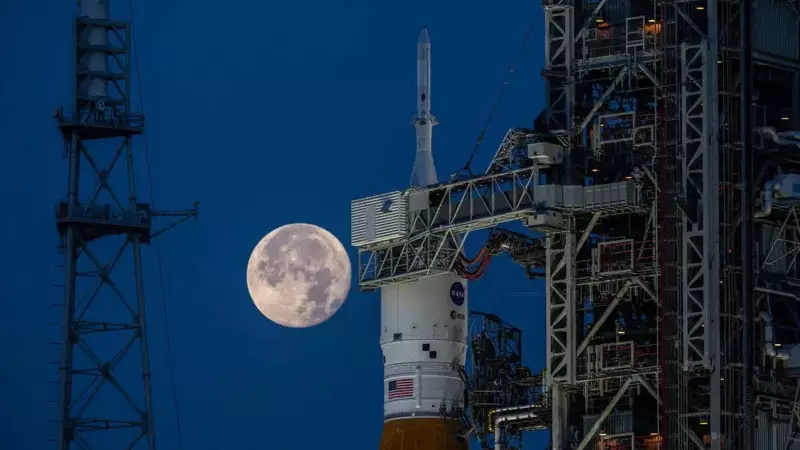
NASA is gearing up for a monumental moment in space exploration. The agency plans to send astronauts back toward the Moon for the first time in over fifty years. The Artemis II mission represents NASA's first crewed lunar flight under the ambitious Artemis program. If everything proceeds smoothly, the spacecraft could lift off as early as February 6.
A Crucial Test Run for Future Moon Landings
Artemis II will not involve a moon landing itself. Instead, it serves as a vital test run for the systems and procedures needed for future missions. Four astronauts will embark on an approximately ten-day journey. They will travel around the Moon and return safely to Earth. This mission will rigorously test key spacecraft systems, putting them through their paces before subsequent attempts at a lunar landing.
Final Preparations at Kennedy Space Center
Final preparations are now in full swing at the Kennedy Space Center in Florida. NASA intends to roll out the massive Space Launch System rocket and the Orion crew spacecraft to Launch Pad 39B. This move is scheduled for no earlier than January 17.

The fully assembled rocket stands taller than the Statue of Liberty. The journey to the launch pad, though only about four miles, is a slow and meticulous process. It can take up to twelve hours to complete the careful transport.
Lori Glaze, acting assistant administrator for NASA's Exploration Systems Development Mission Directorate, recently emphasized the progress. "We are moving closer to Artemis II, with rollout just around the corner," she stated. "We have important steps remaining on our path to launch, and crew safety will remain our top priority at every turn, as we near humanity's return to the Moon."
The Artemis II Crew: A Historic Team
The mission crew includes NASA astronauts Reid Wiseman, Victor Glover, and Christina Koch. They are joined by Jeremy Hansen from the Canadian Space Agency. Together, this team will achieve a significant milestone. They will become the first humans in the 21st century to travel beyond low Earth orbit, echoing the legacy of the Apollo missions.
Critical Wet Dress Rehearsal This Month
Once the rocket arrives at the launch pad, teams will begin a series of critical inspections. The most significant of these is the wet dress rehearsal, scheduled for later this month. During this crucial test, NASA will practice the entire launch countdown sequence.
The rehearsal involves fully fueling the rocket with over 700,000 gallons of supercooled propellants. Engineers will also practice draining the fuel and reviewing all safety procedures. This comprehensive test ensures every system functions as expected before the actual launch.
NASA officials have repeatedly stressed that safety is the paramount concern. Engineers have been actively resolving technical issues, including work on ground systems that supply oxygen to the Orion spacecraft. The agency maintains a cautious approach. If weather conditions or technical concerns arise, they are prepared to delay key steps rather than rush the process.
Path to Launch Confirmation
Following the wet dress rehearsal, NASA will conduct a formal flight readiness review. This review will determine if the mission is cleared for launch. Only after this assessment will a final, official launch date be confirmed. For now, the launch window remains open from early February through April, providing flexibility.
This mission marks a major step toward NASA's broader goal. The agency aims not only to return humans to the lunar surface but also to establish a sustainable, long-term presence on the Moon. Artemis II is the critical proving ground that makes those future ambitions possible.