

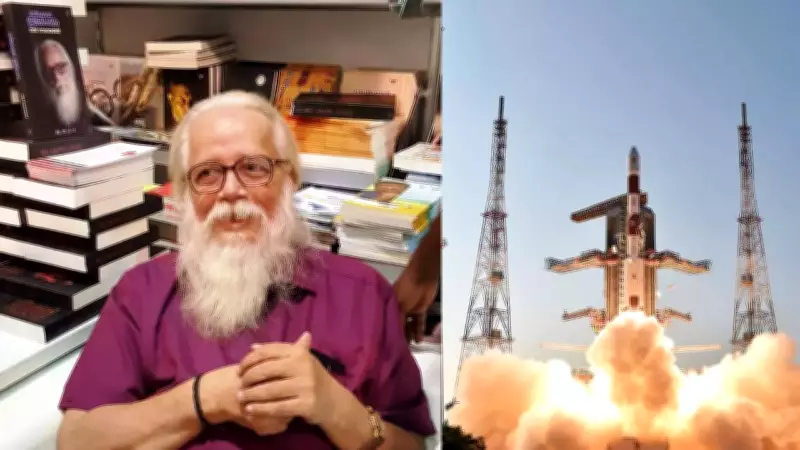
The False Espionage Case That Shook India's Space Program
In 1994, Nambi Narayanan, a senior scientist at the Indian Space Research Organisation (ISRO), found his distinguished career abruptly derailed by a fabricated espionage case. At the time, Narayanan was leading India's critical cryogenic rocket engine program, working to acquire advanced technology from Russia. The baseless accusations led to his arrest, imprisonment, and triggered a protracted legal battle that spanned years before his name was finally cleared.
A Distinguished Career Before the Controversy
Nambi Narayanan hailed from a middle-class family in Kerala and joined ISRO in the early 1960s after completing his engineering education. He worked alongside India's most celebrated space scientists including Vikram Sarabhai, Satish Dhawan, and A.P.J. Abdul Kalam on pivotal projects. Following a scholarship to study rocket propulsion at Princeton University, Narayanan returned to India to focus on developing cryogenic engines capable of handling high-pressure liquid fuels for satellite launch vehicles.
The Fateful Arrest and Media Frenzy
On November 30, 1994, Kerala police arrived at Narayanan's home in Trivandrum, questioning him and his wife before taking him to the police station for further interrogation. That same night, authorities formally arrested him, alleging he had shared sensitive rocket technology with Pakistan through two women from the Maldives who supposedly collected secret information about India's cryogenic engine program.

The media quickly sensationalized the story, labeling Narayanan a spy across newspapers and television broadcasts. He spent 50 days in judicial custody and prison while facing charges under India's Official Secrets Act along with corruption allegations.
Investigation and Vindication
In January 1995, the Central Bureau of Investigation (CBI) assumed control of the case. After conducting a thorough review of all evidence, the CBI concluded in 1996 that there was absolutely no proof of espionage. Their report completely exonerated Narayanan and other accused individuals, confirming that no sensitive documents or technology had been transferred.
Following the CBI's findings, Narayanan was granted bail, though his case continued through multiple appeals. The Supreme Court of India ultimately dismissed all remaining charges in 1998, officially clearing his name.
Compensation and Accountability
After his exoneration, Narayanan pursued legal action against the Kerala government for wrongful arrest and harassment. He received initial compensation of 5 million rupees, with additional amounts later confirmed for the damage to his career and personal life. In 2018, the Supreme Court ordered a review of Kerala police actions in fabricating the case, initiating investigations to identify those responsible for the false claims.
Impact on India's Space Ambitions
Although Narayanan returned to ISRO after being cleared, he was reassigned to administrative duties rather than research positions. The interruption to his work on the cryogenic engine project temporarily slowed technological developments. Despite these setbacks, India ultimately succeeded in developing indigenous cryogenic engines and advanced satellite launch vehicles, strengthening the nation's capabilities in space exploration, satellite deployment, and interplanetary missions.
Recognition and Legacy
In 2019, Nambi Narayanan received the Padma Bhushan, one of India's highest civilian honors, recognizing his contributions to space science. His case remains one of the most significant controversies in India's space history, highlighting the devastating consequences of false accusations on scientific progress and individual careers.






