

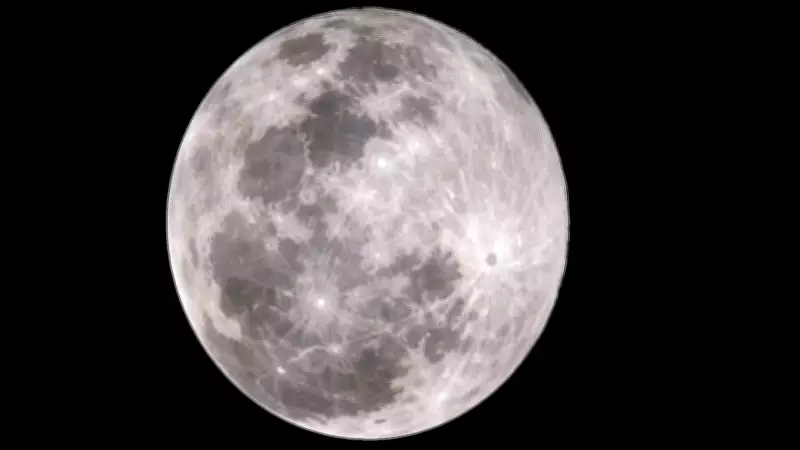
The Moon's Critical Role in Earth's Stability
For billions of years, the Moon has served as Earth's closest celestial companion, exerting a profound influence on our planet's natural systems. From governing ocean tides to stabilizing our planetary axis and regulating biological cycles, its presence is fundamental to life as we know it. But what would happen if this constant companion were to suddenly vanish? A groundbreaking scientific study now reveals the catastrophic consequences of such an event.
Scientific Study Reveals Moon's Gradual Shrinkage
Recent research conducted by scientists at the National Air and Space Museum's Centre for Earth and Planetary Studies has uncovered that the Moon is undergoing significant changes. Using data collected from NASA missions, particularly the Lunar Reconnaissance Orbiter, researchers have documented how the Moon is slowly shrinking due to internal cooling and contraction.
The study focused on analyzing cracks and cliffs known as lobate scarps on the lunar surface. These geological features provide clear evidence of the Moon's gradual contraction as it loses internal heat. The research builds upon earlier work by Thomas R. Watters, a senior scientist emeritus at the Centre for Earth and Planetary Studies, who first identified these telltale signs of lunar shrinkage.

Earth Without the Moon: A Planet Transformed
Scientists often explore hypothetical scenarios to understand the Moon's importance to Earth's stability. If our natural satellite were to disappear, multiple Earth systems would undergo dramatic transformations.
The most immediate and noticeable change would occur in our oceans. The Moon's gravitational pull currently creates the tides by drawing ocean waters toward it. Without this influence, tides would diminish to approximately one-third of their current strength, fundamentally altering coastal ecosystems and marine life patterns.
Planetary Stability at Risk
Perhaps even more significant would be the impact on Earth's axial tilt. Currently stabilized at about 23.5 degrees by the Moon's gravitational influence, this tilt creates our seasons. Without the Moon's stabilizing effect, Earth's axis could begin to tilt wildly, leading to unpredictable and extreme weather patterns, chaotic seasonal changes, and potentially catastrophic climate shifts.
The Moon also plays a crucial role in regulating Earth's rotation. Scientists believe that in Earth's early history, a day lasted only 8 to 10 hours. The gravitational interaction between Earth and the Moon has gradually slowed our planet's rotation to the current 24-hour day-night cycle. Without the Moon, this braking effect would cease, potentially accelerating Earth's rotation over geological timescales.
Long-Term Implications of Lunar Changes
The findings from this comprehensive study highlight how the Moon actively shapes multiple physical processes on Earth. By studying the Moon's evolution and current changes, scientists gain valuable insights into the long-term interactions between Earth and its natural satellite.
This research underscores the importance of continued lunar observation and study. As the Moon continues its gradual shrinkage due to internal cooling, understanding these processes becomes increasingly important for predicting how Earth-Moon interactions might evolve over millions of years.
The study serves as a powerful reminder of our planet's delicate balance within the solar system and the critical role that celestial bodies play in maintaining conditions suitable for life on Earth.






