MIT Scientist Pioneers Revolutionary Air-to-Water Technology
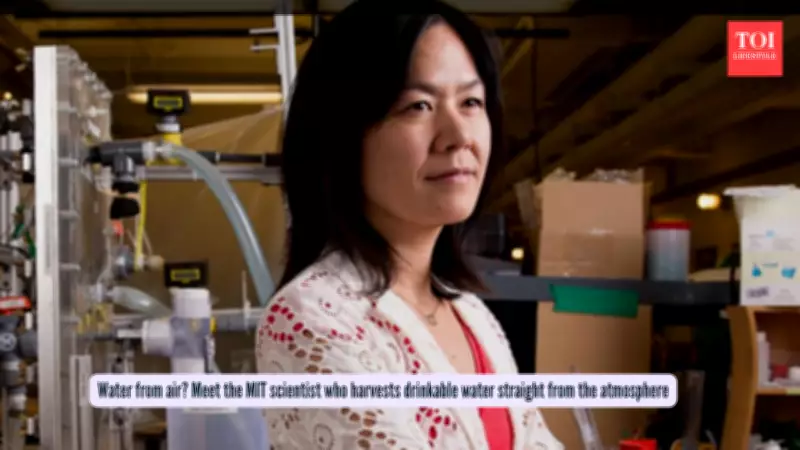
Imagine flipping a switch and witnessing clean, drinkable water materialize from the very air you breathe—no pipes, no wells, just atmospheric moisture transformed into life-sustaining H2O. While this might sound like science fiction, it represents the groundbreaking reality of research led by MIT mechanical engineer Evelyn N. Wang. This innovation arrives at a critical juncture, as United Nations and World Health Organization statistics reveal that over 2.2 billion people worldwide lack consistent access to safe drinking water.
The Global Water Crisis: A Stark Reality
From remote desert communities to overcrowded urban centers where taps run dry, the water crisis manifests in devastating ways. Families are forced to haul heavy buckets over miles, children miss school to fetch water, and agricultural lands wither without irrigation. This widespread scarcity underscores the urgent need for sustainable, decentralized water solutions that can operate independently of traditional infrastructure.
Meet Evelyn N. Wang: The Visionary Engineer
Evelyn N. Wang, the Ford Professor of Mechanical Engineering at MIT, stands at the forefront of atmospheric water harvesting technology. Her work focuses on capturing ambient moisture using specialized porous materials, then releasing it as liquid water through controlled heating processes. This elegant approach bypasses the need for extensive plumbing or groundwater extraction.

Wang's educational and professional journey is equally impressive:
- She earned her Bachelor of Science in Mechanical Engineering from MIT between 1996 and 2000.
- Wang completed her Master's degree in 2001 and her PhD in 2006 from Stanford University, specializing in heat transfer—a fundamental principle underlying her water technology.
- Following her doctoral studies, she conducted research at Bell Laboratories before joining MIT as an Assistant Professor in 2007.
- Wang advanced to Associate Professor in 2011, achieved Full Professor status in 2017, and served as Head of the Mechanical Engineering Department from 2018 to 2022.
- In 2023, she led the Advanced Research Projects Agency-Energy until early 2025, subsequently assuming the role of MIT's Vice President for Energy and Climate in April 2025, as reported by India Today.
How the Solar-Powered Technology Works
Wang's team has developed devices that operate entirely on solar power, making them particularly suitable for arid regions with unreliable electricity grids. The process involves three key stages:
- Absorption: Special porous materials absorb water vapor from the air during cooler nighttime hours.
- Release: Sunlight provides the heat needed to release the captured moisture from the materials during the day.
- Condensation: The released vapor condenses into liquid, drinkable water without requiring any external electrical input.
This cyclical, energy-efficient system can extract water even from relatively dry air, as demonstrated in prototypes detailed in a 2020 MIT News article.
Recognition and Future Implications
Wang's innovations have garnered significant acclaim from scientific and economic institutions. Both Scientific American and the World Economic Forum recognized her arid-climate water technology as one of the "Top 10 Emerging Technologies of 2017." Her MIT Device Research Lab continues to refine and advance these prototypes, pushing the boundaries of what's possible in sustainable water production.
As climate change exacerbates water scarcity and population growth strains existing resources, technologies like Wang's atmospheric water harvesters offer a beacon of hope. They represent not just a technical achievement, but a potential paradigm shift in how humanity accesses one of its most fundamental resources—turning the air around us into a reliable source of clean, safe drinking water for millions in need.