

MAHE Student Honored with National Innovation in Water Technology Award
Arpit Kumar, a dedicated BSc (Hons) molecular physics student at the Manipal Institute of Applied Physics within the prestigious Manipal Academy of Higher Education (MAHE), has been recognized with the Innovation in Water Technology Award. This national honor was bestowed upon him for his groundbreaking development of a magnetic-separation-based system designed to effectively remove arsenic from drinking water.
Award Ceremony and Recognition
The prestigious award was presented at a recent ceremony held in New Delhi, with Lok Sabha Speaker Om Birla officiating the event. This recognition highlights Kumar's significant contribution to addressing one of India's critical public health challenges through technological innovation.
The MARU Technology: A Breakthrough in Water Purification
Kumar's innovation powers a modular water treatment system known as the Magnetic Arsenic Removal Unit (MARU). This system represents a substantial advancement over conventional filtration methods. Unlike traditional systems that depend on consumable filter media requiring frequent replacement, MARU utilizes magnetic separation to extract arsenic from groundwater.

The key advantages of the MARU system include:
- Minimal sludge generation, reducing environmental impact
- Reduced dependence on replaceable media, lowering long-term costs
- Low maintenance requirements, enhancing practicality for diverse settings
- Modular design adaptable for households, communities, and institutional use
Kumar emphasized that the system is specifically engineered to supply safe drinking water to homes, schools, health centers, and community water points, making it a versatile solution for arsenic-affected regions.
Development Journey and Startup Foundation
The origins of this technology can be traced back to a pilot project Kumar conducted as part of research linked to the Bihar Bal Bhawan Kilkari Department of Education and the Public Health Engineering Department of the Bihar government. This initial work provided the foundation for what would become a comprehensive solution.
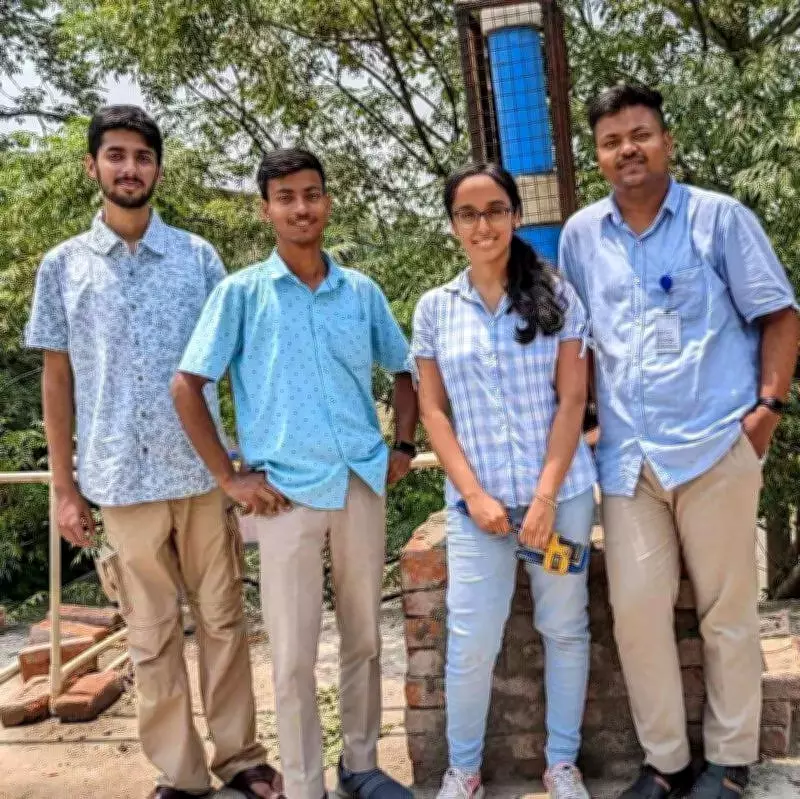
Kumar further advanced his research through the establishment of his startup, Navmarg Research and Innovation Pvt Ltd, which operates from the Innovation Centre at MAHE. The startup team includes co-founder Abhijeet Kumar, along with key members Akshat Adarsh and Shambhavi Sinha, who have collectively contributed to the project's success.
Support and Pilot Deployments
Through Navmarg, the team secured grant support from the Rural Drinking Water and Sanitation Department of the Karnataka government, enabling further development and testing. The system has undergone rigorous pilot deployments in arsenic-affected regions of Bihar, including installations in government schools where it successfully supplied arsenic-safe drinking water to students during field trials.
Currently, the group is conducting additional pilot deployments in Raichur district to evaluate the system's performance under real field conditions, ensuring its reliability and effectiveness across different environments.
Performance and Technological Integration
During pilot operations, the MARU system treated large volumes of arsenic-contaminated water, consistently reducing arsenic levels to within permissible drinking water limits as defined by safety standards. Kumar noted that the team employs AI-based water diagnostics, advanced water data systems, and geospatial platforms to support monitoring and deployment, integrating modern technology to enhance system efficiency and data-driven decision-making.
Addressing a Critical Public Health Issue
Arsenic contamination in groundwater remains a major public health concern across various parts of India, particularly in states such as Bihar, West Bengal, Assam, Uttar Pradesh, Punjab, and parts of Karnataka. Kumar's innovation offers a promising, sustainable solution to this pervasive problem, potentially improving access to safe drinking water for millions of affected individuals.
This development underscores the vital role of young innovators and academic institutions like MAHE in tackling environmental and health challenges through scientific research and entrepreneurial initiative.






