Scientists Unveil Revolutionary Living Walls That Breathe, Grow, and Absorb Carbon Dioxide
Imagine architectural structures that don't merely exist as static objects but actively grow, breathe, and repair themselves like living organisms. This vision has moved from science fiction to reality with the development of groundbreaking living walls that integrate 3D printing technology with cyanobacteria, creating carbon-absorbing structures that thrive on sunlight.
Living Architecture Debuts at Venice Biennale
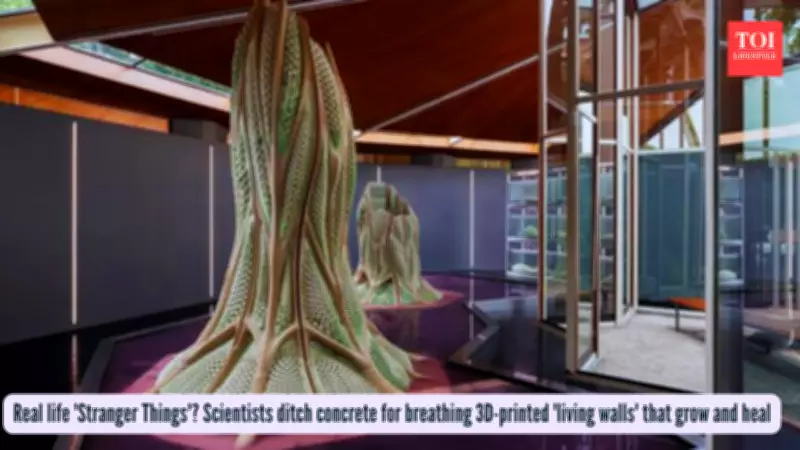
At the prestigious 2025 Venice Architecture Biennale's Canada Pavilion, visitors witnessed a remarkable demonstration of ecological innovation. The installation, titled Picoplanktonics and opened by the Canada Council for the Arts, featured the world's largest architectural structure made entirely from living materials. These 3D-printed walls, alive with cyanobacteria, required daily attention to light, humidity, and temperature to maintain their biological functions.
Developed over four years by the Living Room Collective under the leadership of biodesigner Andrea Shin Ling, this was not merely an artistic display but a serious test of living systems versus traditional inert construction materials. The exhibition ran until November 23, 2025, showcasing how architectural forms could host microbes specifically engineered for carbon sequestration.

The Science Behind Self-Sustaining Structures
On April 23, 2025, a groundbreaking paper published in Nature Communications detailed the scientific foundation of this innovation. A research team from ETH Zurich, led by Dalia Dranseike, Yifan Cui, and Mark W. Tibbitt with contributions from Andrea S. Ling and Benjamin Dillenburger, successfully embedded Synechococcus sp. PCC 7002 cyanobacteria into a specially formulated 3D-printable F127-BUM hydrogel.
Over an impressive 400-day testing period, this living material demonstrated remarkable carbon capture capabilities. Through the combined processes of photosynthesis and microbially induced carbonate precipitation (MICP), the material captured 26 ± 7 milligrams of CO₂ per gram of hydrogel. This represented a substantial improvement from the initial capture rate of 2.2 ± 0.9 mg/g documented at the beginning of the research.
The samples exhibited visible biological activity, greening significantly and gaining 36% more dry mass than control samples after just 30 days. Most importantly, the captured carbon remained stably locked within the material, while the formation of strengthening minerals suggested potential self-repair capabilities.
Innovative Design Enables Deep Photosynthesis
The research team employed sophisticated design strategies to maximize the biological functionality of their living material. The hydrogel transmitted an impressive 76 ± 3% of visible light (400-750 nm wavelengths), enabling cyanobacteria to photosynthesize not just on surfaces but deep within the material's structure.
Optimal performance was achieved with a 5 mm thickness, while lattice and coral-inspired geometric forms increased surface volume by 150% while maintaining cellular viability. These design elements mirrored those used in the Picoplanktonics installation in Venice, optimizing both light penetration and fluid flow throughout the structures.
Remarkably, lattice structures maintained their green coloration and biological activity for 365 days, retaining their mineralized shapes even after the hydrogel matrix dissolved, demonstrating the material's durability and longevity.
Real-World Applications for Sustainable Construction
Unlike industrial carbon capture systems that require significant energy inputs and produce chemical waste, this biological approach operates under ambient conditions using only sunlight and air. The method avoids the urea or ammonia waste typically generated by alternative carbon capture technologies.
As carbonates accumulated within the material over time, they reinforced the structural integrity, suggesting potential applications for self-healing buildings that actually strengthen with age rather than deteriorate. The Picoplanktonics installation successfully bridged laboratory research with life-scale implementation, proving the scalability of this technology for architectural applications.

The research authors noted that while biological sequestration operates more slowly than industrial carbon-capture systems, its ability to function under ambient conditions without additional energy inputs represents a significant advantage for sustainable construction. This breakthrough points toward a future where buildings actively contribute to environmental remediation rather than merely minimizing their ecological footprint.