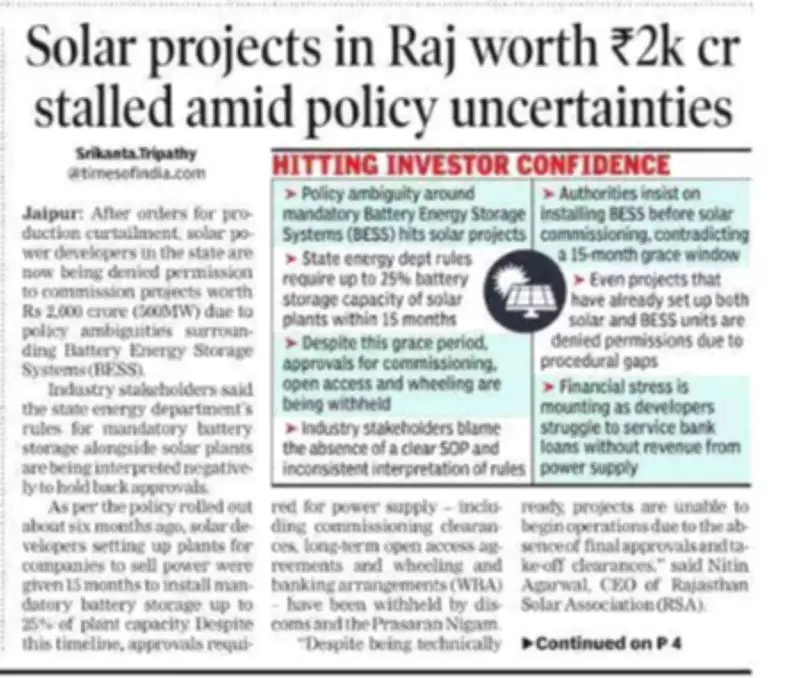
The Rajasthan energy department has released standard operating procedures (SOPs) for integrating Battery Energy Storage Systems (BESS) with solar power projects. However, developers claim that projects totaling nearly 500 MW remain stalled because authorities have not clarified whether solar plants can be commissioned before batteries are installed within the 15-month grace period allowed by government policy.
Partial Relief from SOPs
The SOPs provide partial relief to developers, many of whom had already installed battery systems but could not commission projects due to the lack of operational guidelines. A report in April highlighted the plight of developers whose generation and storage systems were ready but could not commence operations in the absence of clear SOPs.
Unaddressed 15-Month Deadline Issue
Even after the issuance of SOPs, developers and industry stakeholders say the wider issue remains unaddressed – uncertainty over the 15-month deadline for installing BESS alongside solar plants. This lack of clarity has held up investments of around Rs 2,000 crore.

Stakeholders said the policy introduced about six months ago allowed a 15-month window to install battery storage up to 25% of plant capacity. However, they alleged that discoms and transmission authorities are insisting BESS must be installed before commissioning approvals are granted, effectively canceling the grace period.
“The SOPs have come, but the issue of the 15-month window remains unaddressed. There is still no clarity on whether projects can be commissioned before BESS installation within the allowed timeframe,” said a senior industry representative.
Approvals Withheld
Developers said approvals for commissioning, long-term open access, and wheeling and banking arrangements continue to be withheld, with agencies citing ambiguity in policy interpretation.
Many projects were financed through loans with repayment schedules linked to commissioning. With generation yet to begin, developers said cash flows have stalled, raising the risk of loan defaults and assets turning non-performing.