

Young Indian Space Enthusiast Completes Pioneering Mars Simulation Mission in Utah
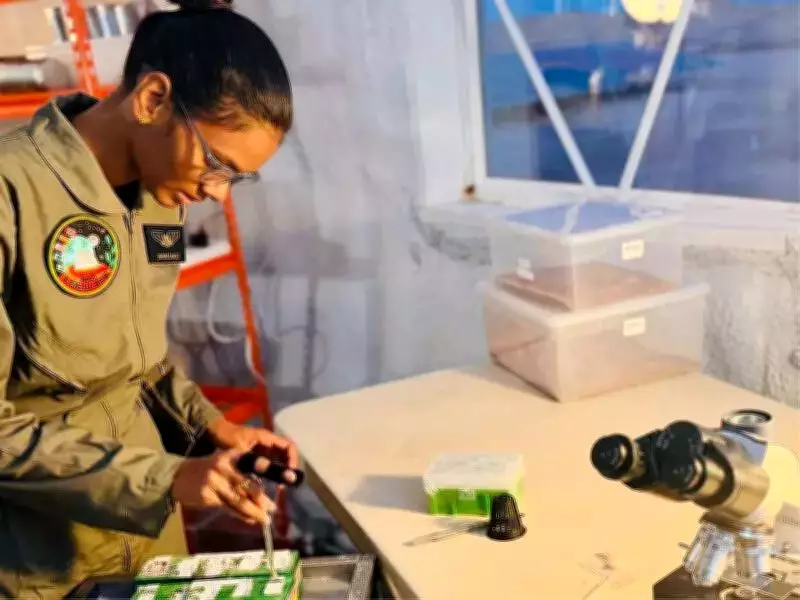
In a significant milestone for India's growing presence in space exploration, 23-year-old Jahnavi Dangeti from Palakollu in West Godavari district has successfully completed a rigorous two-week analog astronaut mission at the prestigious Mars Desert Research Station (MDRS) in Utah, USA. Serving as the crew scientist for Crew 328, Dangeti participated in this groundbreaking simulation from January 25 to February 10, 2025.
Simulating Martian Life and Scientific Research
The mission was meticulously designed to replicate the challenging conditions astronauts would face on Mars, providing participants with a realistic experience of isolation, resource limitations, and operational hurdles. During the simulation, all outdoor activities required wearing full Extravehicular Activity (EVA) suits, navigating using traditional maps instead of digital devices, and carefully managing limited supplies of food, water, and communication systems.
"The mission was designed to simulate life on Mars, giving a realistic experience of isolation, limited resources, and operational challenges," Dangeti explained in an exclusive interview. "During the mission, all outdoor work required wearing an EVA suit, navigating using maps instead of digital devices, and managing limited food, water, and communication systems."

Groundbreaking Scientific Experiments Conducted
As crew scientist, Dangeti conducted several critical experiments under these simulated Martian conditions. Her primary research focused on working with Martian soil simulants to investigate how resources on the Red Planet could potentially be utilized and how sustainable habitats could be constructed for future astronauts.
Additionally, she participated in a crucial delayed communication experiment that studied how time delays affect teamwork dynamics, decision-making processes, and human behavior—a significant challenge that must be addressed for successful future Mars missions.
"I conducted scientific tasks under these conditions, including working with soil samples and observing how the environment affected the experiments," Dangeti revealed. "The experience gave me hands-on exposure to extreme temperatures, very low humidity, and the kinds of challenges astronauts face on Mars. It provided valuable lessons for future planetary exploration."
Educational Outreach and Broader Mission Impact
Beyond her scientific duties, Dangeti actively engaged with school students during the mission, sharing her experiences and insights about space research and human spaceflight. This educational component highlights the mission's commitment to inspiring the next generation of space explorers.
"Analog missions are not just about being isolated; they are mainly about learning how people can live and work effectively in extreme conditions," Dangeti emphasized, underscoring the broader purpose of such simulations beyond mere isolation experiments.
A Distinguished Track Record in Space Exploration
Jahnavi Dangeti is no stranger to pioneering achievements in space exploration:
- In 2021, she became the first Indian to complete the International Air and Space Programme at NASA's Kennedy Space Center, where she served as mission director and led a multinational team across continents.
- In 2022, she became the youngest participant at the Analog Astronaut Training Center in Poland.
- Her passion for space exploration then took her to Geospace Iceland, where she studied planetary geology in lunar and Martian analog environments.
- She has also trained with Project PoSSUM (Polar Suborbital Science in the Upper Mesosphere), a specialized program focusing on upper atmosphere research, space environment studies, and high-altitude missions.
This latest achievement at MDRS represents another significant step in Dangeti's remarkable journey, demonstrating India's growing capabilities and contributions to international space exploration efforts. Her work provides valuable data and insights that will help shape future missions to Mars and beyond, while inspiring countless young Indians to pursue careers in space science and technology.






