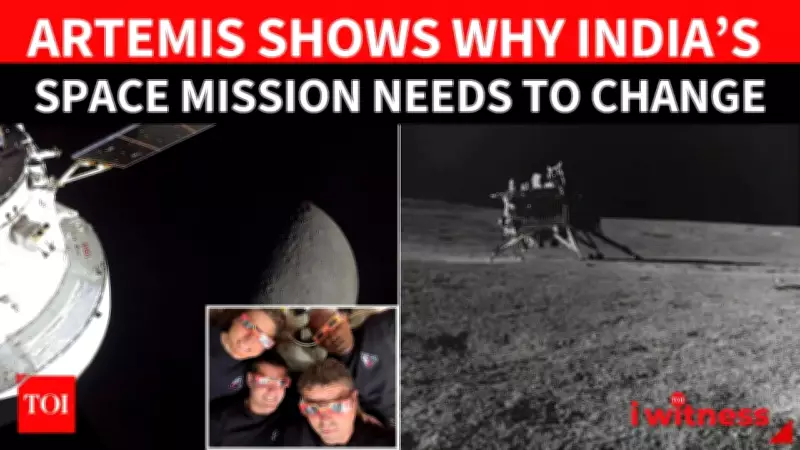
Is ISRO's Frugal Mindset Delaying India's Human Moon Landing Ambitions?
India has achieved remarkable successes with its Chandrayaan lunar missions, establishing itself as a significant player in space exploration. However, the country remains approximately two decades away from landing humans on the Moon, according to current projections. This timeline places India far behind the highly articulated plans of global space powers like China and the United States-led Artemis program.
The Double-Edged Sword of Frugal Engineering
ISRO's celebrated "frugal engineering" approach has enabled impressive achievements with limited budgets, such as the successful Chandrayaan-3 mission. This mindset emphasizes cost-effectiveness and resource optimization, allowing India to conduct complex space missions at a fraction of the cost of other space agencies.
However, this very frugality may now be hindering the rapid technological advancement required for crewed missions. Human spaceflight demands significantly higher safety standards, more rigorous testing protocols, and advanced life support systems that cannot be compromised for cost savings.

Critical Challenges Facing India's Lunar Ambitions
Several key factors are contributing to India's extended timeline for human Moon missions:
- Budgetary Constraints: ISRO operates with a budget that is substantially smaller than those of NASA or China's space program. To accelerate human spaceflight capabilities, significant budget increases are essential for developing advanced technologies and infrastructure.
- Personnel Vacancies: Critical positions within ISRO remain unfilled, creating gaps in expertise and slowing down research and development processes for complex human spaceflight systems.
- Testing Culture: India's space program needs to adopt a more failure-tolerant testing approach that allows for iterative improvements without excessive risk aversion. Crewed missions require extensive testing that accepts some failures as part of the development process.
- Private Sector Integration: Effectively incorporating private startups and companies into India's long-term space strategy could accelerate innovation and bring fresh perspectives to technological challenges.
The Global Space Race Context
While India has focused on cost-effective robotic missions, China has established a permanent space station and plans crewed lunar landings within this decade. The United States, through the Artemis program, aims to return astronauts to the Moon by 2026 and establish sustainable lunar exploration.
These ambitious international timelines highlight the competitive pressure facing India's space ambitions. To remain relevant in the new space race, India must balance its frugal engineering heritage with the substantial investments required for human spaceflight.
The challenge lies in maintaining India's distinctive approach to space exploration while accelerating development timelines to compete with global space powers. This requires strategic decisions about resource allocation, international partnerships, and technological priorities that will determine India's position in the next phase of lunar exploration.