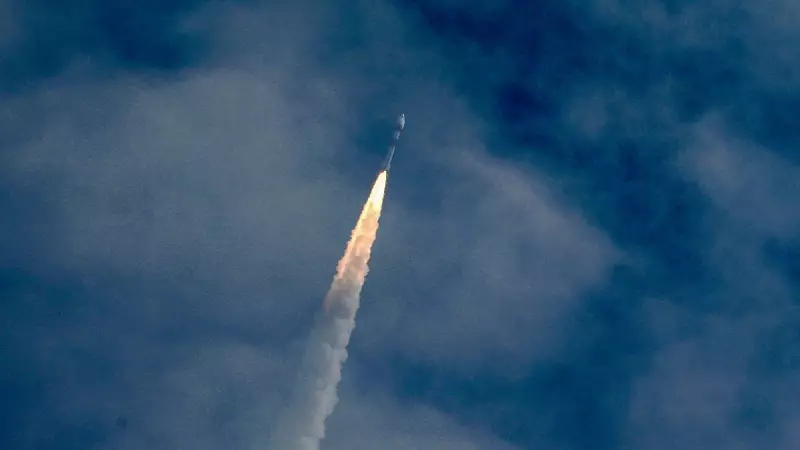
The Indian Space Research Organisation (ISRO) faced a significant setback as its first launch mission of 2026, the PSLV-C62, ended in failure. This incident marks a rare stumble for the reliable Polar Satellite Launch Vehicle (PSLV) workhorse, casting a shadow over the year's ambitious space agenda.
The Mission Profile and What Went Wrong
The PSLV-C62 mission was scheduled for a precise launch from the Satish Dhawan Space Centre in Sriharikota. Its primary payload was a crucial domestic satellite, alongside several smaller commercial satellites from international clients. The initial stages of the launch, including the liftoff and the performance of the initial solid and liquid fuel stages, appeared nominal.
However, anomalies were detected during a critical later phase, believed to be related to the ignition or performance of the upper stage. This deviation from the planned trajectory meant the rocket could not achieve the intended orbit. Consequently, the satellites onboard were lost, as they were deployed into a useless, decaying path that would lead to their re-entry and burn-up in the Earth's atmosphere.

Immediate Aftermath and ISRO's Response
ISRO Chairman S. Somanath promptly addressed the media, confirming the mission's failure. He stated that a detailed Failure Analysis Committee (FAC) has been constituted to investigate the root cause of the anomaly. The committee, comprising seasoned scientists and engineers, will scrutinize telemetry data, onboard system performance, and stage separation events to pinpoint the exact technical glitch.
This failure is a blow to ISRO's impeccable record with the PSLV, which has been a symbol of reliability with over 50 successful missions. The incident also has immediate financial and strategic repercussions. The loss of the primary satellite, developed at considerable cost and time, will delay the services it was meant to provide, which could include earth observation, communication, or scientific research.
Broader Implications for India's Space Program
The failure of PSLV-C62 sends ripples beyond a single mission. Firstly, it impacts the launch schedule for the year, potentially delaying subsequent missions that were lined up on the ISRO calendar. Secondly, it poses a challenge for ISRO's commercial arm, NewSpace India Limited (NSIL), which manages commercial launches. Reliability is paramount in the competitive global launch market, and such setbacks can affect future contract negotiations with foreign satellite companies.
However, ISRO has a strong history of resilience and learning from failures. Past incidents, like the GSAT-6A communication satellite anomaly, have led to rigorous reviews and improved protocols. The space agency is expected to approach this setback with the same technical rigor. The findings of the FAC will be crucial not just for rectifying the issue with PSLV, but also for informing the development and testing protocols for the next-generation launch vehicles.
This event underscores the inherent risks and complexities of space exploration. While it is a moment of disappointment, it also serves as a stark reminder that technological advancement is often paved with such challenges. The focus now shifts to ISRO's investigation and its ability to bounce back, ensuring that the lessons from PSLV-C62 strengthen future missions and uphold India's position in the global space arena.