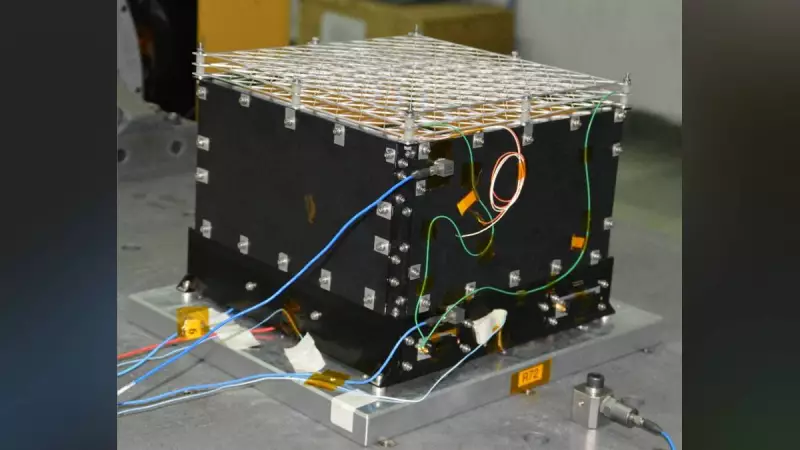
In a significant achievement for India's space exploration program, a sophisticated instrument aboard the Chandrayaan-3 lander has successfully detected and measured tiny interplanetary particles hitting the lunar surface. The Indian Space Research Organisation (ISRO) announced this breakthrough, which provides invaluable data about the dust environment in the cislunar space.
Chandrayaan-3's Silent Watchdog: The ILSA Instrument
The key player in this discovery is the Instrument for Lunar Seismic Activity (ILSA), which is primarily designed to study moonquakes. This sensitive device, a micro-electro-mechanical system (MEMS) based sensor, is mounted on the Vikram lander. While its main job is to listen for seismic rumbles, it has proven exceptionally capable of sensing the minute vibrations caused by another phenomenon: impacts from micrometeoroids and interplanetary dust particles.
ISRO revealed that during the mission's first few weeks on the Moon, ILSA recorded a series of intriguing events. These were not internal moonquakes but the signatures of tiny particles, likely remnants from asteroids or comets, striking the lander or the nearby lunar regolith. The instrument's data allowed scientists to estimate the size, speed, and impact energy of these particles, offering a direct measurement of the dust flux in the lunar environment.

Unlocking Secrets of the Solar System's Dust
The successful tracking of these interplanetary particles is more than just a technical feat; it opens a new window for scientific inquiry. Interplanetary dust is considered a fundamental building block of the solar system, and studying its properties near the Moon helps scientists understand the composition and dynamics of our cosmic neighborhood. This data is crucial for several reasons.
Firstly, it helps in assessing the micrometeoroid hazard for future long-duration lunar missions, both robotic and human. Knowing how often and how hard these tiny particles hit is essential for designing protective shielding for habitats, spacecraft, and astronauts' suits. Secondly, the measurements contribute to planetary science, helping model the distribution and origin of dust throughout the inner solar system.
ISRO stated that the initial observations from ILSA have provided unique, in-situ measurements of these particles in the lunar south polar region, a zone of high interest for global space agencies. The ability of ILSA to detect such faint events underscores the instrument's sensitivity and the robustness of its design.
A Legacy Beyond the Primary Mission
This discovery highlights the extended value and versatility of the Chandrayaan-3 mission's payloads. Even though the lander and rover Pragyan completed their primary objectives over a single lunar day, the data they gathered continues to yield new science. The ILSA instrument, in particular, has demonstrated an unexpected capability, turning a seismic sensor into a highly effective dust detector.
The findings mark a proud moment for India's space science community, showcasing the country's growing prowess in designing instruments that deliver world-class data. It positions ISRO as a key contributor to the global understanding of the lunar environment, especially as the world sets its sights on returning humans to the Moon. This successful experiment with ILSA paves the way for even more specialized dust detection instruments on future Indian and international lunar missions, turning the Moon into a permanent observatory for studying the interplanetary medium.