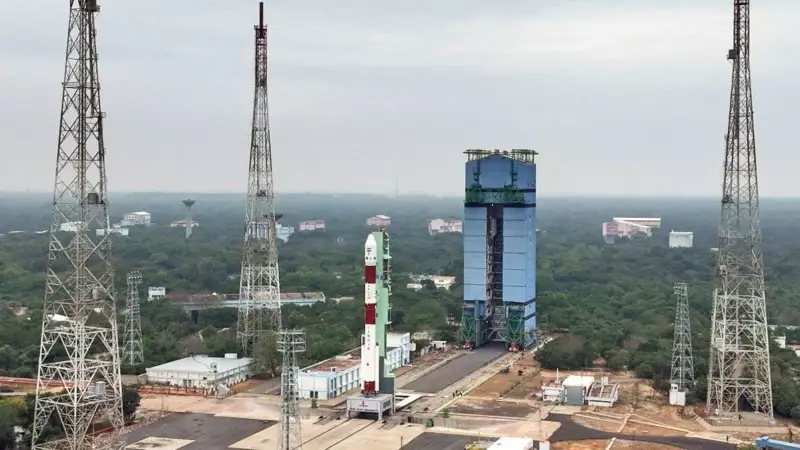
In a powerful commencement to the new year's space endeavours, the Indian Space Research Organisation (ISRO) successfully launched its Polar Satellite Launch Vehicle (PSLV-C62) on Monday, January 12, 2026. The mission, which lifted off at 10:18 AM from the first launch pad at the Satish Dhawan Space Centre in Sriharikota, marks India's first space launch of 2026.
A Flawless Launch and Ambitious Payload
The 260-tonne PSLV-C62 rocket roared into the sky, carrying the primary Earth Observation Satellite named Anvesha (EOS-N1) along with 14 co-passenger satellites. This mission is the 64th flight of the reliable PSLV platform, a workhorse that has previously launched historic missions like Chandrayaan-1, the Mars Orbiter Mission (MOM), and Aditya-L1. The 22.5-hour countdown for the launch had commenced at 12:48 PM on Sunday, January 11.
Operated by ISRO's commercial arm, NewSpace India Ltd (NSIL), the mission had a clear objective: to precisely inject the Anvesha satellite into a polar sun-synchronous orbit approximately 100 kilometres above Earth. The satellite is a collaborative build between Thailand and the United Kingdom.

Precision Deployment and a Spanish Tech Demo
The flight sequence unfolded with textbook precision. Around 17 minutes after lift-off, the rocket first deployed the primary Anvesha satellite, followed by the separation of 13 other co-passenger satellites belonging to both domestic and international customers into the intended orbit.
The mission, however, had an extended technological demonstration planned. More than two hours post-launch, ISRO scientists executed a complex manoeuvre involving the rocket's fourth stage (PS4). They restarted the PS4 engine to de-boost it and place a special payload—the Kestrel Initial Technology Demonstrator (KID) capsule—on a re-entry trajectory.
The 25-kg KID capsule, developed by a Spanish start-up, was then separated. Both the spent PS4 stage and the KID capsule are expected to re-enter Earth's atmosphere and make a controlled splashdown in the South Pacific Ocean, concluding the demonstration phase of the mission.
Bouncing Back with Confidence
This successful launch is particularly significant as it follows the PSLV-C61/EOS-09 mission on May 18, 2025, which could not be completed due to an observation in the rocket's third stage. The flawless execution of PSLV-C62 underscores ISRO's robust failure analysis and correction mechanisms, restoring full confidence in the launch vehicle's reliability.
The mission highlights India's growing role as a key and cost-effective player in the global commercial space launch market, capable of delivering multiple satellites from various nations into precise orbits in a single flight. It sets a positive tone for ISRO's ambitious schedule for 2026, which reportedly includes seven planned launches, including an uncrewed Gaganyaan mission.