India's Private Space Sector Forges Ahead Despite Launch Setback
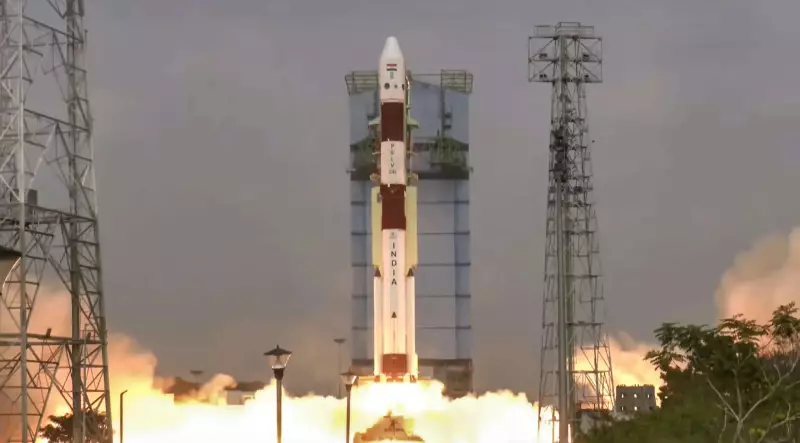
India's ambitious 2026 space calendar began with a sobering reminder of the challenges inherent in space exploration. The PSLV-C62 mission, which carried a significant private sector payload, unfortunately ended in failure on January 12. This mission was particularly notable as it represented the growing private sector imprint on India's space endeavors. Despite this initial setback, the year is shaping up to be a transformative period for India's private space industry, with multiple landmark projects moving from planning to implementation phases.
Major Earth Observation Project Takes Concrete Shape
Just eight days after the PSLV mission, India's space sector witnessed a significant milestone with the signing of a crucial concession agreement for the country's first Earth Observation Satellite System (EOSS) under a public-private partnership model. The agreement was finalized between the Indian National Space Promotion and Authorisation Centre (IN-SPACe) and Allied Orbits, a special purpose vehicle created by a consortium of leading space technology companies.
The consortium comprises Pixxel Space, Piersight Space, Satsure Analytics India, and Dhruva Space, with the signing ceremony taking place at IN-SPACe's Bengaluru office. This development comes four months after the consortium won the project through what was reported as a "zero-bid" process in August 2025. While the concession agreement was originally scheduled to be signed within three months of project award, procedural delays pushed the signing to January 20.

The ambitious project will create a constellation of 12 satellites positioned in low-Earth orbit, with data applications spanning multiple critical sectors. These include climate change monitoring, disaster response coordination, agricultural optimization, infrastructure planning, maritime operations enhancement, and national security applications. The project addresses significant gaps in India's current satellite observation capabilities.
Gaurav Seth, CEO and co-founder of Piersight, explained the division of responsibilities: "As part of the project, PierSight will build synthetic aperture radar (SAR) satellites, Pixxel will build hyperspectral and high-resolution optical satellites, Satsure will manufacture multispectral satellites, and Dhruva will develop the necessary ground stations."
Pixxel CEO Awais Ahmed revealed that his company is implementing 60% of the project and making corresponding investments. "Of the 12 satellites, seven will come from Pixxel, three from SatSure, and two from PierSight," Ahmed stated. He further detailed that Pixxel will manufacture two types of satellites: five ultra-high-resolution submeter satellites and two hyperspectral satellites.
The consortium plans to invest more than Rs 1,200 crore over the next four to five years to complete the constellation. A key aspect of this project is its emphasis on national self-reliance: all satellites will be manufactured in India, launched using Indian rockets, and controlled from ground infrastructure located within the country. This approach is designed to enhance India's data sovereignty and reduce dependence on foreign satellite imagery.
Strategic Space-Based Surveillance Program Advances
In parallel with the Earth observation initiative, India is making significant progress on its space-based surveillance (SBS) program, which represents another milestone for private sector participation. For the first time in India's space history, private industry will develop satellites specifically for strategic national security needs.
Three private entities have been tasked with producing 31 satellites as part of this comprehensive surveillance program. The current SBS initiative builds upon earlier programs that utilized satellites from the Cartosat and Risat families, but represents a substantial upgrade in capability and scope.
The complete program will deploy 52 satellites across both geostationary orbit (GEO) and low Earth orbit (LEO), with 21 satellites developed by the Indian Space Research Organisation (ISRO) and the remaining 31 coming from private sector partners. The estimated cost for this ambitious program ranges between Rs 26,000 and Rs 27,000 crore, though this figure is expected to undergo revision as the project progresses.

The latest iteration of the SBS program incorporates artificial intelligence to enable unprecedented levels of satellite interaction and intelligence gathering. A key innovation involves creating an integrated network of satellites positioned in both LEO and GEO orbits. This dual-layer system will facilitate dynamic cooperation between satellites, with GEO satellites at approximately 36,000 kilometers able to detect activities and direct LEO satellites at 400-600 kilometers to provide detailed observations.
The program is designed to allocate dedicated satellites to support land, sea, and air-based missions across India's military services, significantly enhancing the nation's defense and surveillance capabilities.
Innovative Space Habitat Development
As India advances its human spaceflight ambitions through the Gaganyaan and Bhartiya Antriksh Station (BAS) programs, Bengaluru-based startup Akashalabdhi is developing an innovative "expandable space habitat." This project represents the growing sophistication of India's private space technology sector.
A prototype model of the habitat, named 'Antariksh HAB,' has already been completed. The final version is being designed to accommodate between six and sixteen personnel and features an innovative structure that promises superior protection against orbital debris and radiation while maintaining versatility for various mission profiles.
Private Launch Vehicle Development Accelerates
Beyond satellite development, 2026 is expected to witness significant progress in India's private launch vehicle sector. Several startups are approaching critical milestones in their development programs.
Skyroot Aerospace remains one of the most closely watched companies in this sector. In late 2025, the company unveiled its Vikram-I orbital rocket along with its "Infinity Campus" in Hyderabad, a comprehensive facility designed to support parallel rocket design, manufacturing, and testing operations. In 2026, Skyroot aims to conduct its first commercial orbital launch, placing small satellites into low-Earth orbit. The company has indicated plans for an initial launch cadence of one mission every three months, with ambitions to scale to monthly missions by 2027. Revenue generation is expected to begin once regular commercial operations are established.
Success for Skyroot would mark a significant turning point for India's space sector: the country's first privately built orbital rocket, launched from Indian soil, carrying paying customer payloads rather than experimental technology demonstrators.
Chennai-based Agnikul Cosmos is pursuing a different technical approach, with launch vehicles built around modular architectures and patented upper-stage designs that could double as orbital payloads. Internally, the company is targeting monthly launches once its first orbital mission is completed. Agnikul's emphasis is on adaptability and production efficiency, with engines and stages designed for rapid manufacturing and lower per-mission costs—a potential competitive advantage in the increasingly crowded global small-satellite launch market.
Specialized Space Services Emerge
Several Indian companies are developing specialized capabilities in niche areas of space technology. Digantara operates in the increasingly important field of space domain awareness and orbital intelligence. The company specializes in tracking resident space objects, including debris and active satellites, using its own spacecraft, ground networks, and data platforms. In 2025, it launched its first commercial space surveillance satellite, SCOT.
In 2026, Digantara plans to deploy at least eight more satellites, primarily through rideshare missions on vehicles such as SpaceX's Transporter series. The company is also close to operationalizing a ground-based telescope in India. As low-Earth orbit becomes more congested, such capabilities are increasingly critical for commercial operators, defense authorities, and civil agencies responsible for collision avoidance and orbital safety.
Bellatrix Aerospace has evolved from an early focus on launch vehicles to concentrate on propulsion systems and orbital transport technologies. Its portfolio includes electric propulsion thrusters for small satellites and an orbital transfer vehicle capable of repositioning spacecraft after launch.
Recently, both Bellatrix and Digantara entered partnerships with Japan's Astroscale, a global leader in debris removal and orbital servicing. These collaborations reflect how Indian hardware startups are increasingly integrating into international technology ecosystems. For satellite operators, such propulsion and servicing systems could become essential, enabling low-cost maneuvering, orbit changes, and mission life extension.
Earth Observation Sector Scales Up
India's Earth observation (EO) sector is entering a new phase of development and commercialization. IN-SPACe's Build–Own–Operate framework began transitioning into implementation in 2025, signaling a shift in how satellite infrastructure and data services are commercialized. It is under this initiative that Allied Orbits was formed.
Separately, Pixxel has already placed its first private batch of hyperspectral imaging satellites in orbit through its Firefly series, serving agriculture, environmental monitoring, and resource analysis applications. Other firms, including Satellize and Grahaa Space, are working on satellite manufacturing and data services, such as near-real-time geospatial video, which could serve both commercial users and strategic agencies.
Public-Private Partnerships Deepen
On the launch vehicle side, public-private partnership models are beginning to take concrete shape. The LVM-3 heavy-lift program is being scaled with deeper industry involvement to support future commercial missions. The first PSLV manufactured by a HAL–L&T-led consortium is expected to fly in early 2026, marking a significant milestone in the industrialization of India's launch vehicle production.
Technology transfer agreements for the Small Satellite Launch Vehicle (SSLV), and eventually for PSLV manufacturing, are also expected to progress as part of broader privatization plans. On January 8, the Department of Space issued an Expression of Interest inviting industries to build the first module of the proposed Bhartiya Antriksh Station (BAS).
Together, these developments point to a deliberate shift from a research-centric model to a market-driven space economy.
Calls for Increased Public Investment
Industry associations argue that private sector momentum will need stronger public backing to achieve sustainable scale. The Satcom Industry Association-India (SIA-India), in three coordinated pre-budget submissions prepared in collaboration with KPMG, pointed out that India's public spending on space, at about 0.04% of GDP, remains well below global norms.
The association recommended a phased increase to levels closer to the 0.12% seen in leading spacefaring nations, with predictable support for launch capability development, satellite constellation deployment, navigation systems enhancement, and testing infrastructure expansion.
SIA-India president Subba Rao Pavuluri emphasized: "From secure communications and navigation to climate systems, launch infrastructure and disaster resilience, every layer of our national architecture now depends on space assets. Granting space the status of critical infrastructure and decisively expanding public investment is essential if we are to match our strategic aspirations and secure our leadership in the Indo-Pacific."
The Indian Space Association (ISpA) echoed this sentiment of transition. "Private space startups in India raised nearly $150 million during FY 2025, taking the total funding to over $617 million to date," said ISpA director-general Lt Gen (retd) A K Bhatt. "India's space sector is moving firmly into an execution-led phase. While challenges remain in manufacturing scale, long-term capital access, and assured demand, the year established a clear foundation for sustained growth, deeper industry participation, and India's expanding role in the global space economy."
Resilience After Failure
The PSLV-C62 mission, despite its failure, highlighted an important trend: of the 15 satellites onboard, 13 were from private industry, demonstrating how commercial payloads are becoming the norm rather than the exception on Indian launch vehicles. The Indian companies that had their payloads on the rocket are expected to demonstrate resilience and bounce back from this setback.
Dhruva Space, whose Polar Access-1 (PA-1) deployment system was lost in the failure, will aim to return to orbit. This structured launch program would have enabled 10 satellite deployments serving multiple Indian states and international customers.
One of the most closely watched payloads on the mission was AyulSat, built by OrbitAID Aerospace. The satellite was designed to demonstrate technology that would eventually allow the firm to conduct full-fledged on-orbit refueling—a capability that could fundamentally change how satellites are operated and maintained. The firm is now looking at launching both the target and chaser satellites together later this year.
As India's space sector navigates both successes and setbacks, 2026 appears poised to be a defining year that could establish the country's private space industry as a significant player in the global space economy, while simultaneously enhancing national capabilities in Earth observation, strategic surveillance, and space exploration.