India's PFBR at Kalpakkam Achieves Criticality, Boosting Nuclear Energy Self-Reliance
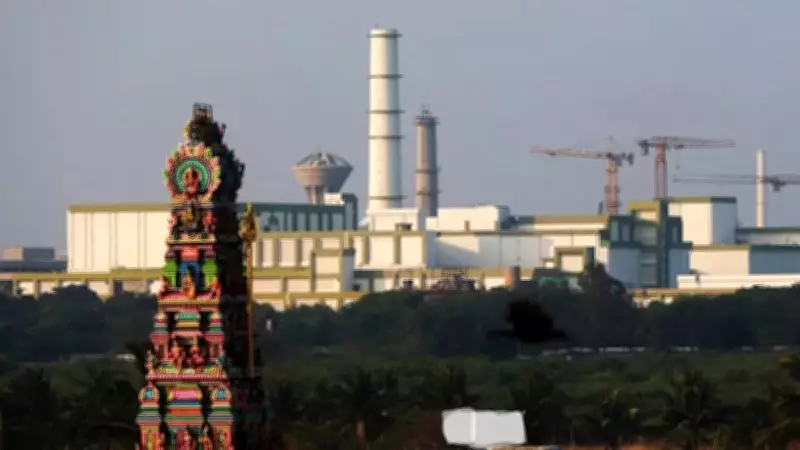
India has achieved a decisive breakthrough in its nuclear energy programme with the indigenously developed 500 MWe Prototype Fast Breeder Reactor (PFBR) at Kalpakkam attaining criticality at 08.25 pm on April 6. This milestone signals the start of a controlled, self-sustaining nuclear chain reaction, representing one of the final and most crucial stages before full-scale power generation.
Strategic Milestone for Atmanirbhar Bharat and Viksit Bharat 2047
The PFBR milestone ties directly to India's broader ambitions of becoming energy secure and technologically self-reliant under the Atmanirbhar Bharat vision. Reducing dependence on imported fuels has been a core objective, and nuclear energy, especially through breeder technology, offers a pathway to achieve this by maximising the use of limited domestic uranium resources and unlocking the country's vast thorium reserves.
Prime Minister Narendra Modi described the development as a turning point in India's nuclear journey. In a post on X, he said, "Today, India takes a defining step in its civil nuclear journey, advancing the second stage of its nuclear programme." Emphasising the significance of the reactor's design, he added, "This advanced reactor, capable of producing more fuel than it consumes, reflects the depth of our scientific capability and the strength of our engineering enterprise. It is a decisive step towards harnessing our vast thorium reserves in the third stage of the programme."

India's Three-Stage Nuclear Programme and the PFBR's Role
India's nuclear roadmap, originally conceptualised by Homi J Bhabha, is structured into three stages designed to overcome the country's limited uranium reserves and leverage its abundant thorium deposits.
- First Stage: Relies on Pressurised Heavy Water Reactors (PHWRs), which use natural uranium as fuel and produce plutonium as a byproduct.
- Second Stage: Activated by the PFBR, uses plutonium as fuel in fast breeder reactors, generating power and producing more fissile material than consumed.
- Third Stage: Aims to use thorium to produce uranium-233 for long-term sustainable energy generation.
Dr Manpreet Sethi, distinguished fellow at the centre for aerospace power and strategic studies, explains the significance: "Yes, it does place India in an exclusive group. Nuclear energy is critical as a sustainable and environmentally friendly source of power." She adds that the PFBR is not an endpoint but a transition, with the government targeting 100 GW of nuclear power by 2047 as part of the Viksit Bharat vision.
Understanding Fast Breeder Reactor Technology
A fast breeder reactor operates on a fundamentally different principle compared to conventional nuclear reactors. Traditional reactors slow down neutrons using a moderator such as water, while fast reactors use high-energy neutrons without moderation.
In the PFBR, plutonium-based mixed oxide (MOX) fuel is used in the core, surrounded by a blanket of uranium-238. Fast neutrons convert this uranium into plutonium-239, effectively creating new fuel while generating energy. Dr Sethi explains: "It is called a 'breeder' reactor because it not only uses plutonium but also produces more of it."
This ability to "breed" fuel significantly enhances resource efficiency, allowing India to extract far more energy from available materials while reducing nuclear waste. The PFBR uses liquid sodium as a coolant, which does not slow down neutrons and has excellent heat transfer properties, though it introduces engineering complexities.
Types of Breeder and Fast Reactor Technologies
Fast breeder and breeder reactor technologies are a family of advanced nuclear systems, each built around the core idea of maximising fuel efficiency by producing more fissile material than they consume.

- Fast Breeder Reactor (FBR): Operates using fast neutrons, converting fertile material like uranium-238 into fissile plutonium-239, enabling recycling of nuclear waste.
- Liquid Metal Fast Breeder Reactor (LMFBR): Uses liquid metals such as sodium as coolants, with India's PFBR being a sodium-cooled LMFBR, similar to Russia's advanced breeder reactors.
- Gas-Cooled Fast Reactor (GCFR): Uses inert gases like helium as a coolant, still in research and development stages.
- Thermal Breeder Reactor: Uses slowed thermal neutrons and thorium-232, relevant for India's third stage nuclear programme.
- Molten Salt Breeder Reactor (MSBR): Uses molten salt as a fuel carrier and coolant, under active development globally.
- Light-Water Breeder Reactor (LWBR): A modified version of conventional water-cooled reactors with specialised fuel arrangements.
Indigenisation and Engineering Achievement
The PFBR stands out for the extent of indigenous capability it represents. Designed by the Indira Gandhi Centre for Atomic Research and constructed with the participation of more than 200 Indian industries, including many MSMEs, it aligns closely with the Atmanirbhar Bharat push. The development involved advances in materials science, reactor physics, fuel fabrication, and safety engineering, incorporating several advanced safety features.
Baseload Power and the Clean Energy Transition
Nuclear power provides continuous, reliable electricity, operating around the clock unlike intermittent renewable sources. Dr Sethi highlights: "Once a nuclear reactor becomes operational, it functions continuously. That is why nuclear energy provides baseload electricity." This makes nuclear energy an essential complement to renewables in India's clean energy mix as the country aims to reduce carbon emissions while meeting rising demand.
From Criticality to Commercial Operation
With criticality achieved, the PFBR now enters a crucial phase of testing and gradual power increase before being connected to the grid. Dr Sethi notes that this transition is typically swift, and once grid-connected, the electricity generated can be distributed nationwide, adding to India's power supply while validating the technology for future deployment.
Global Significance and Strategic Positioning
With the PFBR reaching criticality, India joins a select group of nations, alongside Russia, that have developed and operated fast breeder reactor technology at scale. This status carries both technological and strategic implications, enhancing energy security and signalling advanced scientific capability.
The Road Ahead
The PFBR is a foundational step, not a standalone solution. India's path to 100 GW of nuclear capacity will depend on scaling up PHWRs, deploying more fast breeder reactors, and leveraging international collaborations, with the eventual goal of transitioning to thorium-based reactors. The achievement at Kalpakkam marks the beginning of this next phase, symbolising a shift towards technological confidence, energy independence, and a sustainable future powered by indigenous innovation.