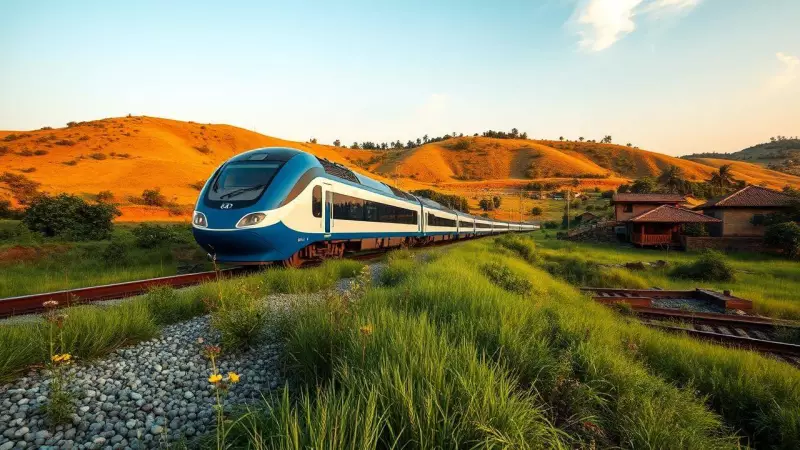
Haryana is on the cusp of making Indian railway history as the launch of the nation's first hydrogen-powered train enters its final phase. The pioneering pilot project by Northern Railway, set to operate between Jind and Sonipat, has completed successful trial runs and is awaiting a final green light from authorities.
Final Preparations and Infrastructure Review
The state government has confirmed that a stable and uninterrupted 11 kV power supply is now ensured for the dedicated hydrogen plant located in Jind. This facility is critical for fueling the train during both its commissioning and regular operations. Haryana Chief Secretary Anurag Rastogi recently conducted a review of the project with officials from the Dakshin Haryana Bijli Vitran Nigam (DHBVN).
During the review, Rastogi directed officials to maintain regular monitoring of the power supply system to prevent any disruptions. He also emphasized the necessity of establishing robust backup arrangements and quick-response mechanisms to support this landmark initiative. The hydrogen plant itself, with a substantial storage capacity of 3,000 kilograms, is currently in its final commissioning stage.

Train Specifications and Green Technology
Last month, Railway Minister Ashwini Vaishnaw informed the Lok Sabha about this state-of-the-art pilot project. The train has been developed according to specifications framed by the Research, Design and Standards Organisation (RDSO) to demonstrate indigenous hydrogen-based train technology. Vaishnaw confirmed that the manufacturing of the hydrogen train-set is complete.
The green hydrogen required for the train will be produced at the Jind plant using the electrolysis process. The train, built at the Integral Coach Factory in Chennai, has already arrived at Jind junction. It is an eight-coach configuration with power cars at both ends and features a metro-style layout. For enhanced passenger safety, the doors are designed to close fully before the train's departure.
Special Features and Performance
The hydrogen train boasts several innovative features that set it apart from conventional trains:
- It is designed to cover up to 10 times more distance compared to electric trains on a single charge/fill.
- It can travel approximately 180 km using just 360 kg of hydrogen.
- The train operates silently, ensuring a notably comfortable journey for passengers.
- It includes eight coaches for passenger seating with facilities like fans, lights, and air-conditioning available throughout the journey.
- The metro-style design incorporates two doors on each side of every coach for efficient entry and exit.
Awaiting the Maiden Journey
An official associated with the project stated that all technical and logistical preparations are in place. The train's speed limit has been set at 110 km per hour, and all technical aspects are undergoing thorough final checks. While trial runs have been completed successfully, the final decision on the official launch date now rests with higher authorities.
The maiden journey is expected to commence soon on the Jind–Gohana–Sonipat route. This project marks a significant leap forward for Indian Railways in its pursuit of sustainable and eco-friendly transportation solutions, positioning India in the global league of nations adopting hydrogen fuel cell technology for rail transport.