Indian Astronauts Adapt Russian and US Training for Gaganyaan Mission
Indian astronauts selected for the Gaganyaan mission are leveraging their extensive training from Russia in 2020 and the United States' Axiom-4 mission in 2025 to shape India's inaugural human spaceflight program, now set for 2027. Group Captains Shubanshu Shukla and Prashant B Nair, key figures in this endeavor, emphasized the critical responsibility of developing robust protocols for safe space travel, drawing parallels to pioneers like Yuri Gagarin and Neil Armstrong.
Integrating International Best Practices
During a fireside chat at the US India Space Forum, Shukla and Nair highlighted how their experiences are informing the Gaganyaan mission. Shukla, who flew to the International Space Station on SpaceX's Crew Dragon for Axiom-4, and Nair, a standby for that mission, stressed the importance of evolving systems based on insights from both Russian and American space programs. "We have very rich experience from training in Russia on the Soyuz capsule and flying the Crew Dragon," Shukla noted, "which gives us a clear vision for our own systems."
Nair elaborated that the Gaganyaan protocols are being crafted by adopting the best practices from leading space-faring nations, ensuring technologies are thoroughly validated before deployment. "This validation process is why it's taking time, but it's essential for safety," he explained.

Challenges in Adapting Learnings
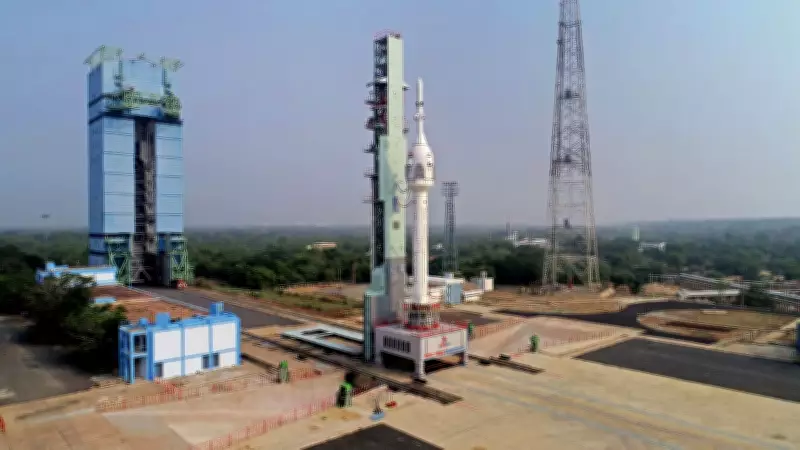
The astronauts face the unique challenge of tailoring international lessons to India's indigenous technologies. Nair pointed out that the Gaganyaan rocket differs significantly from those used in Axiom-4 and Soyuz missions, with distinct engines, propellants, and a home-built design. "The chassis and launch pad are different, requiring us to develop new protocols from scratch," he said. Daily training involves rigorous discussions on human-rated systems, emergency escapes, and crew safety measures.
Key developments include:
- A crew escape system modeled after the Soyuz, similar to China's approach.
- Indigenous development of the environment control and life support system.
- Collaborations with Russia for seats and suits, based on prior training ties.
Long-Term Vision and Collaboration
Gaganyaan is not a one-off mission but the foundation for India's long-term space ambitions, including the Bharatiya Antariksh Mission (Indian space station) and lunar landings. Nair emphasized India's ethical approach to technology development, aiming to build a comprehensive ecosystem. "As the fourth country to undertake human spaceflight, we're committed to doing it right," he stated.
Both astronauts underscored the importance of international collaboration in space exploration. Shukla remarked, "Collaboration is the bedrock of space exploration; there's no other way." Nair highlighted the synergy between India and the US, driven by shared democratic values and technical advancements, pointing to opportunities under frameworks like the Artemis Accords.
New Paradigms in Space Thinking
The astronauts called for a revolution in space affairs, moving beyond mere accessibility to innovative applications. Nair cited Elon Musk's concept of orbital data centers as an example of shifting paradigms. He also addressed defense aspects, advocating for collective security among like-minded nations with high-tech collaborations.
ISRO's participation in Axiom-4 was strategically planned to gain firsthand experience for Gaganyaan. Chairman S Somanath previously noted that such missions help refine designs by understanding cockpit dynamics and emergency handling. With two unmanned tests planned before the 2027 launch, Gaganyaan aims to demonstrate India's capability to safely orbit and return a crew of three from a 400 km orbit.