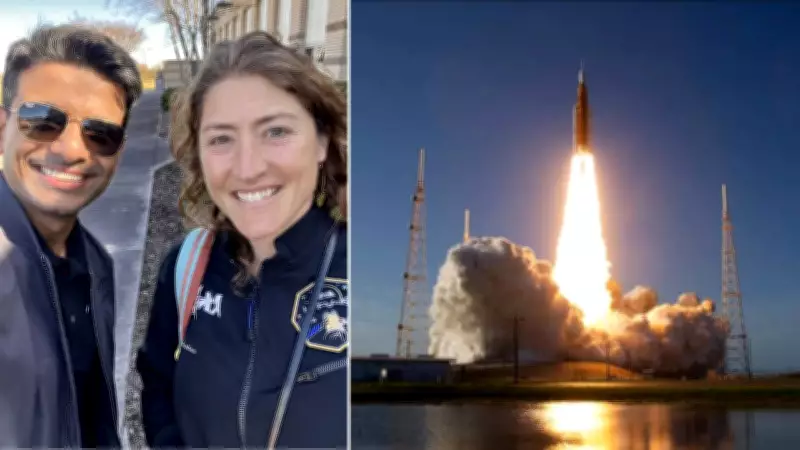
Indian Astronaut Shubhanshu Shukla Reflects on Artemis II Launch, Recalls Historic Grounds
Indian astronaut Shubhanshu Shukla lauded the successful Artemis II launch on Thursday, which sent four astronauts on a pioneering journey around the Moon. In a heartfelt post on social media platform X, he reminisced about his own profound experience at the Kennedy Space Center, describing the moment he first stood on those historic grounds as "feeling humbled by what it represents."
A Legacy of Exploration from Shared Grounds
Shukla emphasized the deep historical significance of the launch site, noting, "It is the same ground from which Neil Armstrong began humanity's first journey to the Moon. The same place where Peggy Whitson, the most experienced American astronaut and my commander, launched on her first mission to space. And today, it becomes the starting point for yet another chapter in our shared story of exploration."
The Space Launch System rocket propelled the Artemis II mission from Launch Pad 39B on Thursday. Interestingly, Neil Armstrong's iconic journey to the Moon commenced from Kennedy Space Center's Launch Pad 39A, located just a few kilometers away from the Artemis-2 launch pad. Shukla, who holds the distinction of being the only Indian to have flown to space from the United States, also launched from Launch Pad 39A, further connecting him to this legacy.

Personal Connections and Inspirational Moments
Shukla shared his personal involvement with the Artemis II crew, stating, "I had the privilege of watching these astronauts prepare for this mission, and even meeting two of them personally. To see them now on the cusp of such a remarkable journey is both inspiring and moving." His words highlight the camaraderie and mutual respect within the global astronaut community.
India's Role in Global Space Collaboration
In a significant development for international space cooperation, India became the 27th signatory to the US-led Artemis Accords in June 2023. While India is not directly participating in the Artemis program's manned missions, this partnership enables collaboration between the Indian Space Research Organisation (ISRO) and NASA on technological advancements and joint missions. This alignment fosters shared goals in lunar exploration and beyond.
India's Ambitious Lunar Roadmap
Concurrently, India is advancing its own lunar ambitions through a series of planned missions:
- Chandrayaan-4 and Chandrayaan-5: Upcoming missions building on previous successes.
- Chandrayaan-6, 7, and 8: Future missions aimed at further lunar exploration and scientific discovery.
India has set an ambitious target to achieve a crewed landing on the Moon by 2040, demonstrating its commitment to becoming a key player in space exploration. This timeline aligns with global efforts, including the Artemis program, to establish a sustainable human presence on the lunar surface.
Shukla's reflections underscore the interconnected nature of space exploration, where historical milestones inspire new generations and international partnerships pave the way for future achievements. As Artemis II embarks on its journey, it symbolizes not just American ambition but a collective human endeavor, with India poised to contribute significantly through both collaboration and independent initiatives.