

IN-SPACe Announces Selection of Three Indian Companies for Satellite Bus Development
India's space regulator and promoter, the Indian National Space Promotion and Authorisation Centre (IN-SPACe), made a formal announcement on Wednesday, revealing that it has selected three domestic companies to spearhead the development of indigenous small satellite bus platforms. This initiative falls under the agency's Satellite Bus as a Service (SBaaS) program, marking a significant step in bolstering India's private space sector.
Selected Firms and Program Details
The chosen companies are Bengaluru-based Astrome Technologies, Hyderabad's Azista Industries, and Dhruva Space. According to IN-SPACe, these firms were selected after a rigorous multi-stage evaluation process that reviewed 15 proposals submitted until July 2025. Each of the three companies will receive a substantial grant of Rs 5 crore to design and demonstrate a modular satellite bus capable of supporting a diverse range of missions.
The primary objective of the SBaaS initiative is to create standardized platforms that can host multiple payloads for both domestic and international customers. This approach is expected to provide a cost-effective solution for payload developers and facilitate the entry of Indian industry into the rapidly expanding hosted payload market.

Official Statements and Strategic Vision
IN-SPACe Chairman Pawan Goenka emphasized the strategic importance of this initiative, stating that it will significantly strengthen the country's manufacturing base. "By enabling indigenous satellite bus platforms and linking them with India's small satellite launch capabilities, we are laying the foundation for India to become a preferred global destination for end-to-end small satellite manufacturing, launch, and hosted payload services," he explained.
Rajeev Jyoti, Director (Technical) at IN-SPACe, highlighted the broader implications of the program. "Standardized platforms would reduce barriers for new entrants. The SBaaS initiative is a key enabler for the development and manufacturing of indigenous small satellite bus platforms. It will support payload developers while reinforcing India's position in the global hosted payload services market," he noted.
Implementation and Support Framework
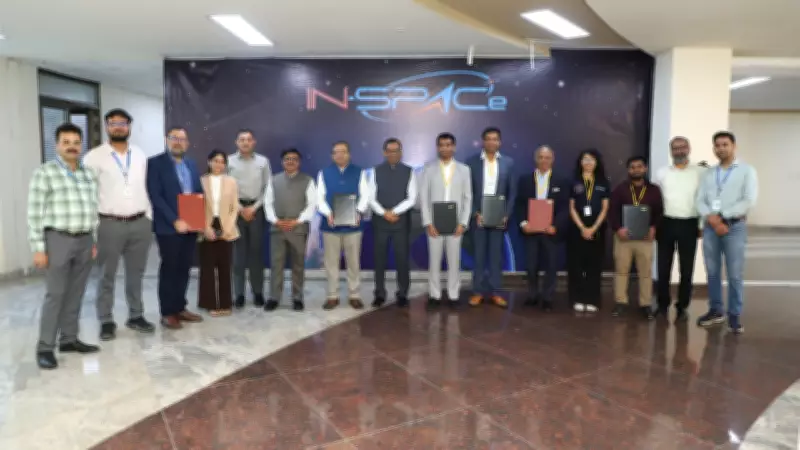
Contract agreements with the three selected companies were officially signed on February 11, marking the commencement of the implementation phase. IN-SPACe has committed to supporting these firms through milestone-linked grants and will provide access to ISRO and Department of Space facilities for essential testing and technical guidance.
The agency plans to expand the program in later phases to include actual hosted payload missions utilizing the newly developed satellite buses. This initiative is part of IN-SPACe's broader public-private partnership efforts, which recently included a concession agreement with Allied Orbits for an Earth observation constellation aimed at building a commercial ecosystem in the sector.
Background and Role of IN-SPACe
Established in June 2020 following the government's decision to open the space sector to private participation, IN-SPACe functions as a single-window nodal agency under the Department of Space. Its responsibilities include authorizing and supervising the activities of non-government entities, such as satellite and launch vehicle development, sharing of ISRO infrastructure, and the creation of new space facilities.
This announcement builds on earlier reports from January, which indicated that IN-SPACe had shortlisted three Indian companies under the SBaaS initiative, with a formal announcement anticipated soon. The selection of Astrome, Azista, and Dhruva underscores India's commitment to fostering innovation and self-reliance in the space technology domain, positioning the nation as a competitive player in the global space economy.






